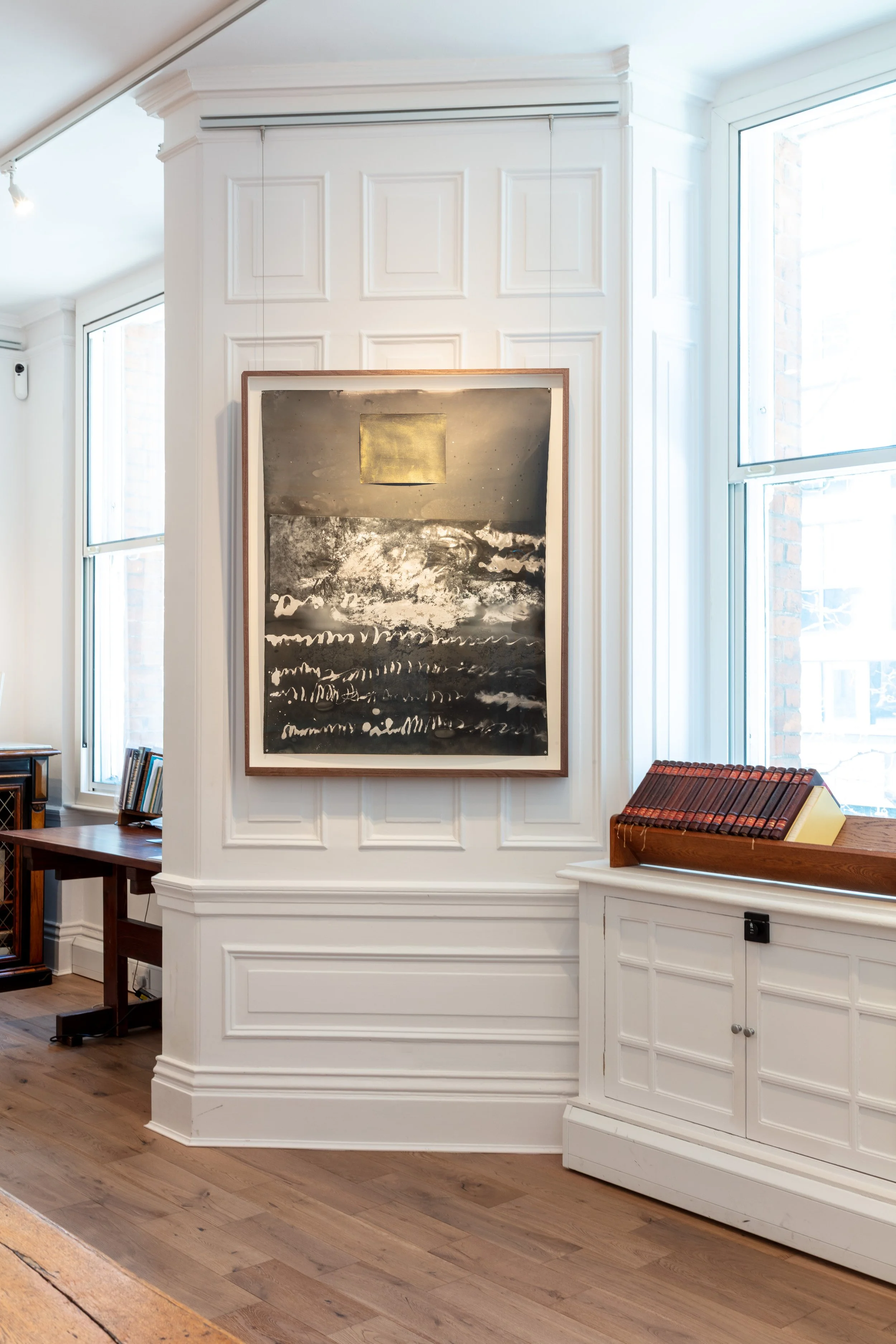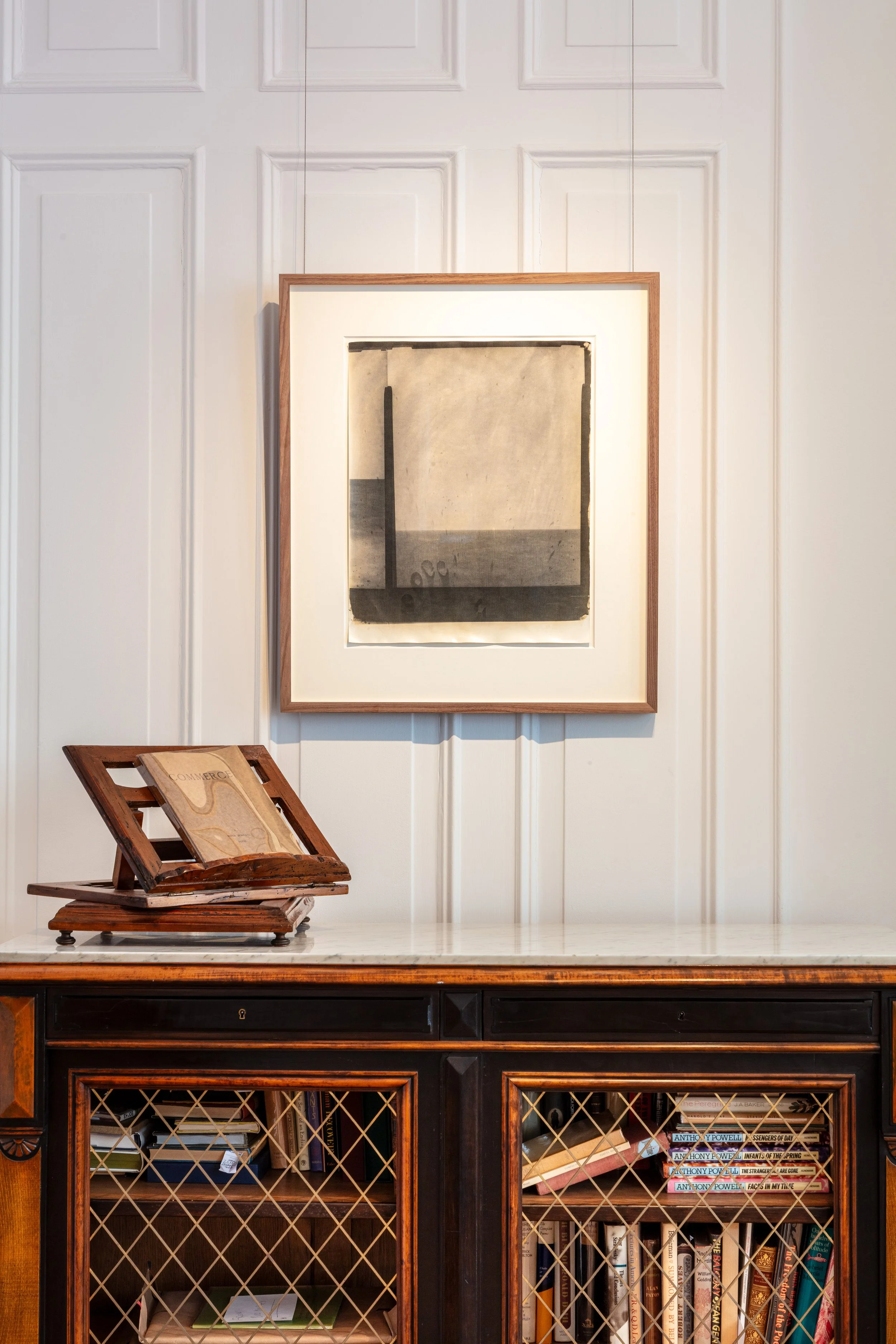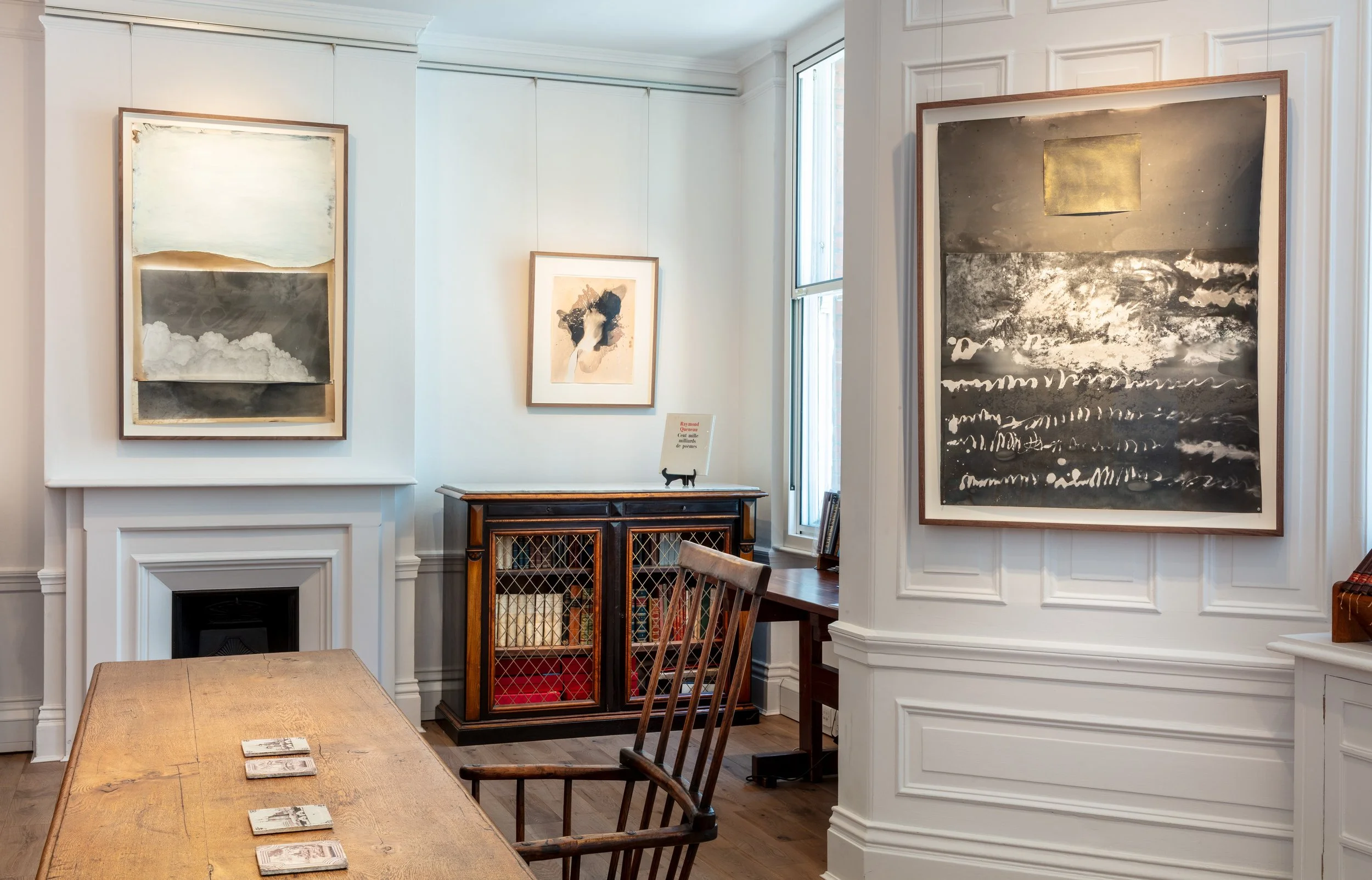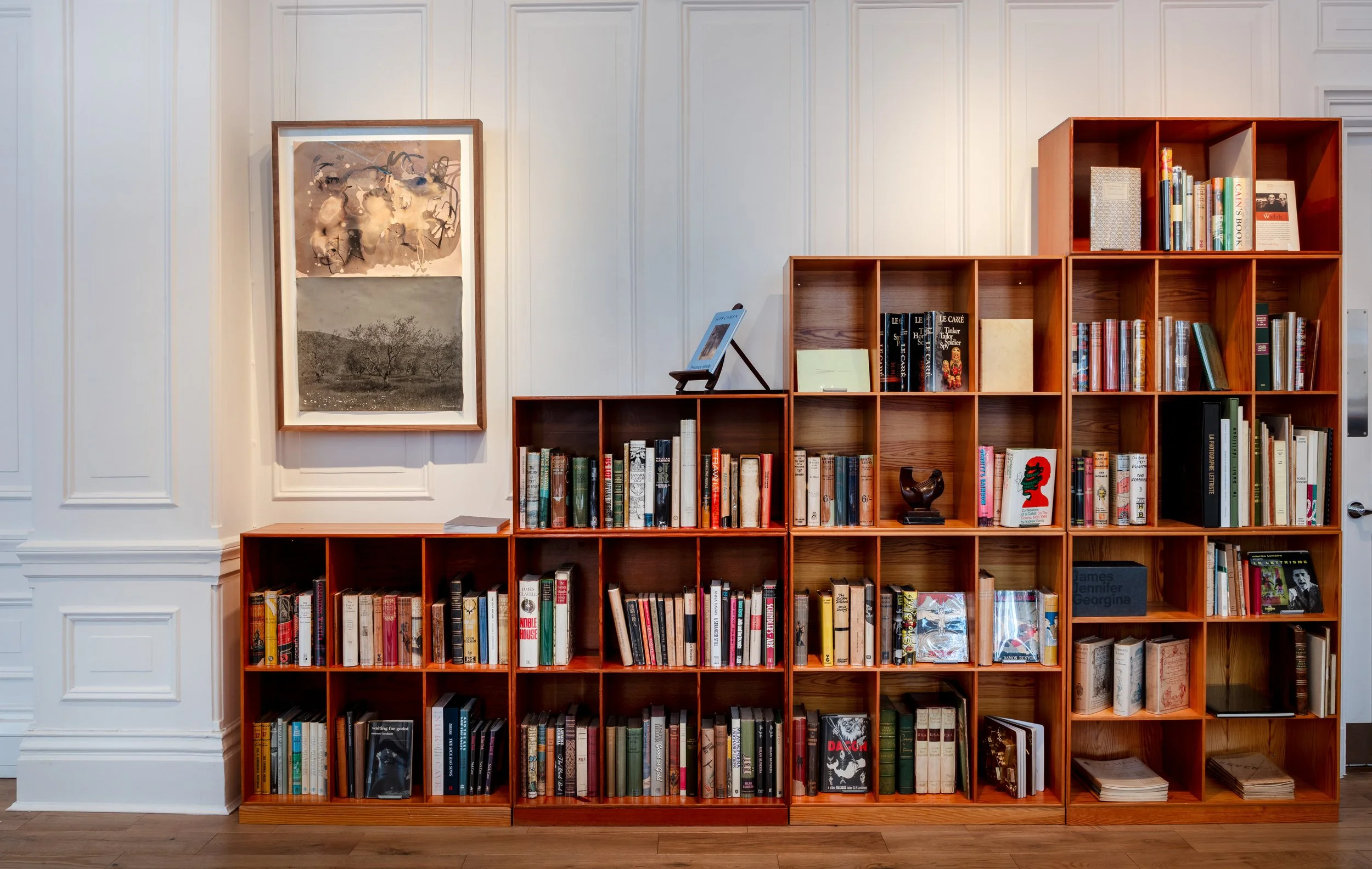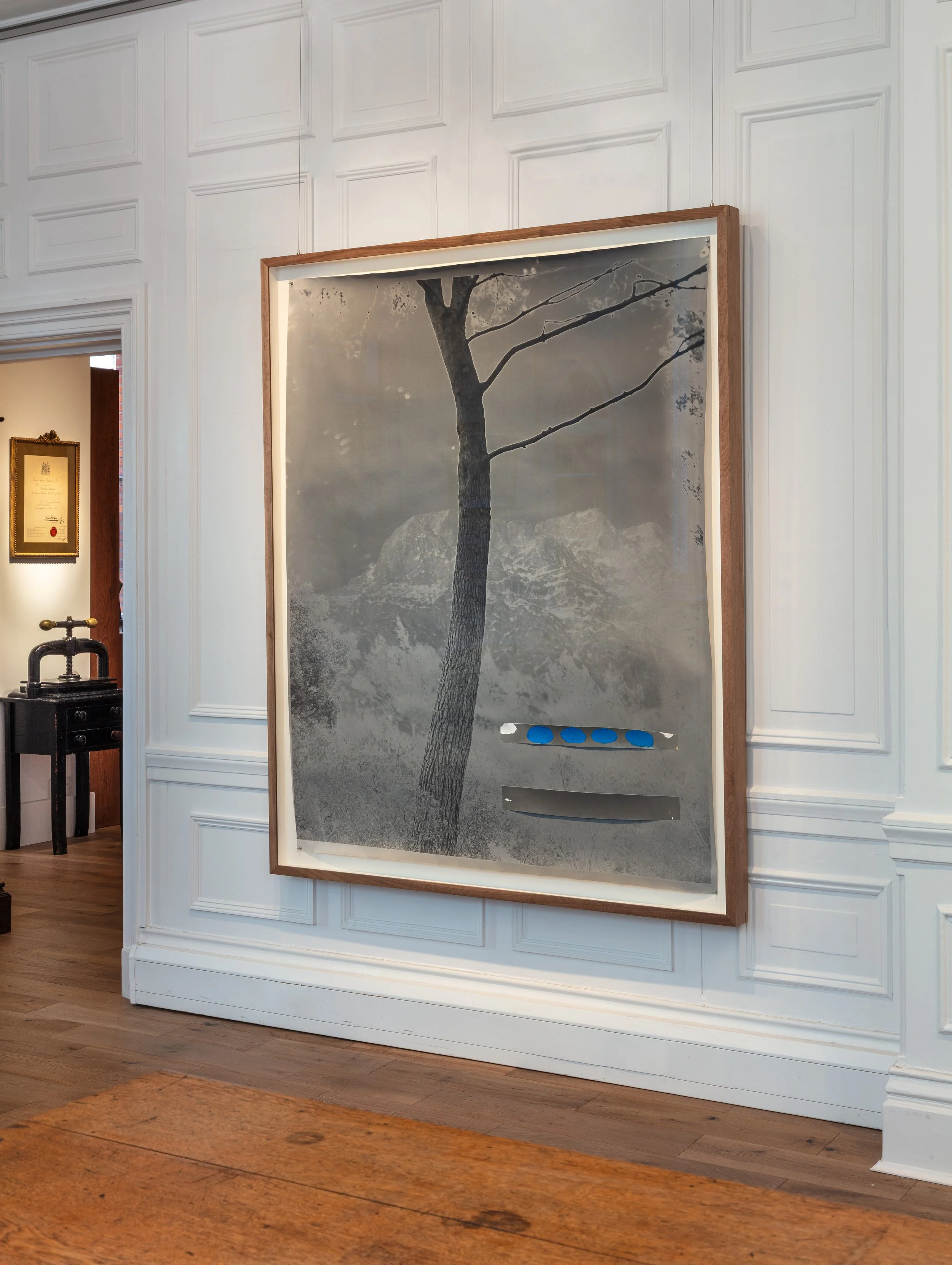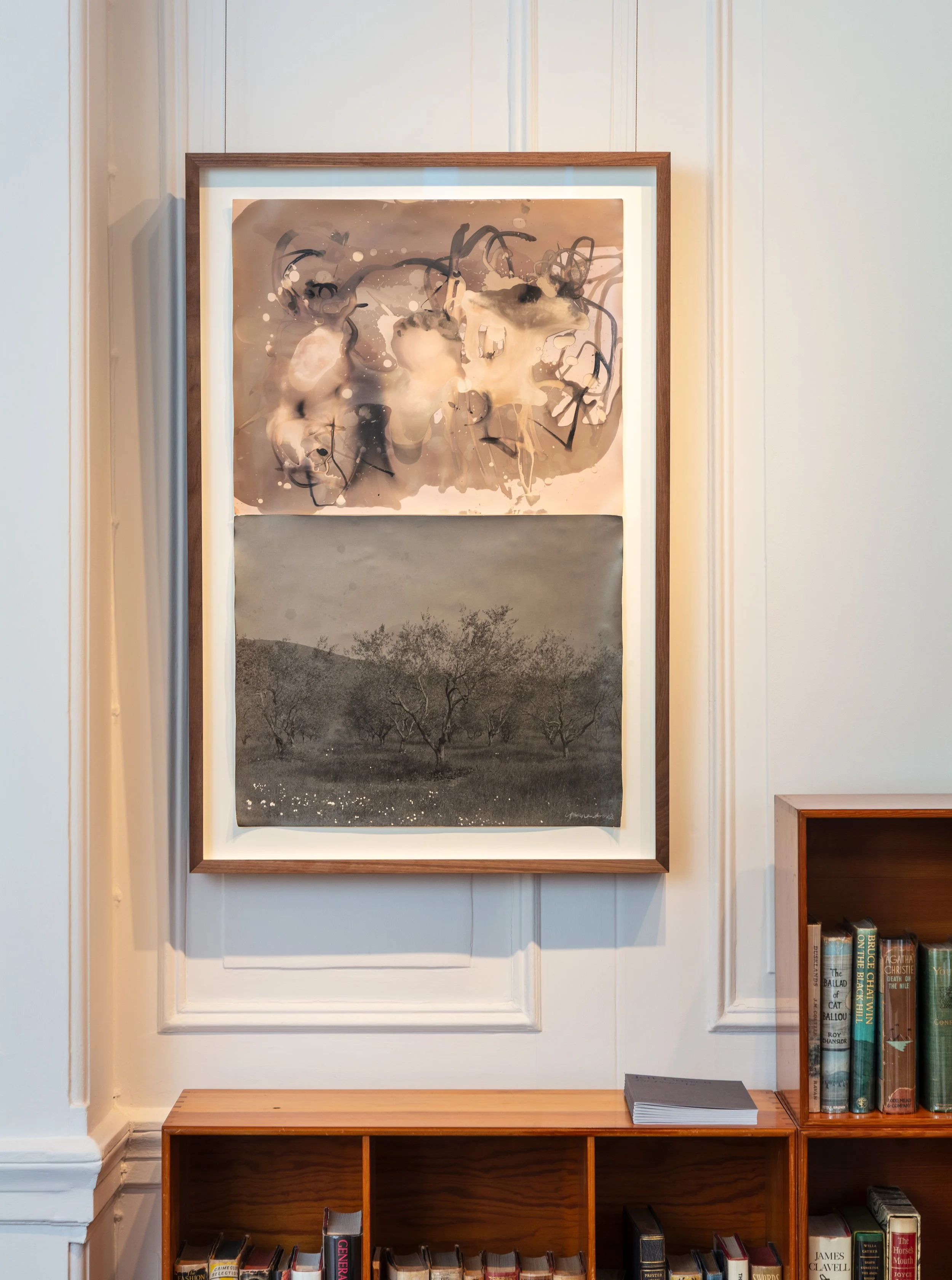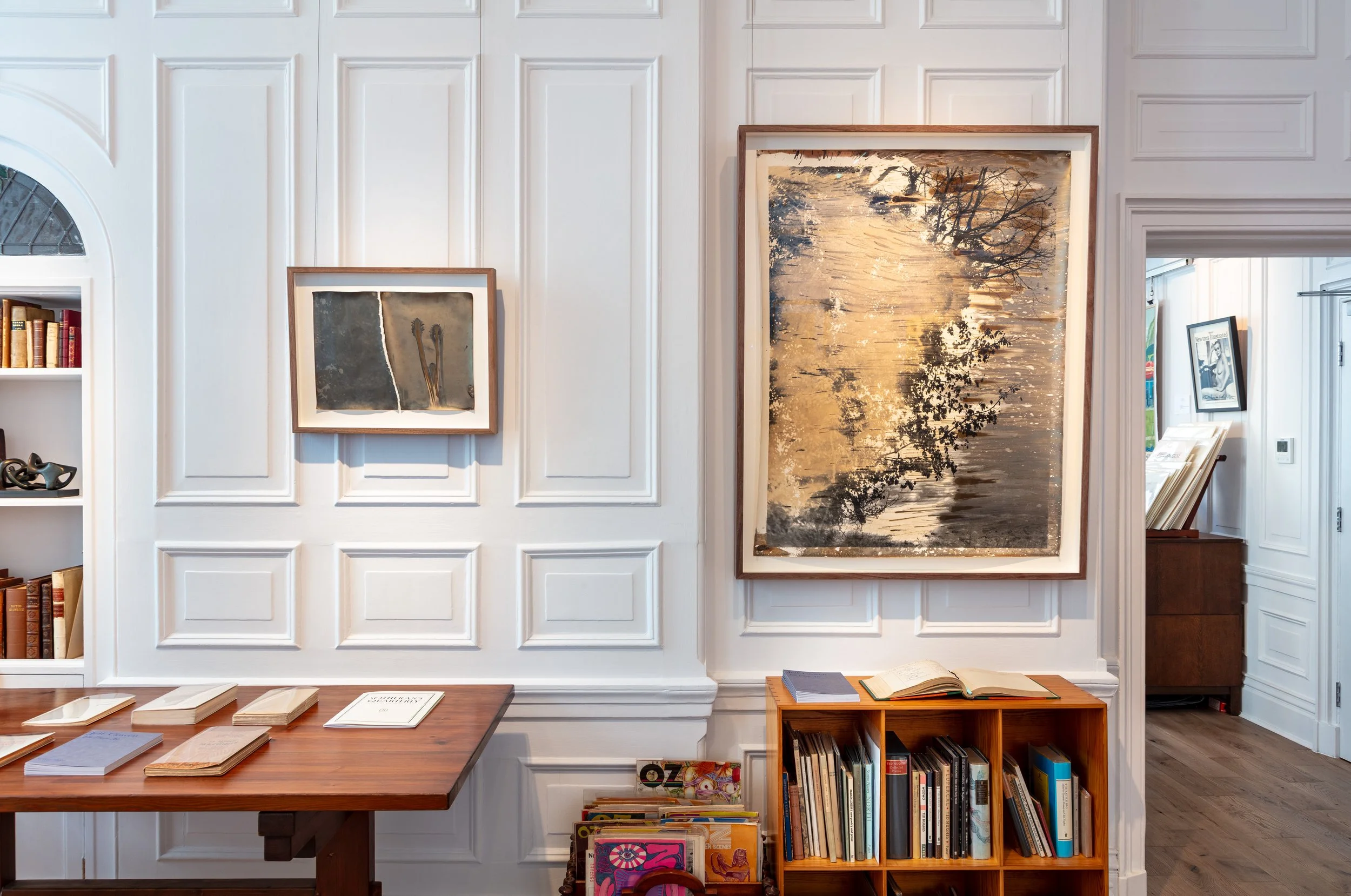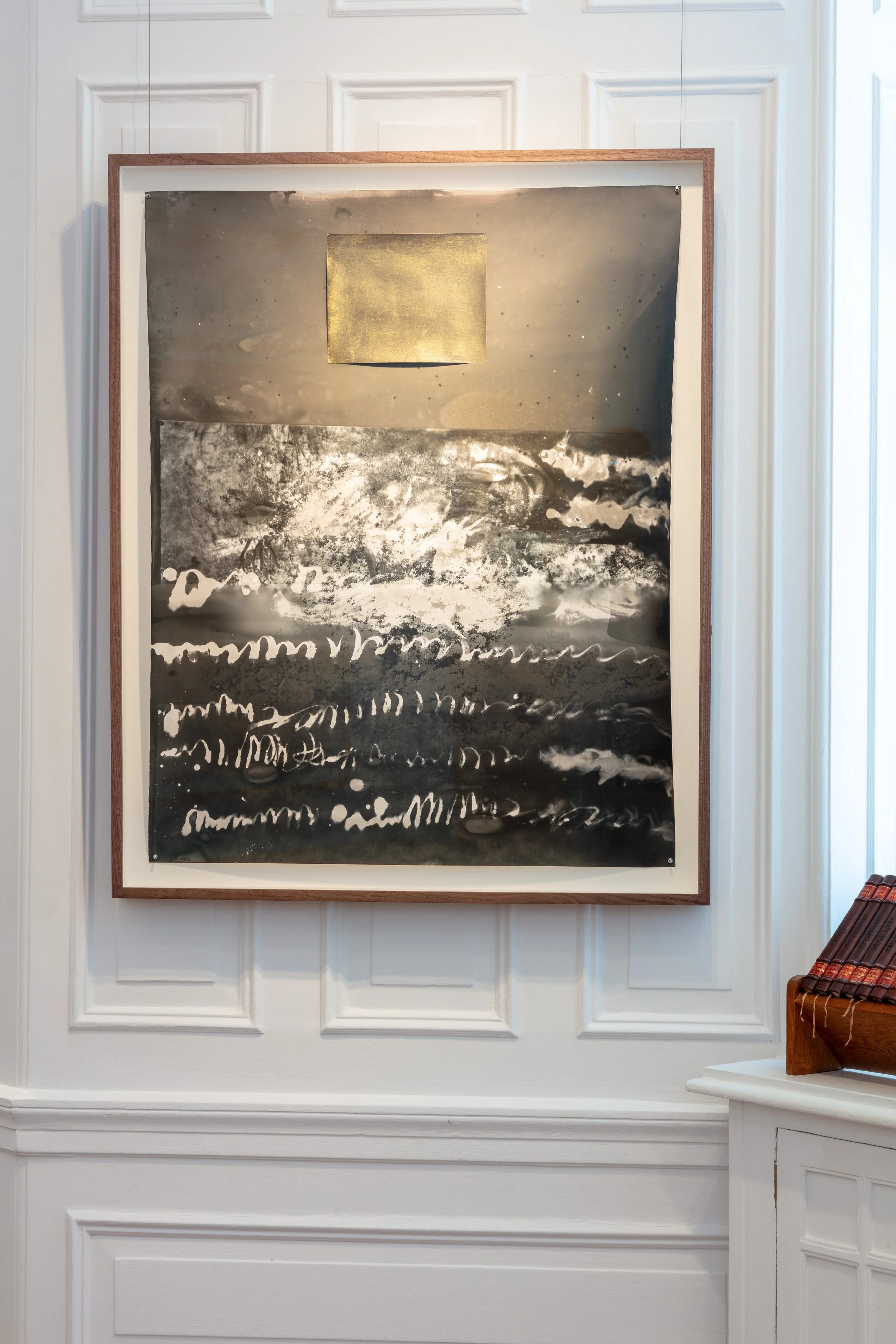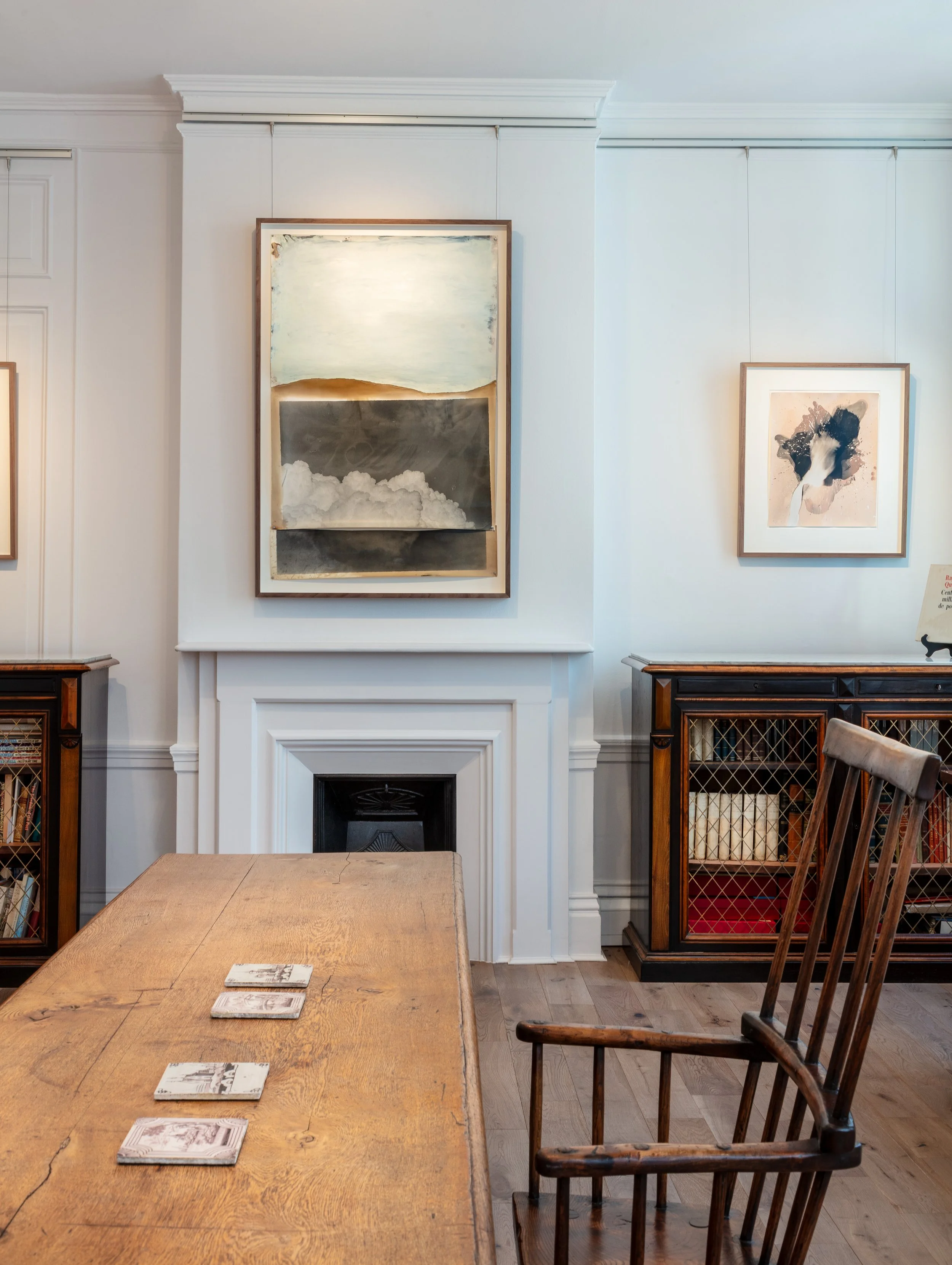
Jeff Cowen, P43, 2020 - 23. Silver Gelatin Print and mixed media, 127 x 82cm. Edition of 1.
Jeff Cowen
En Plein Air
From 17th March 2026
at Sotheran’s Athenaeum
CLICK HERE to request the exhibition catalogue
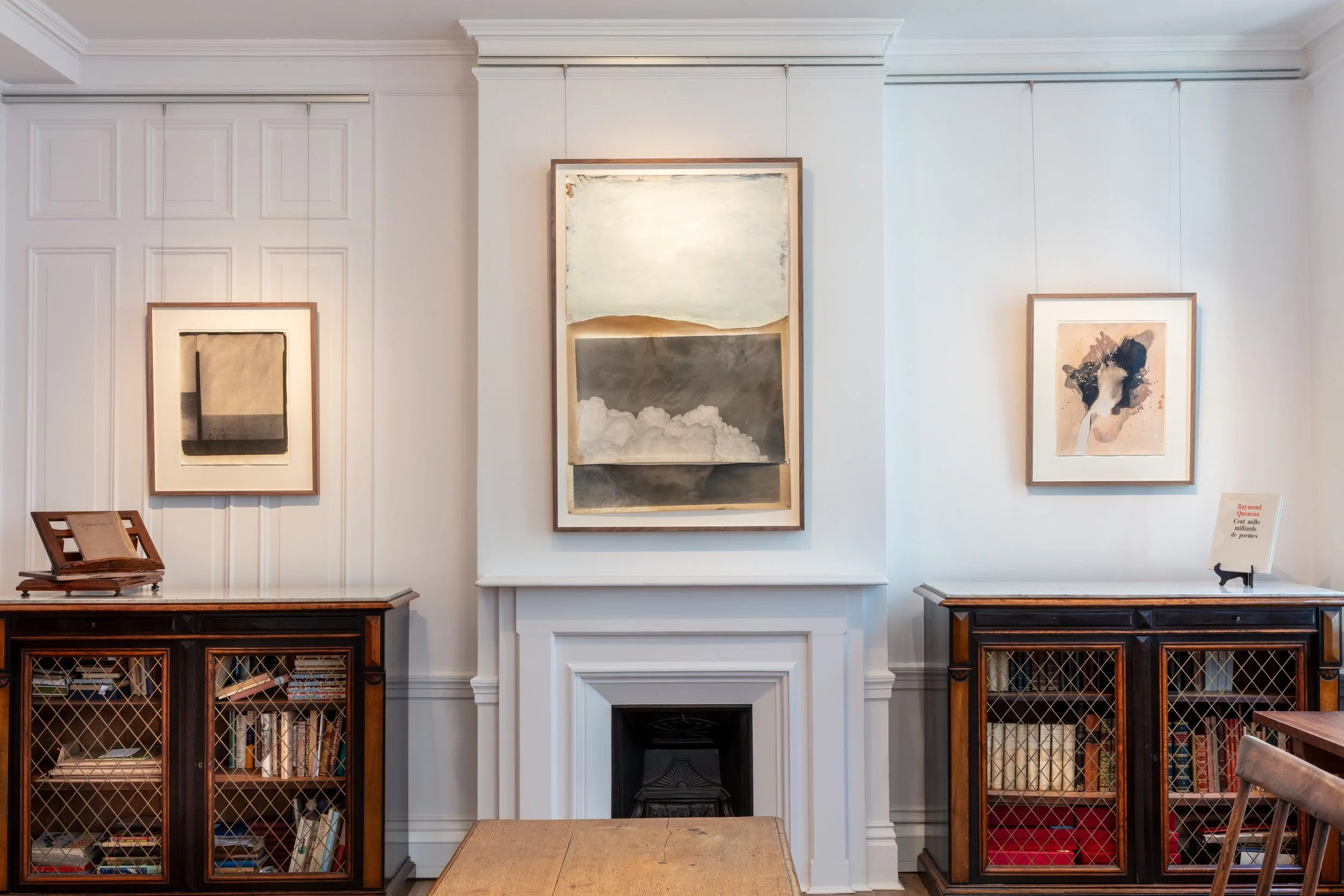
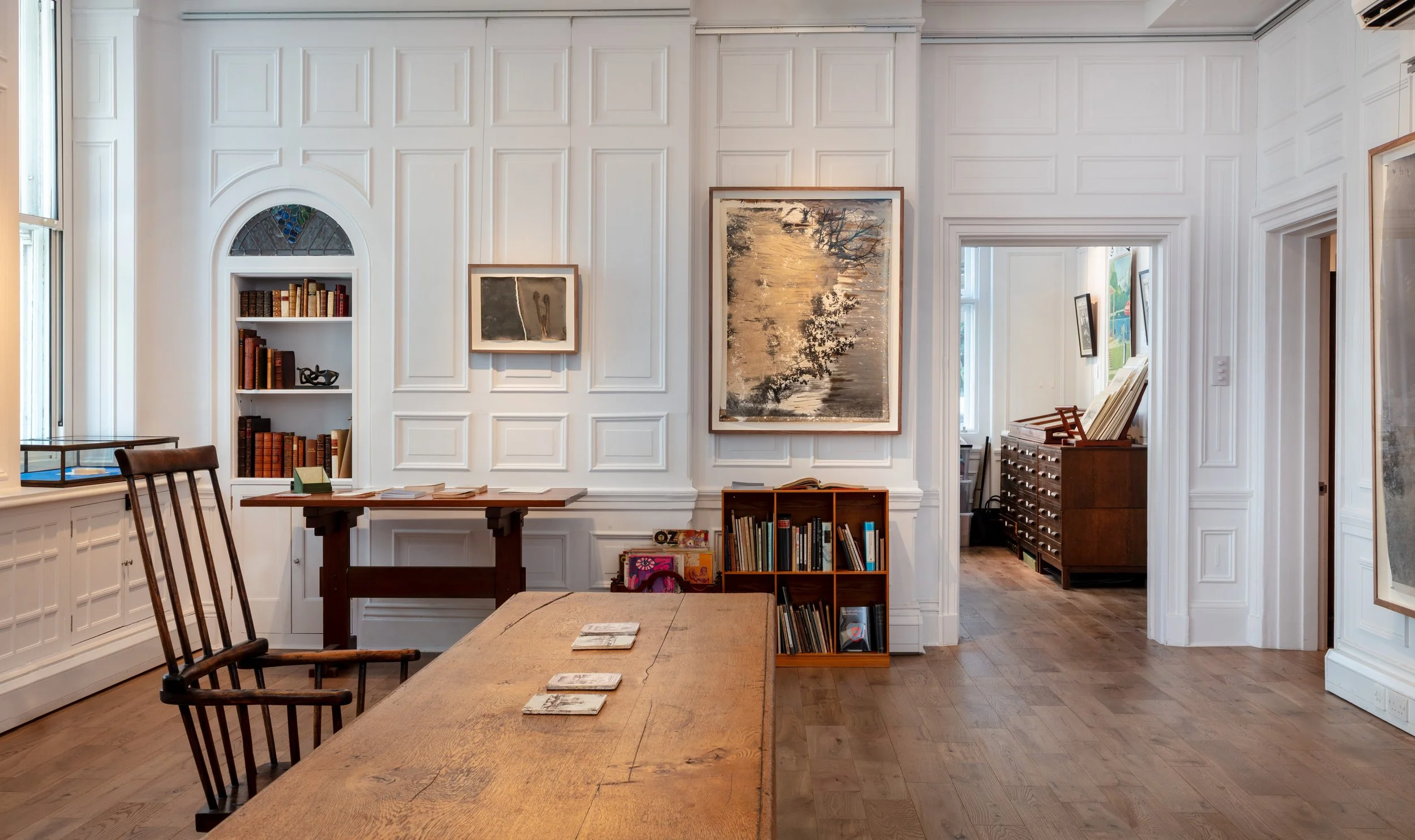
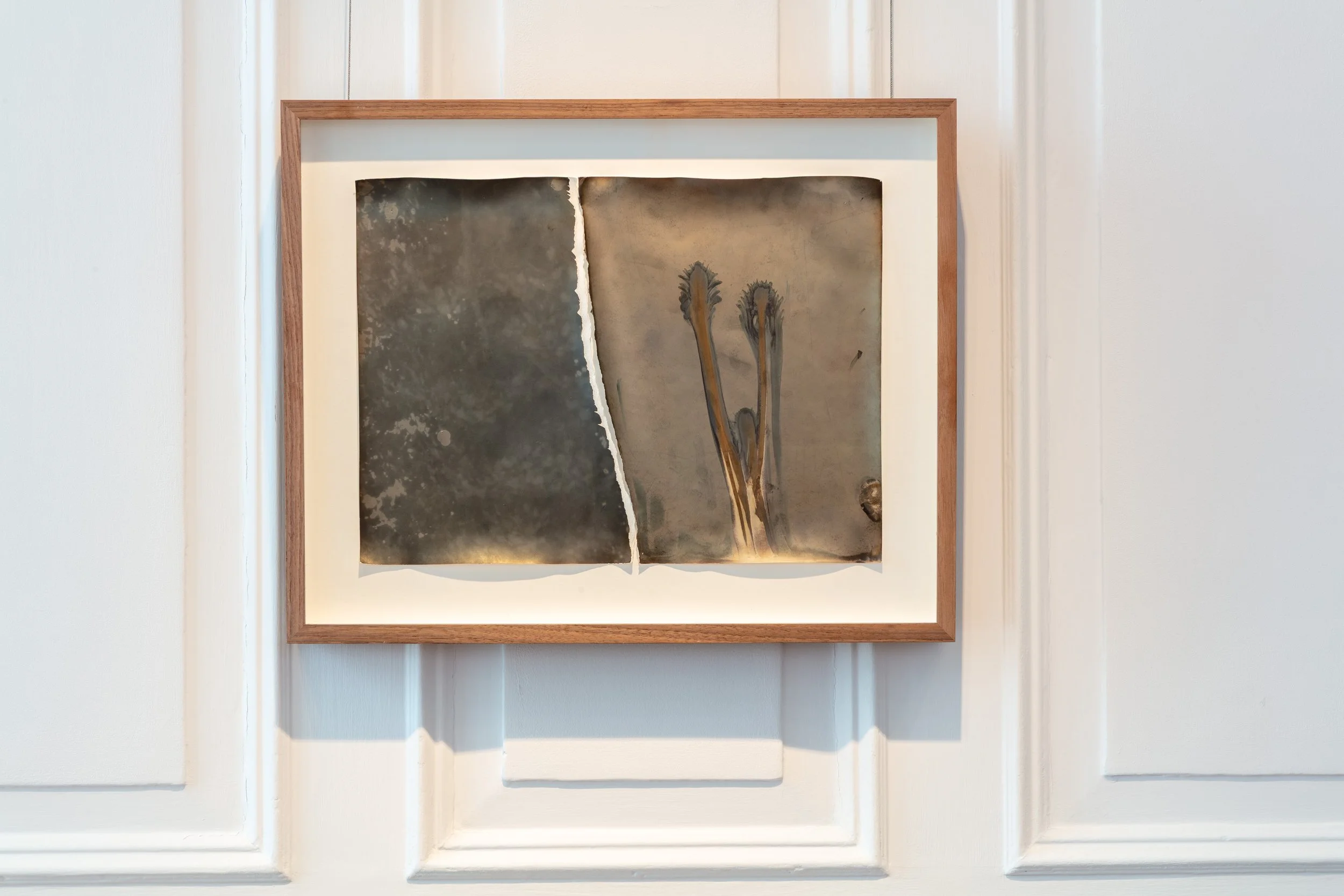
En Plein Air is the second exhibition I have presented of works by Jeff Cowen, and while its contents are unmistakably his, in idea this is a very different proposition. Asemia, presented two years ago at CASSIUS&Co., brought together a group of works that were essentially illegible, both in terms of their subjects and the techniques by which they were made, and which were driven at least in part by a desire to put both the artist and the viewer in a state of unknowing, of sensually engaging with pure material. Now, on the other hand, we have a group of eight works which are fundamentally readable, which take and transmit a clear subject: the landscape of Provence. Indeed, other works from this series were recently shown in Amsterdam (at the Van Gogh Museum and the Huis Marseille concurrently), under the title Provence Works. So no secret has been kept here.
The landscape of Provence is heavily freighted with the history of art. Does there exist a better painted geography? I am thinking of Cézanne, whose near-religious devotion to the Montagne Sainte-Victoire is the basis of so many of his late paintings, and which is here also one of Cowen’s subjects. Likewise the olive trees and cypresses made maniacal by Van Gogh, and the intensity of blue in the sky and the sea that a young Yves Klein decided to dedicate his artistic life to: lying on the beach at the age of nineteen, before coming up with his monochromes, he signed the firmament with his finger.
While I hesitate to describe Cowen’s works as photographs (they exist in a category of their own), they do at least begin with a camera, and are printed in black and white. This both links and separates his work from those that have come before, whose artistic renewal catalysed by this landscape has typically been based on its colour. I am thinking of Van Gogh’s Arles yellows, Klein’s blues, and the work of Henri Matisse, perhaps the greatest colourist of the last century, who settled in Nice in large part because of the breadth and intensity of its palette. Cowen, in spite of his medium, does not neglect colour: a single touch of blue applied to P206 recalls Klein without filling a whole canvas with it, and elsewhere washes of chemicals and oil paint bring these photoworks out of the realm of the monochrome. Further, Cowen’s use of the photograph as the basis of these works provides a specific link to the Provencal art of the past: these are works wrought entirely of light, and what is colour without the luminosity of the sun?
This point is archetypal of Cowen’s engagement with the art of this landscape: he is informed but not weighed down by it. He has taken the same objects: the mountain, the cypress trees, the blue, and worked on them until they are his own. With his camera and his alchemies, his collage and his writing, he has found his own way to sign that sky. And this, I think, is what he has made of it:
In Provence there is no respite from the sun, it is as relentless as it is glorious and cruel. It appears in the work P105 as a heraldic square of solid gold, and in every work here as both the means of the images’ existence and their ultimate lord and master. When a cloud appears, it is turbulent, a growl that it seems to break the very fabric of the paper it appears on. Matter, all of it here, is incredibly intense, furious, visceral. If we describe the treatment of the tree in P73, it would be as though the artist has set it on fire.
One would have thought that an artist who was born in New York, who worked there through the 80s as a cab driver in a tough part of town, and who has lived for the last two decades in Berlin, a city I associate with graffiti and thudding nightclubs, would move to Provence for its natural peace and tranquility. If these works are expressions of something turbulent, is that because that is the impression this landscape has made on the artist, or rather that the landscape has served as a platform for the expression something that was inside him? I don’t know the answer to this. What I do know is that this exchange of impression and expression, modulated in the artist’s studio, provides a further link between Cowen and all the artists that have engaged with the landscape of Provence since the late 19th century, and which in all likelihood will continue to be wrangled with by artists of the future that find themselves under that sky, among those cypresses, at the foot of that mountain. All we have as viewers are the works, their sublime materiality, here given to us without sentiment or biography. A curious work, a favourite here, is P145, a kind of photographic Mondrian of the sea. It is an impression of the Mediterranean made by light through a lens, played with in the studio, and signed, like a cave, with the handprint of the artist. All we know is that the artist was here, in this place, and that this is what he made of it.