Polys Peslikas
Paintings and Drawings
16th April - 28th May 2026
CLICK HERE to request the exhibition catalogue
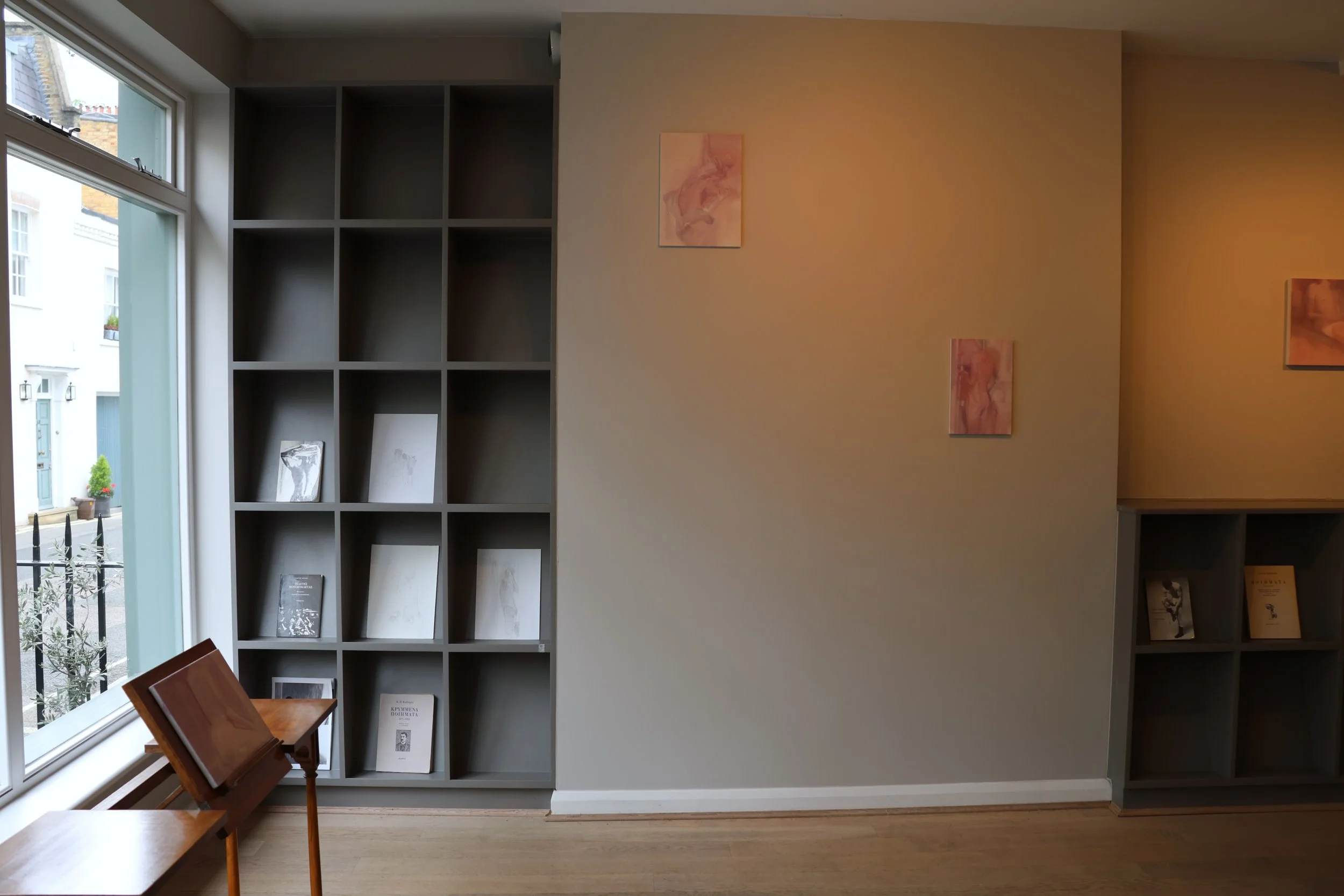
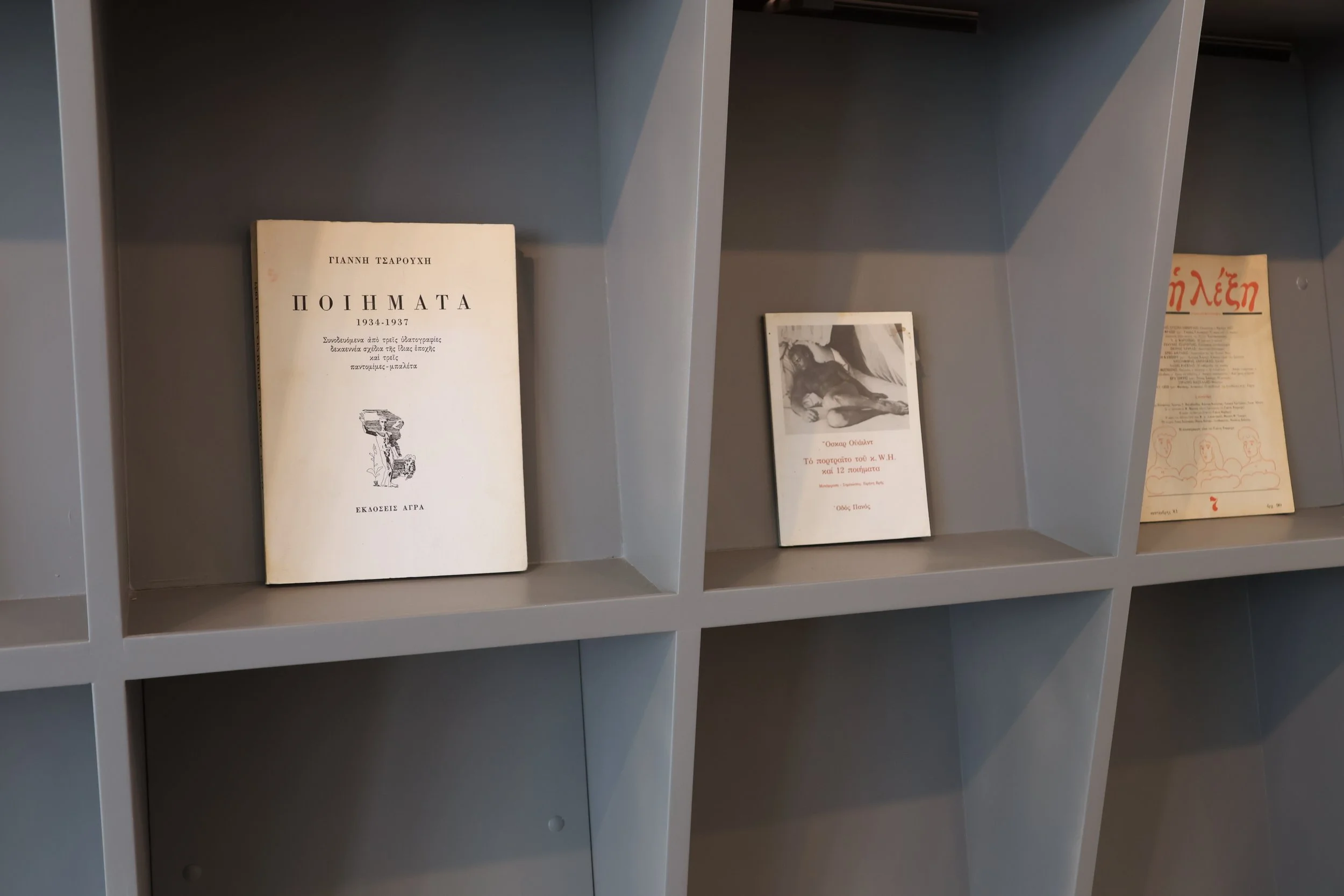
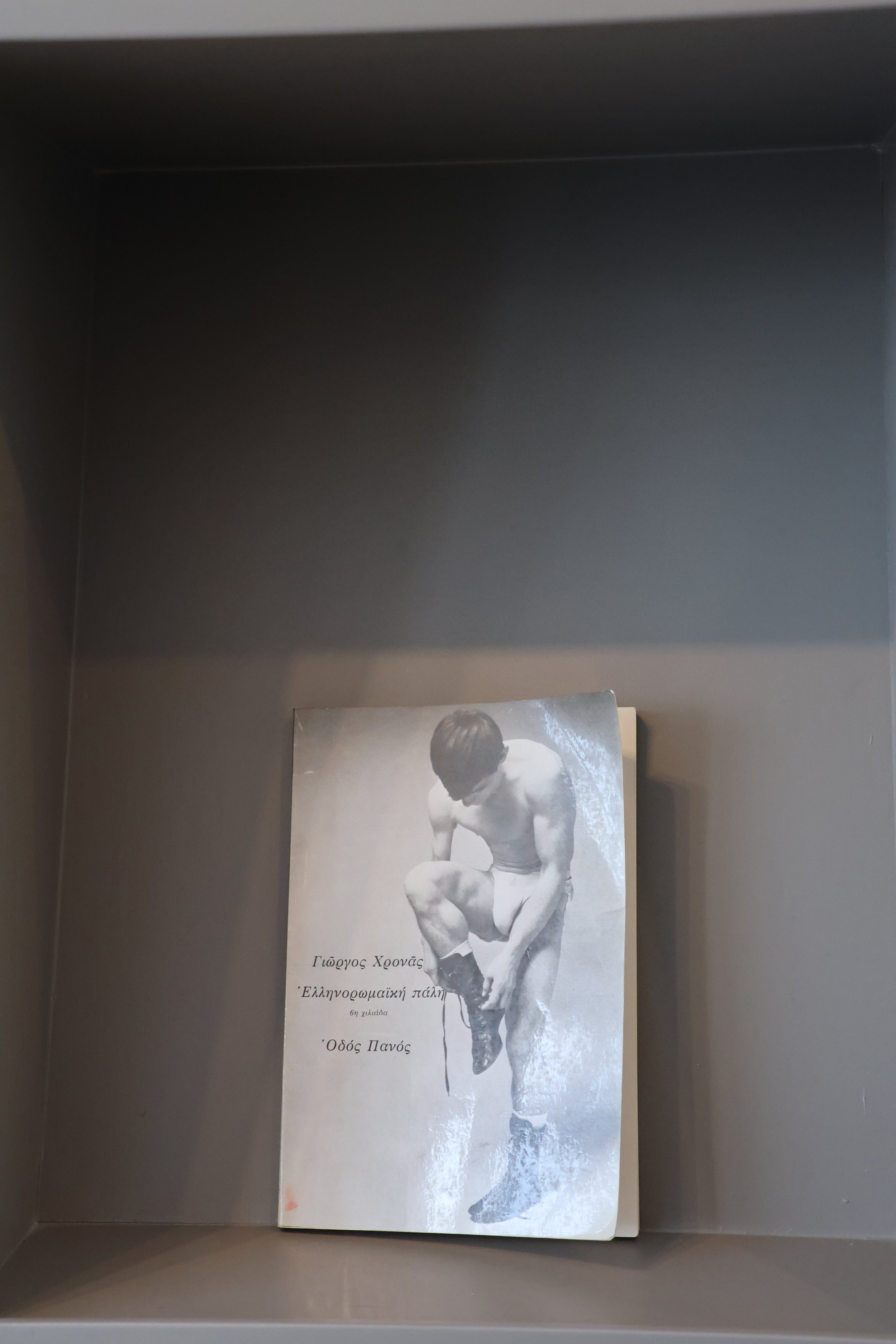
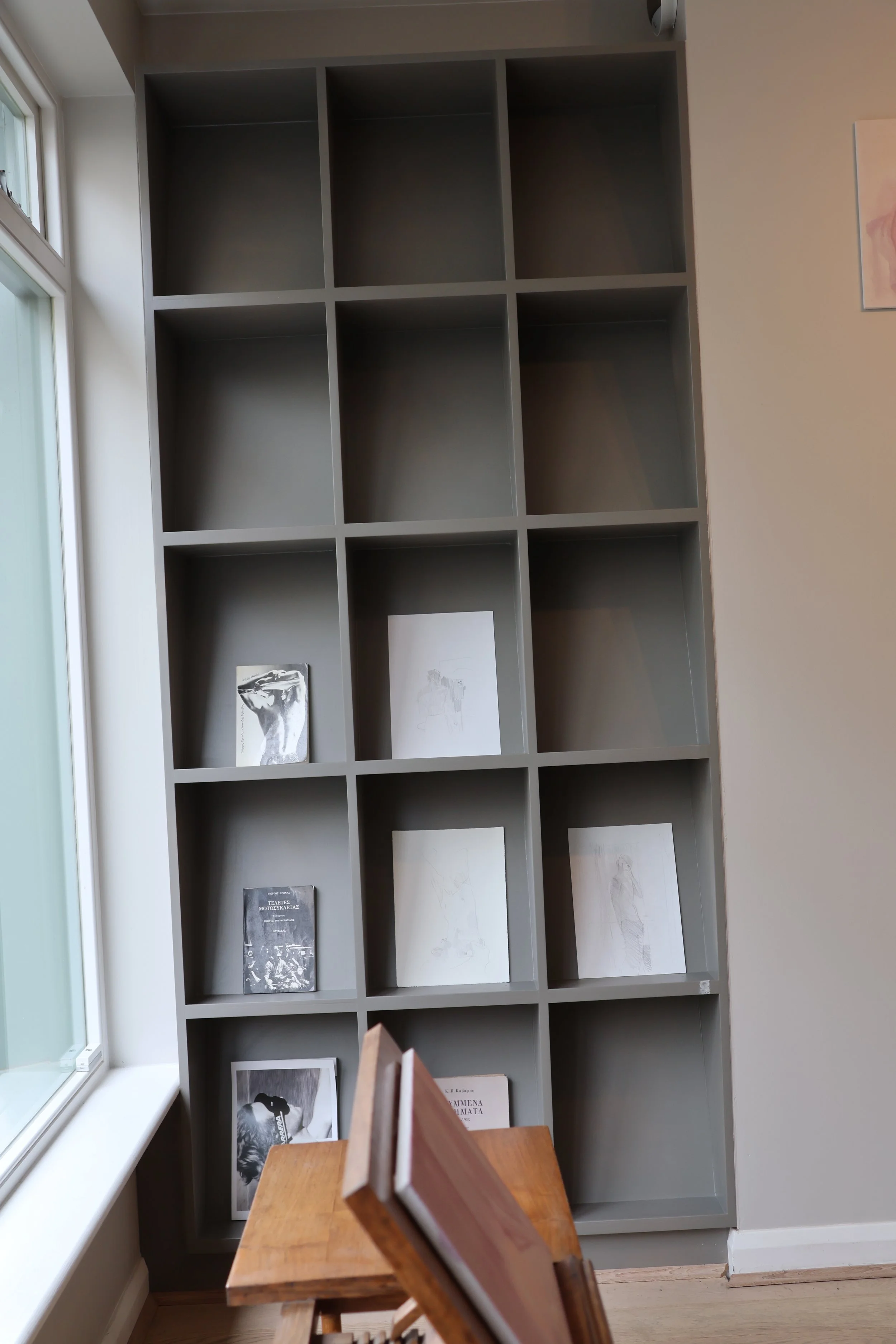
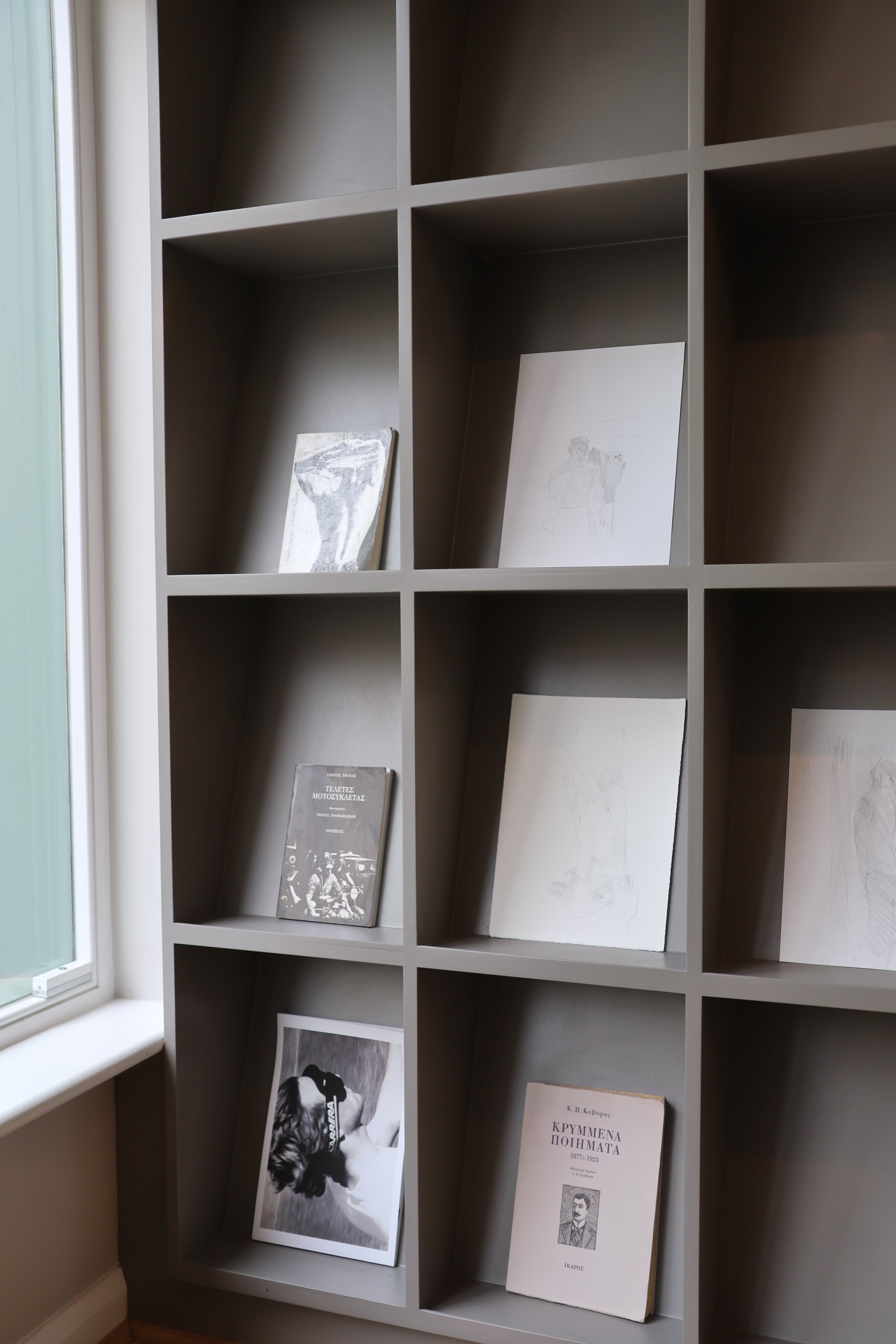
He lives in a book shop. At least, it looks like one from the outside: a converted commercial unit on a busy market street in London, the front room of which has been given over to the artist’s extensive library. For someone who spends a lot of time sitting in his own gallery-bookshop, and who had come without knowing quite what to expect, this was a curious cover to judge.
I had known Polys Peslikas for years without knowing he was an artist. He was a regular visitor to CASSIUS&Co., always polite, always kind, the rare type of person who comes to almost every exhibition and has interesting things to say about them, but almost nothing about themselves. It was only the intrigue that laced our conversations that prompted to me to ask what he did, and then if I could visit his studio; I had no idea what his work would look like.
This was early 2025, and I was in a rut of feeling about Contemporary art. While I was and remain obsessed with the work of the handful of living artists I show, it had been a long time since I had found someone new to be excited about. This was an unfortunate position to be in as the owner of a gallery technically dedicated to showing Contemporary art. I tried to solve it by presenting a series of more historically-inclined exhibitions, but I missed that feeling of being stirred by something fresh, of being able to have a collaborative relationship with an artist, and even, to have the privilege of being present at the moment of making. So, when I turned up at Polys’ house and saw all those books through the window, what had begun as mere curiosity started to crystallise into something like hope. Then he opened the door and led me into his studio.
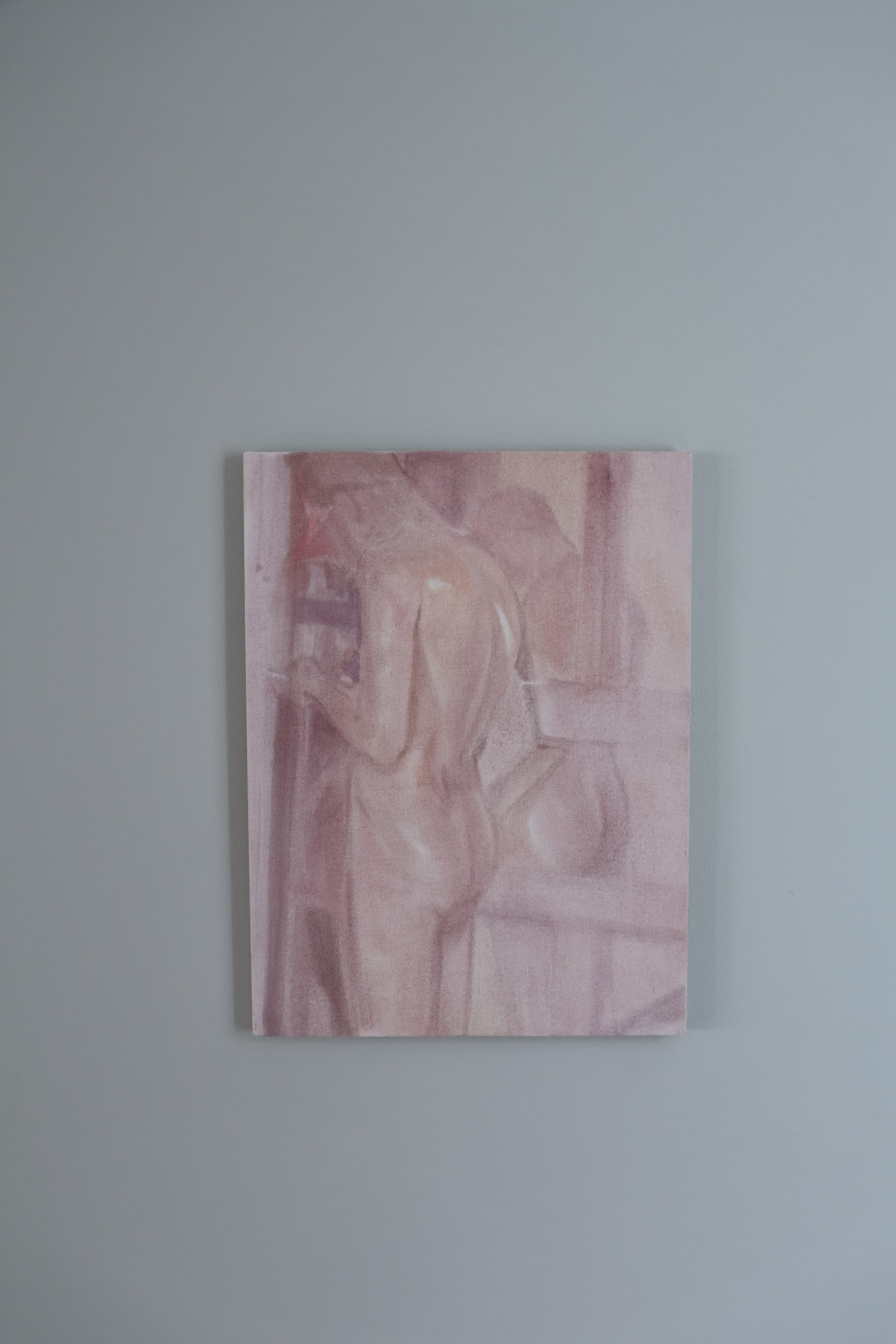
It was neat, with crisp white walls and crisp white paper stretched over well-designed wooden tables. There were stacks of archival boxes in one corner, whose contents were not, I don’t think, revealed to me on that first visit. The walls were lined with rows of canvas-boards, each with Egyptian cotton stretched tight across them. There were no spills of paint, quantities of ash, jars of turpentine made muddy with use; rather cleanliness and clarity, like being inside a fresh white piece of paper. There were images all over the walls.
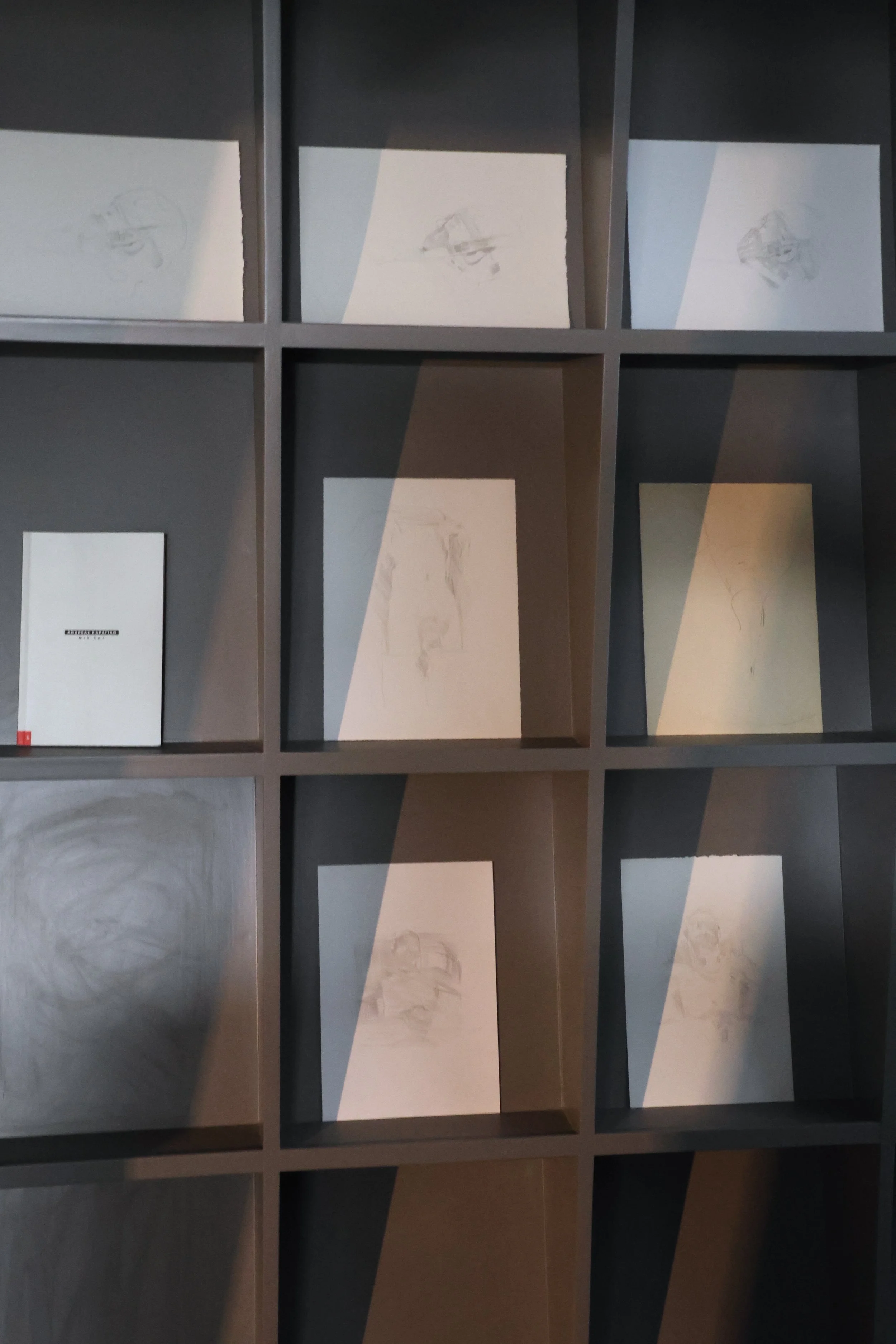
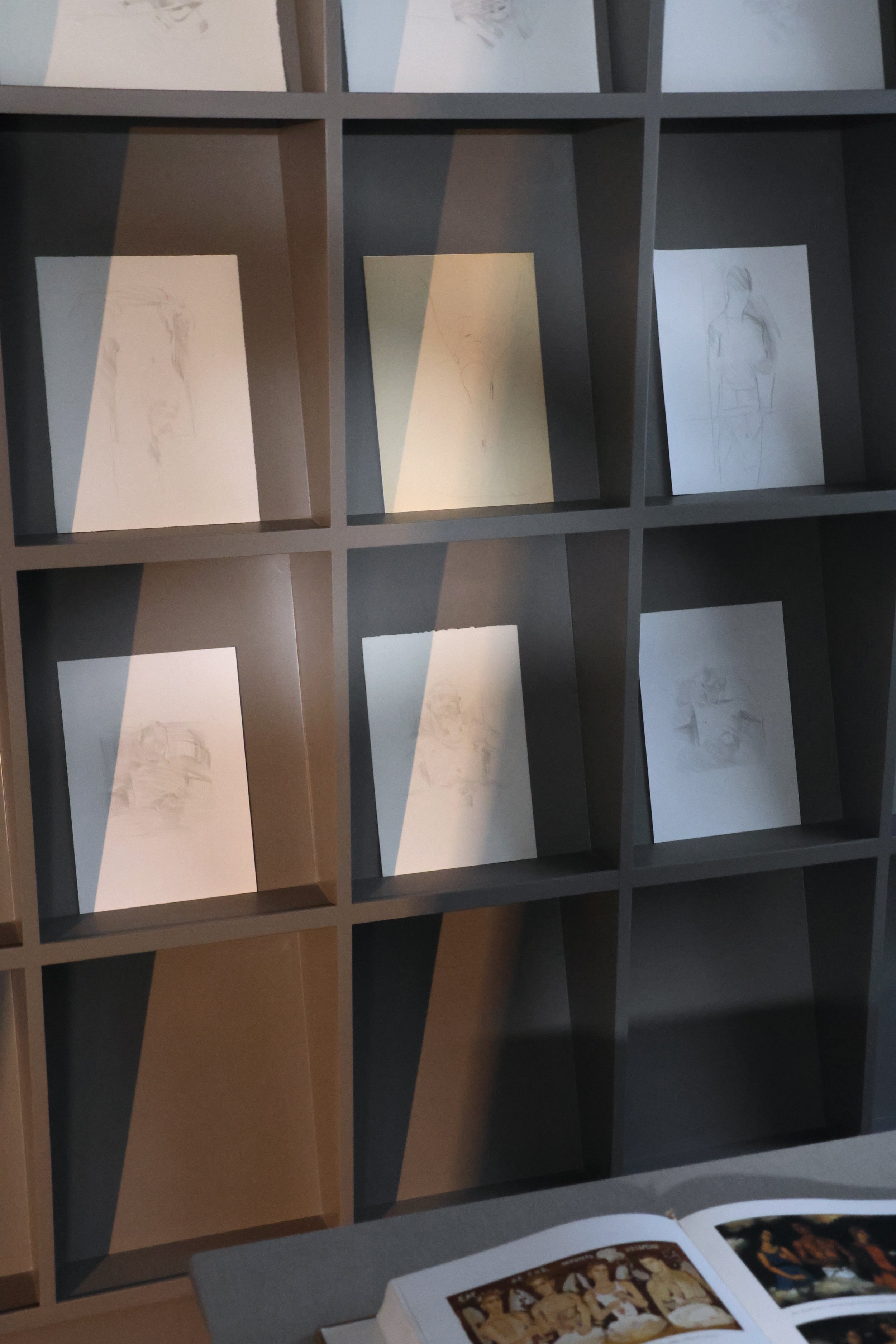
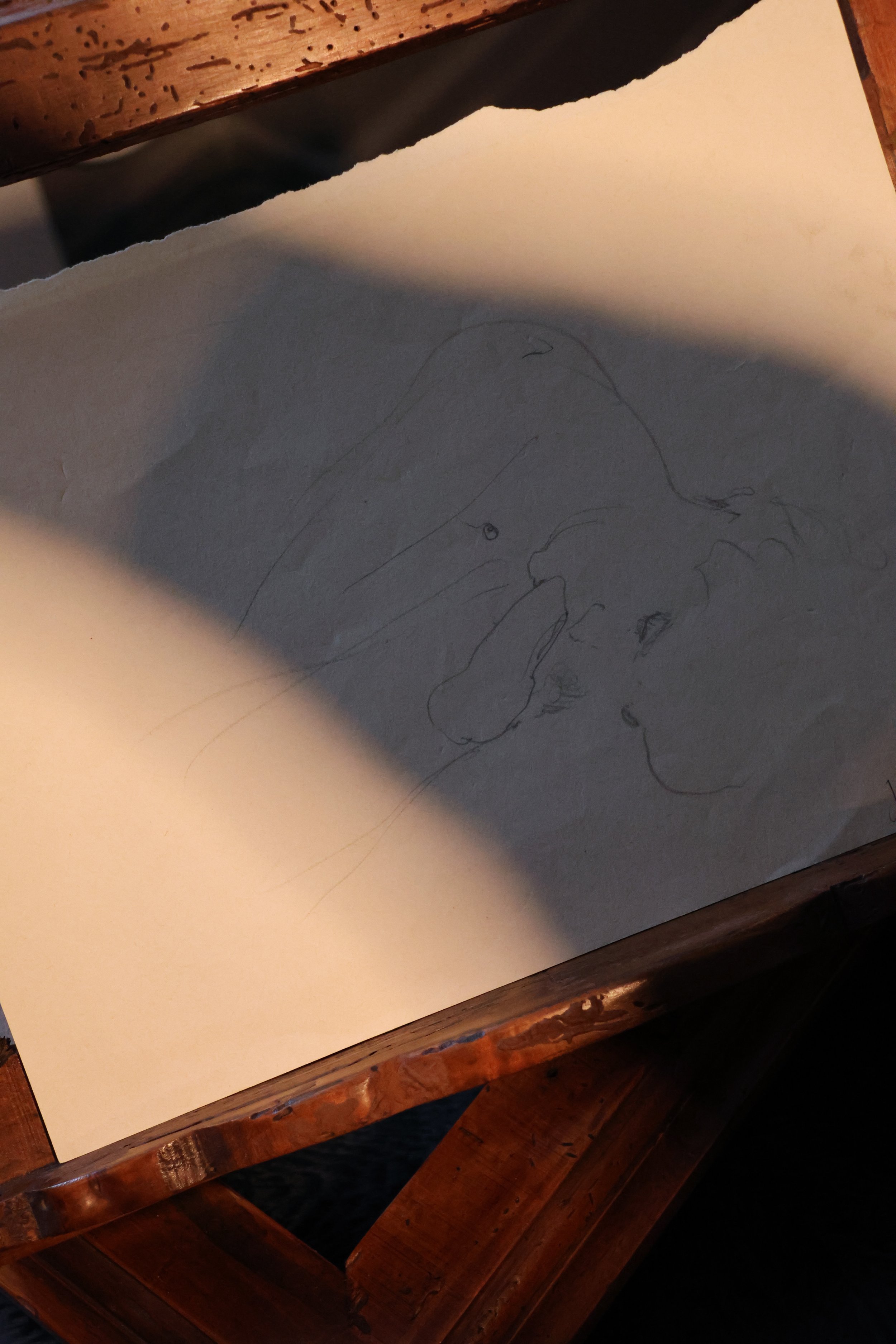
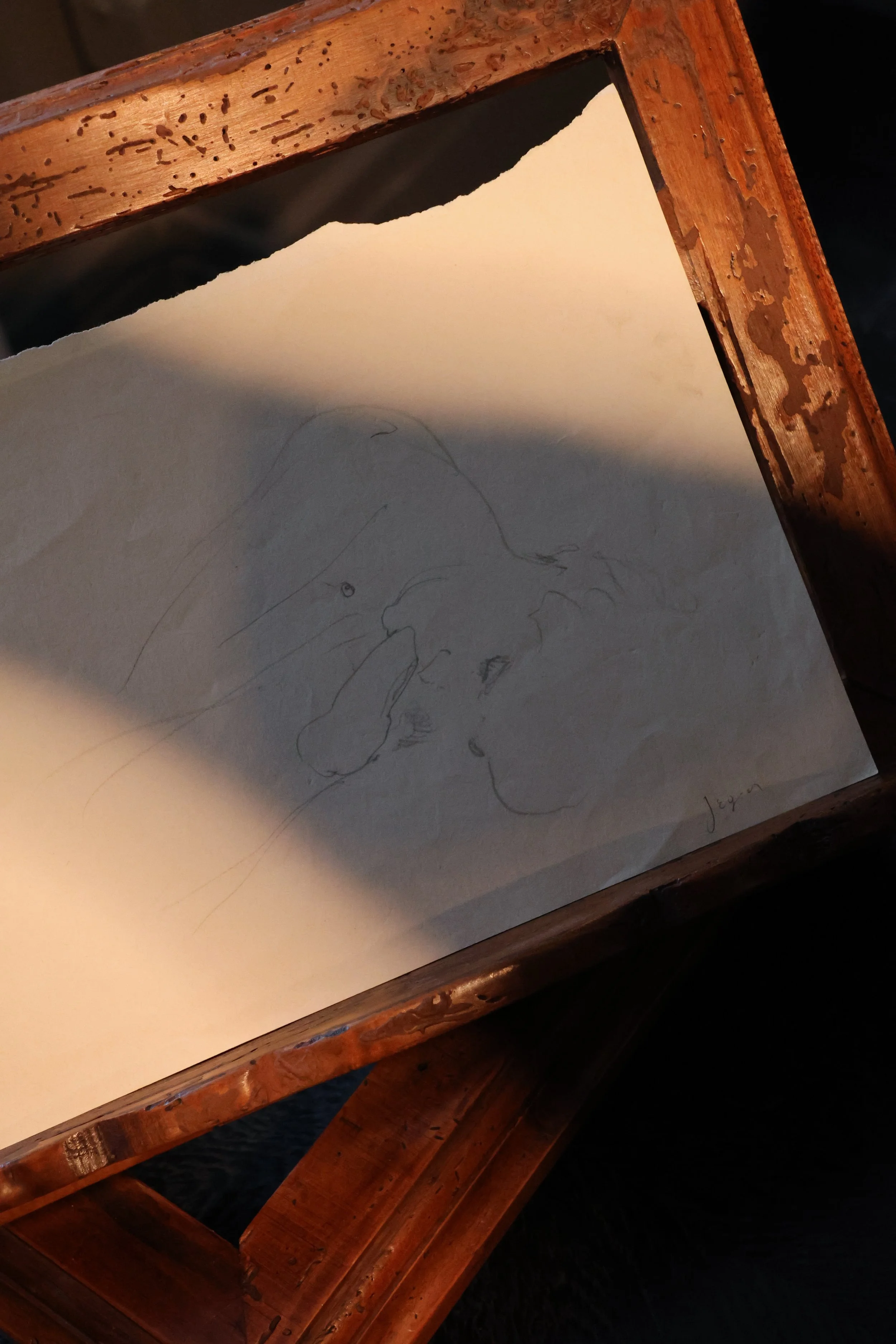
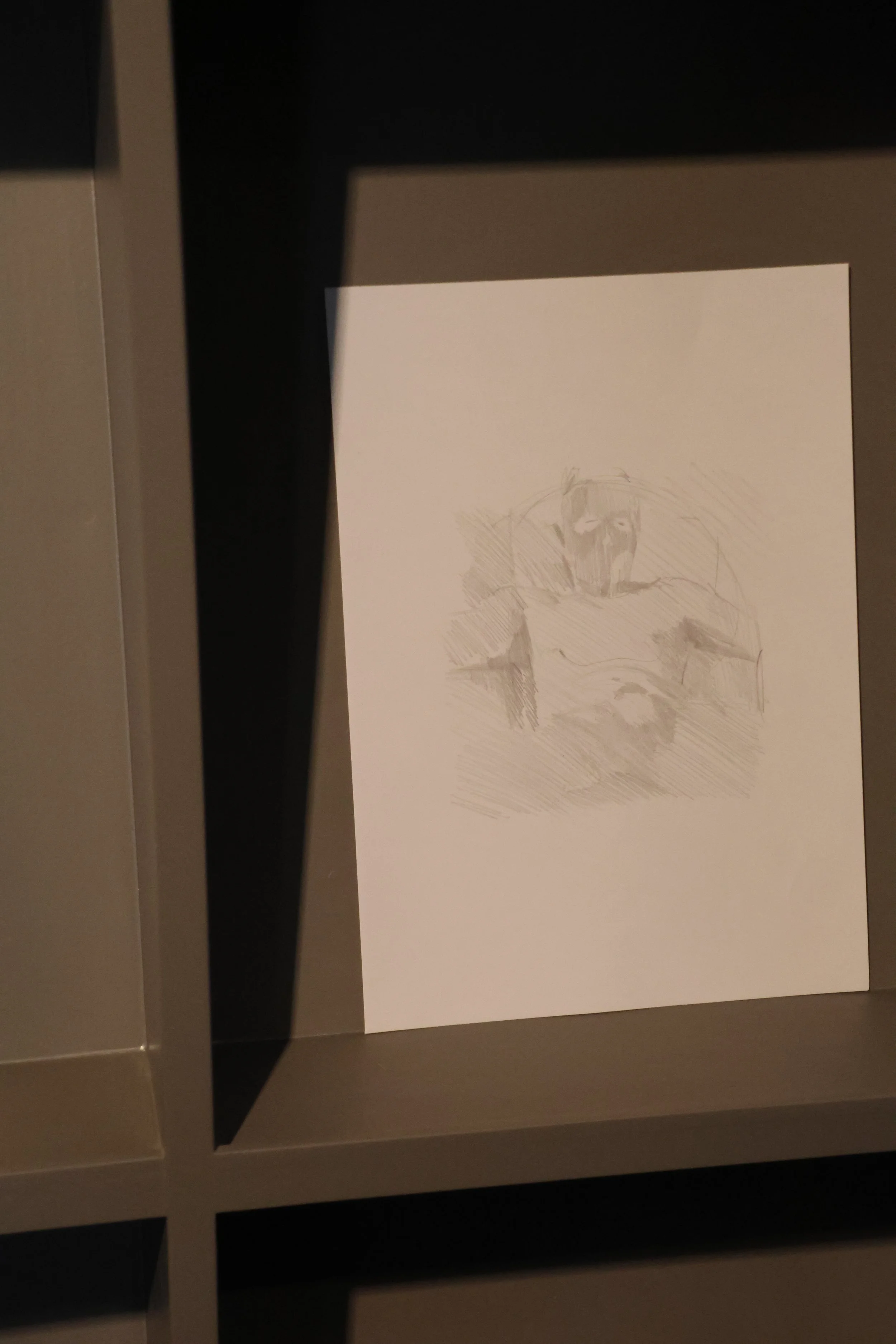
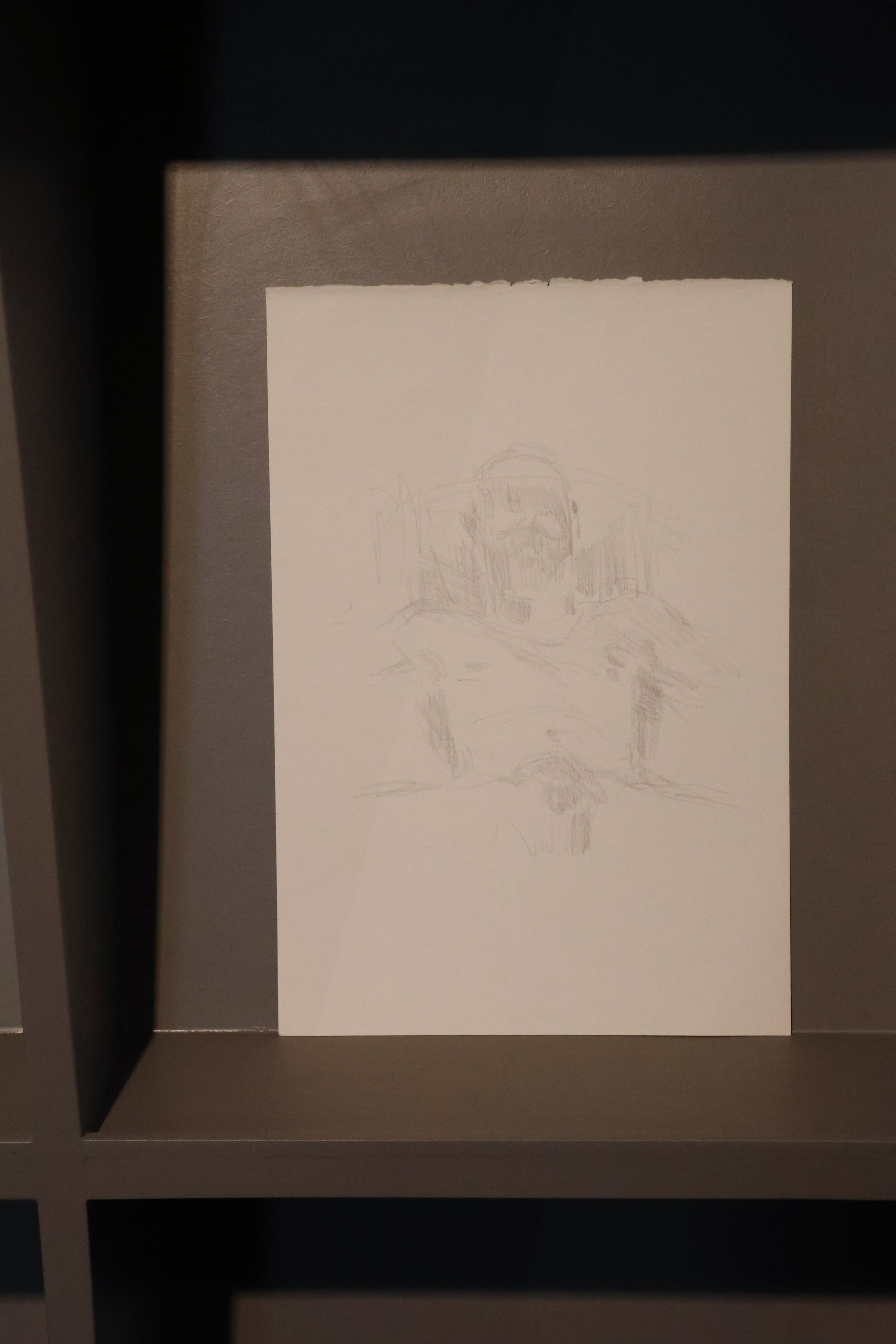
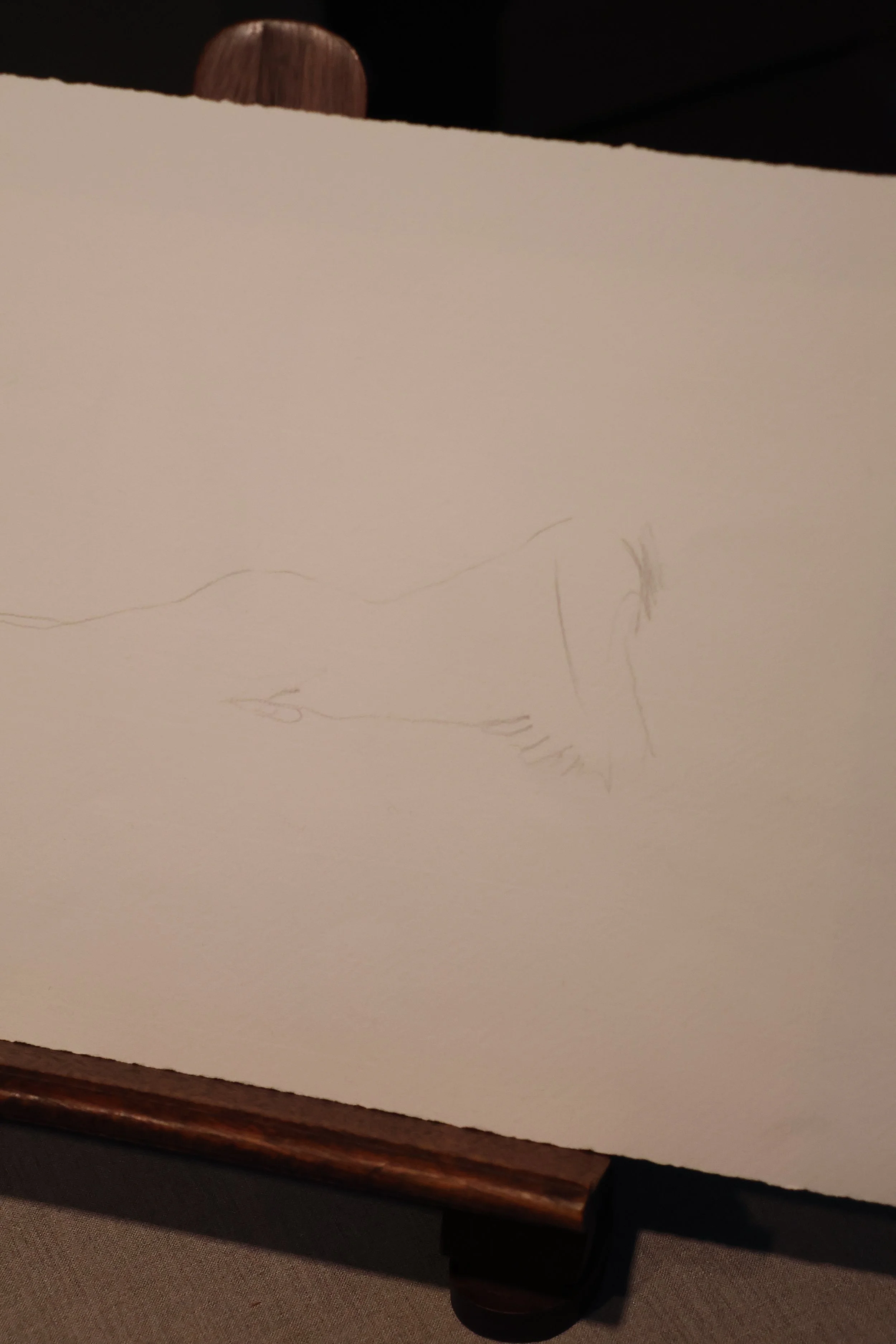
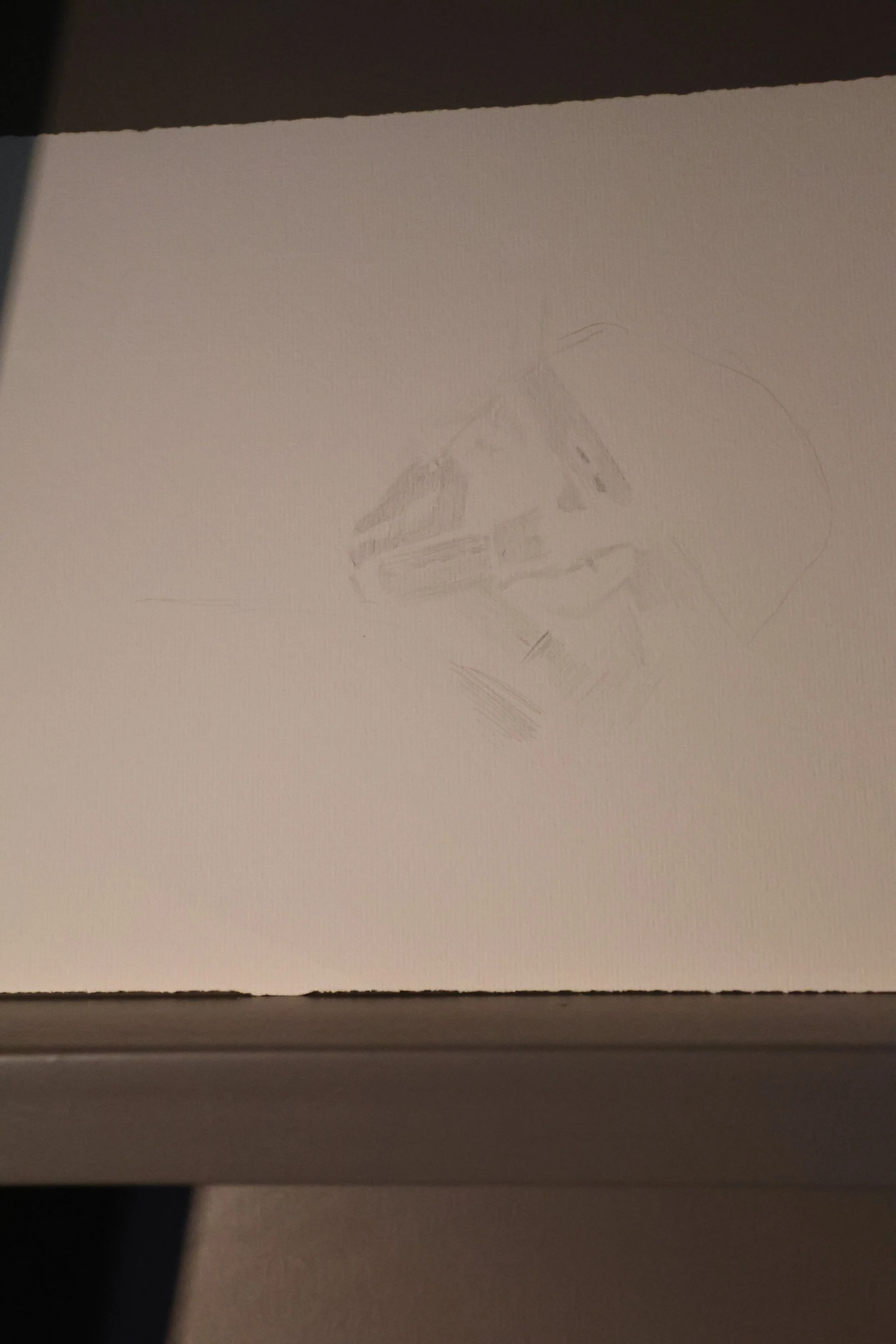
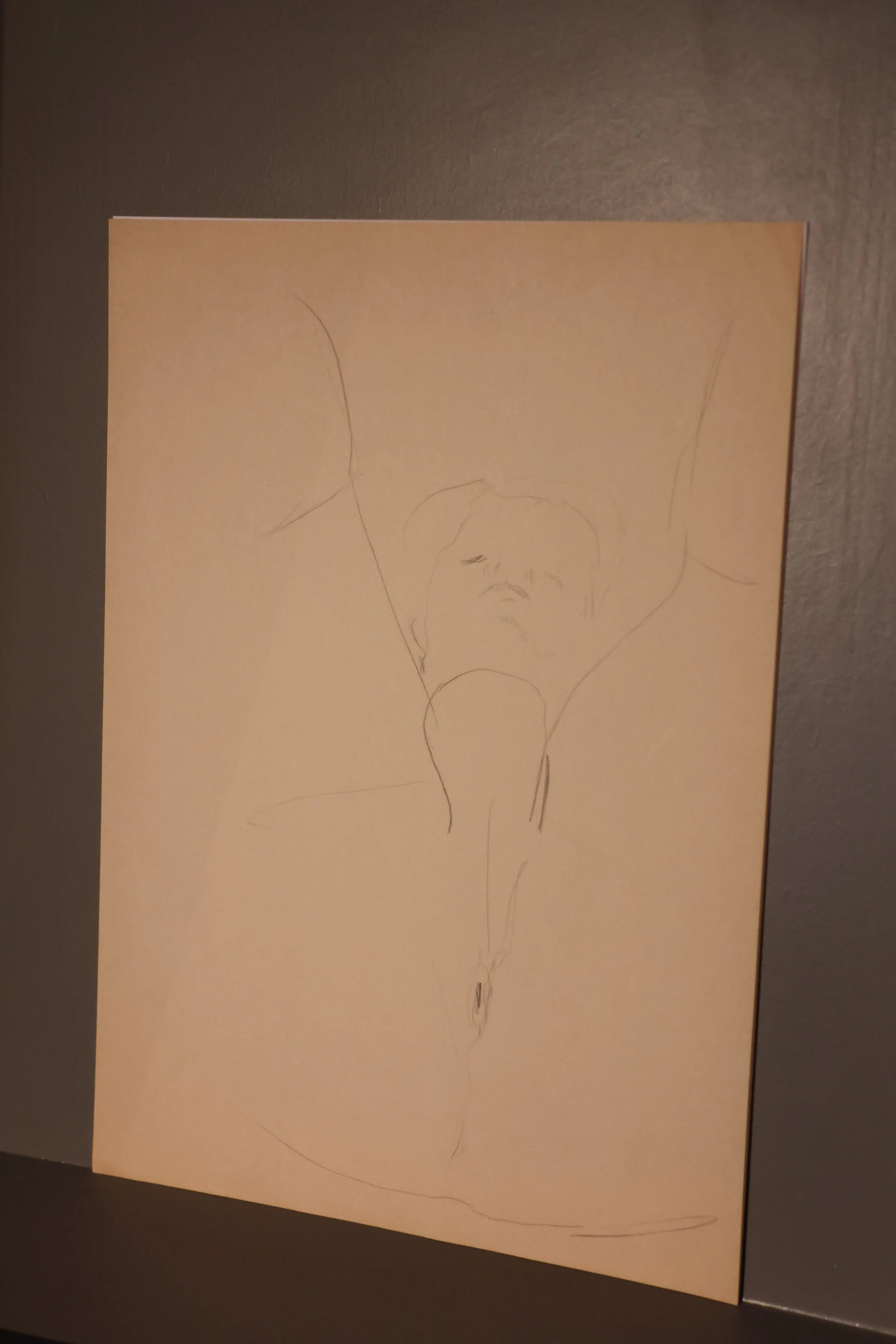
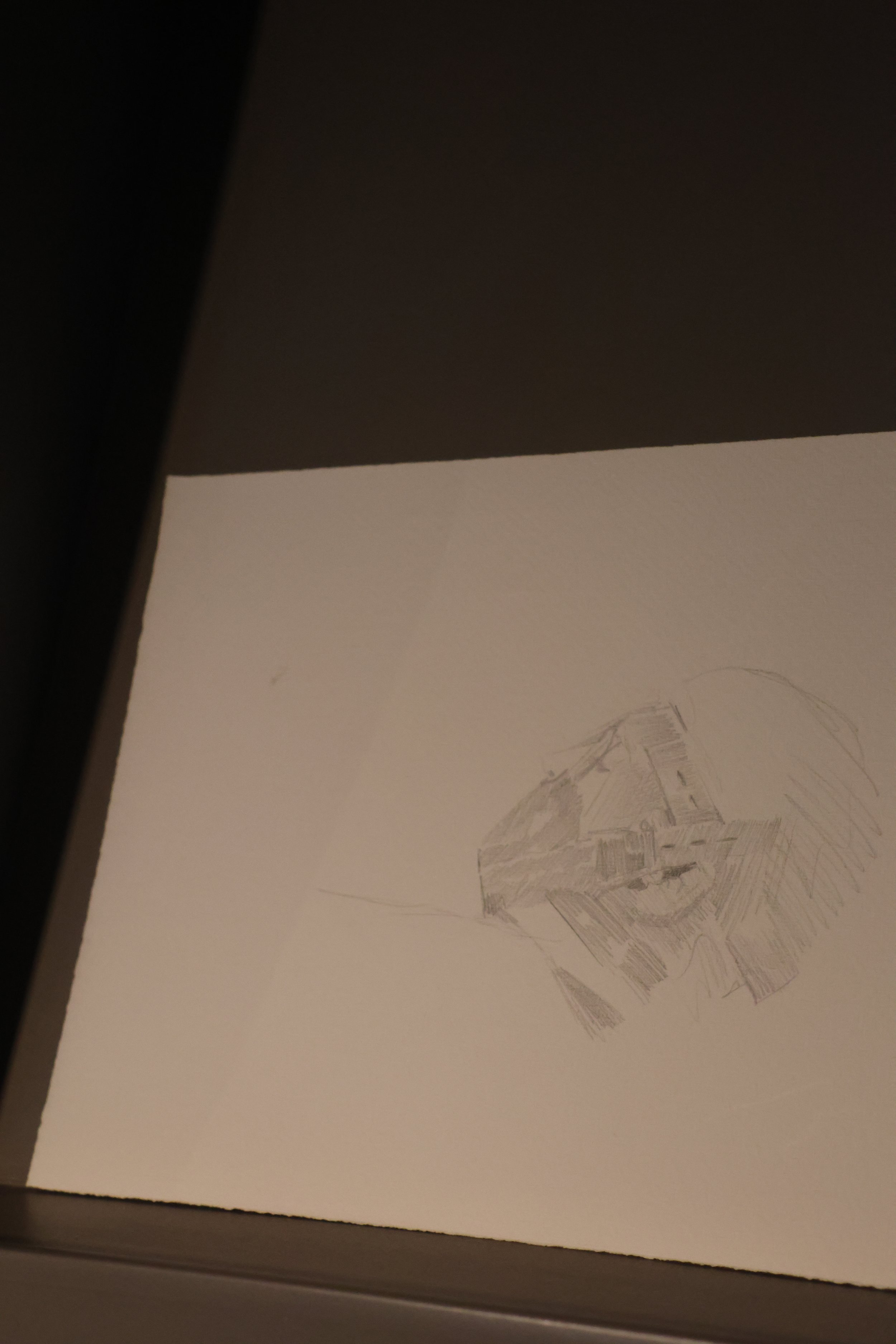
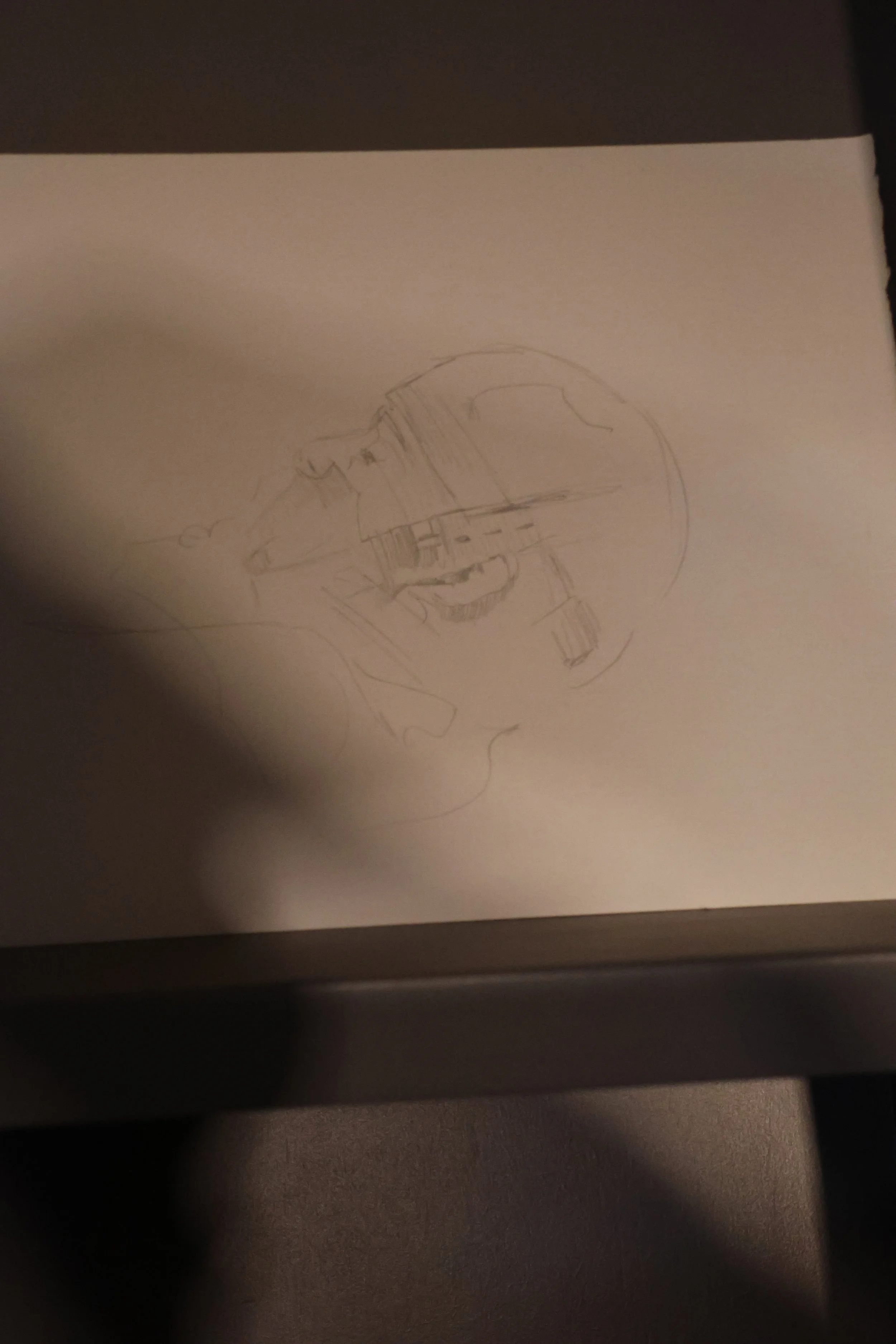
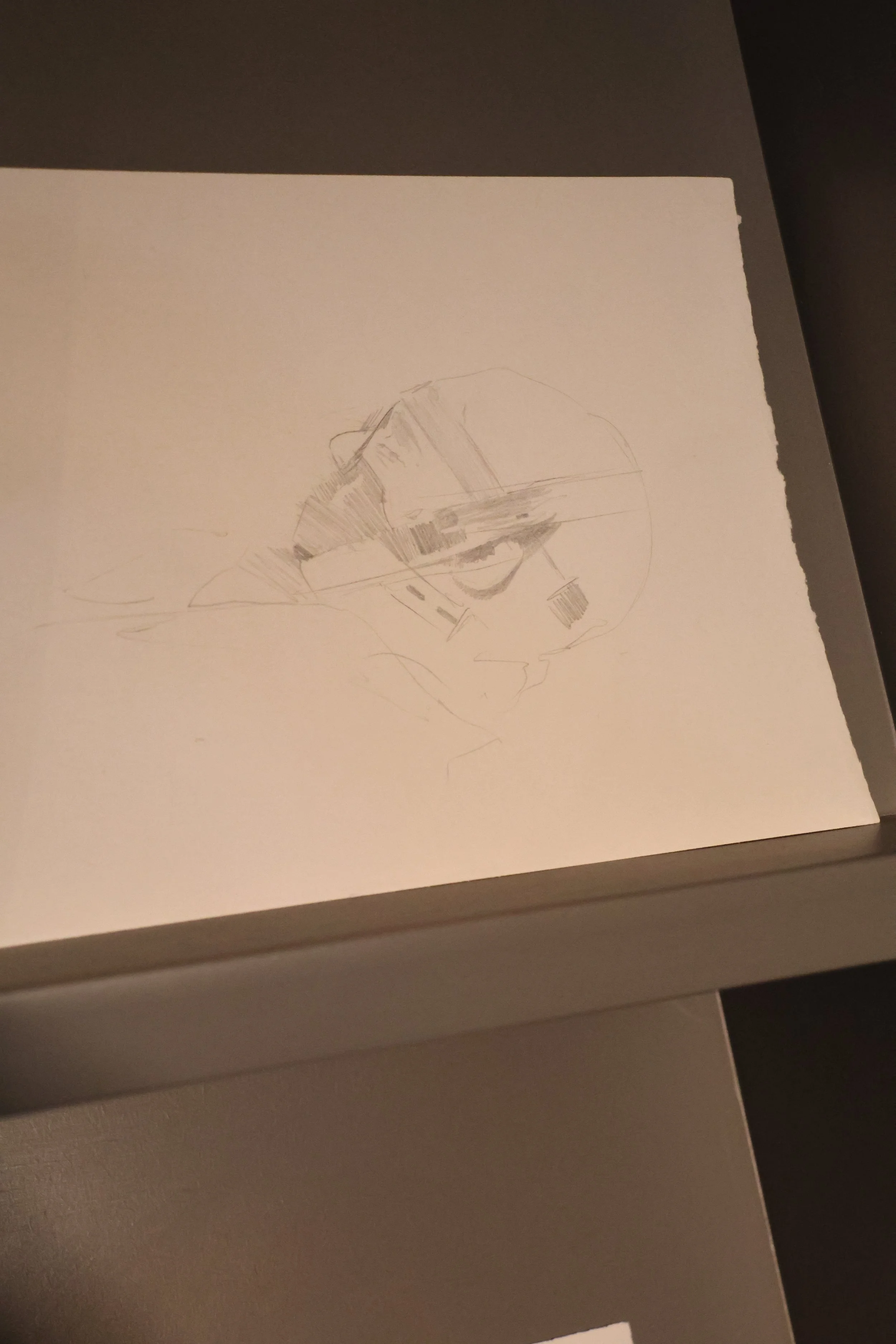
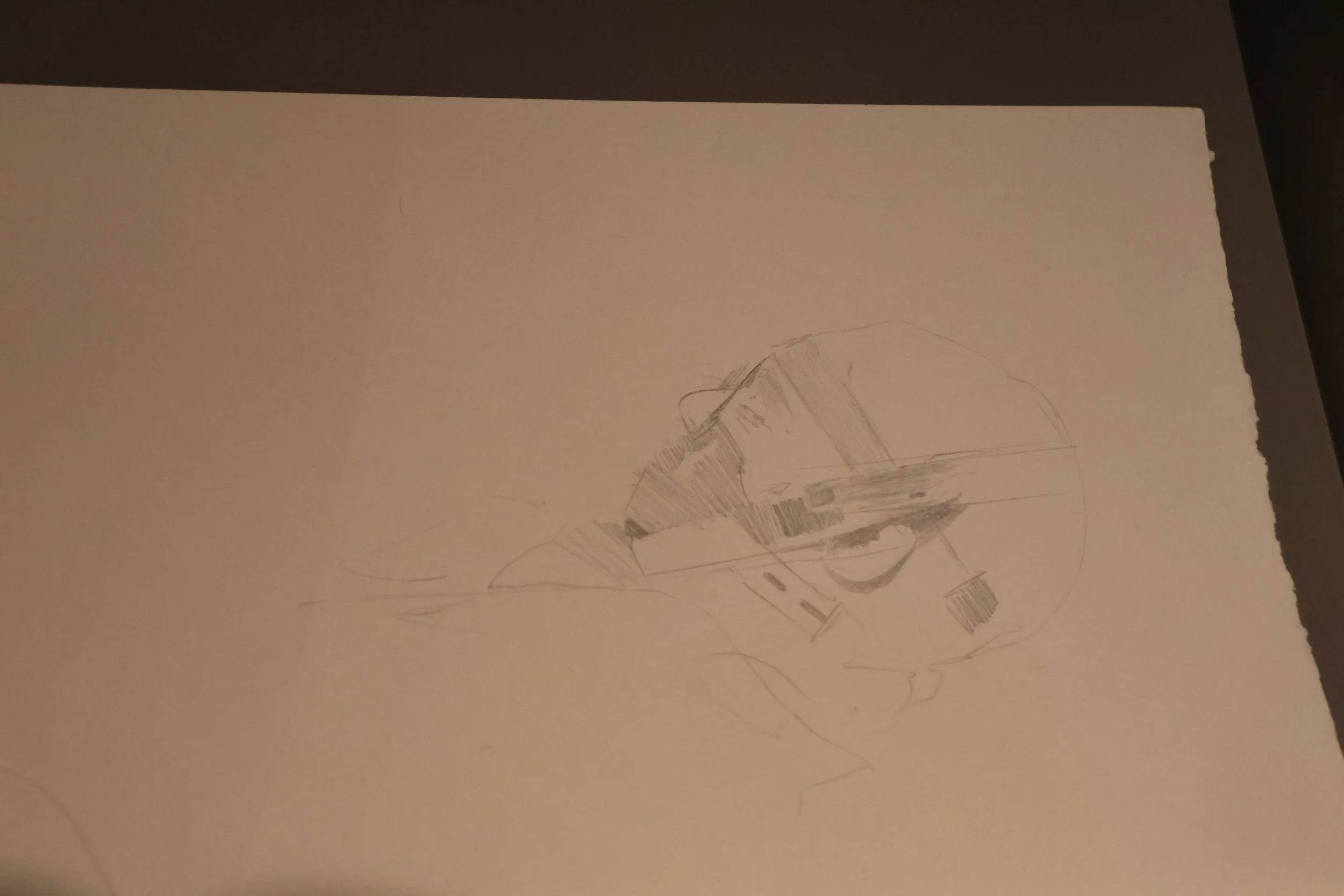
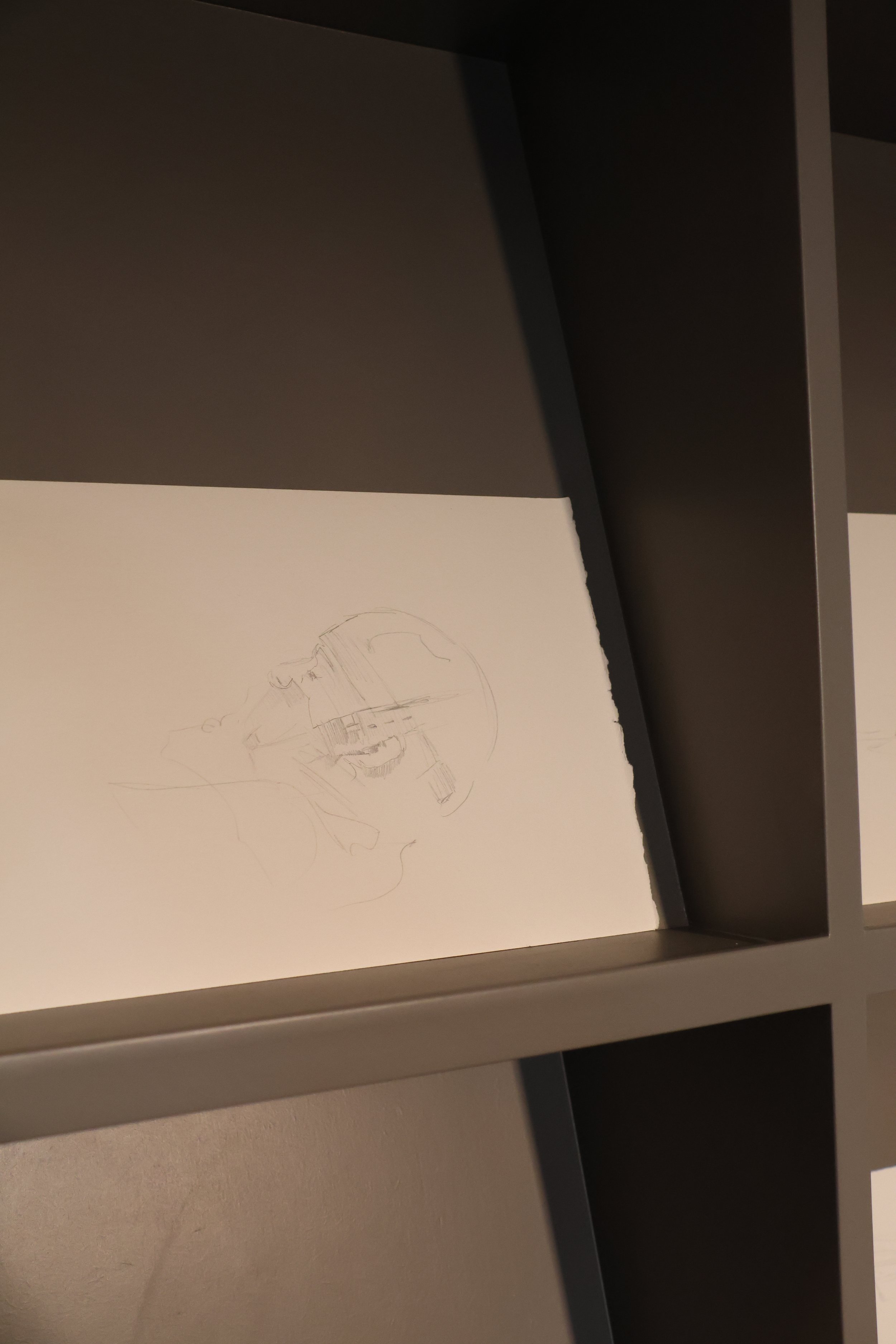
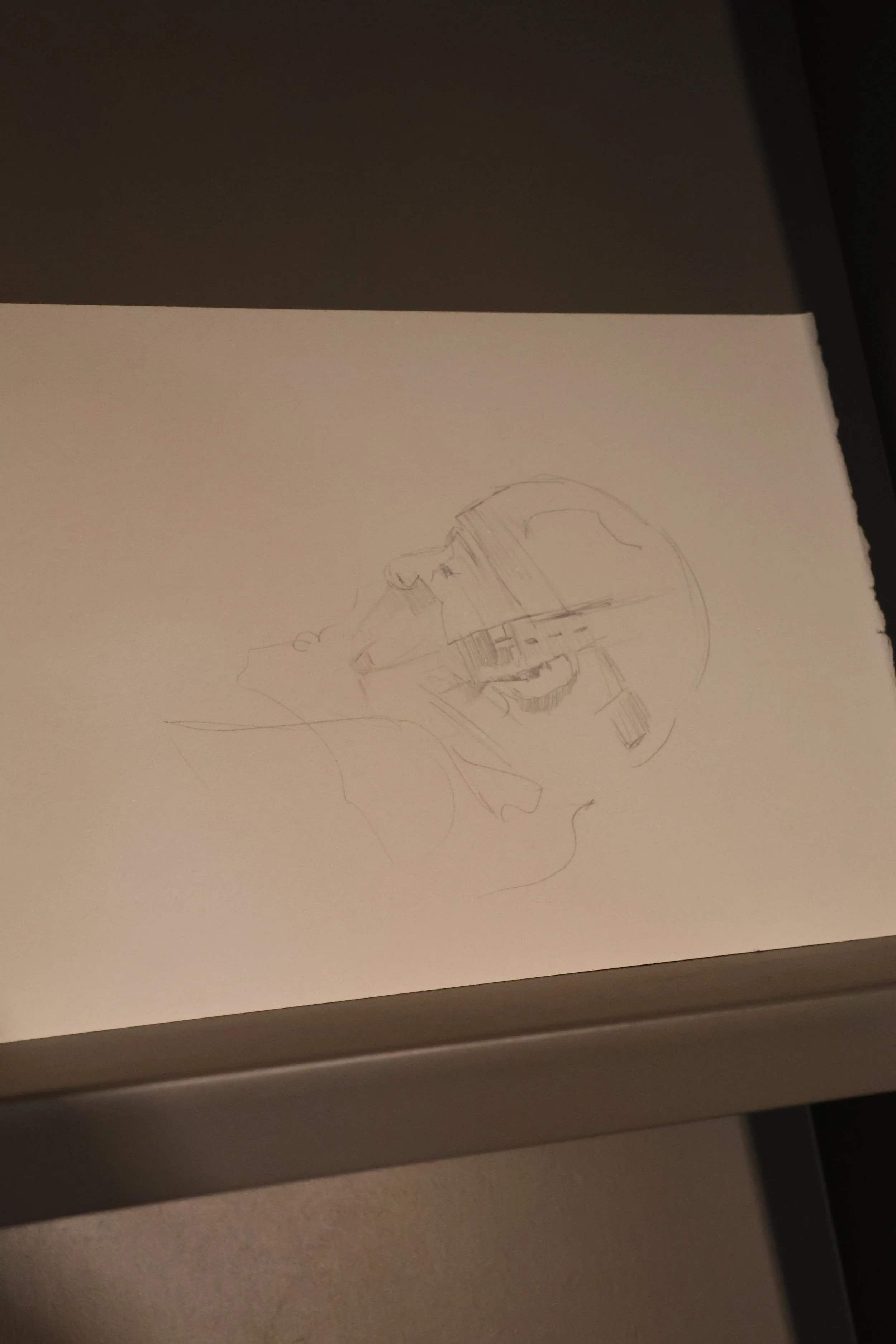
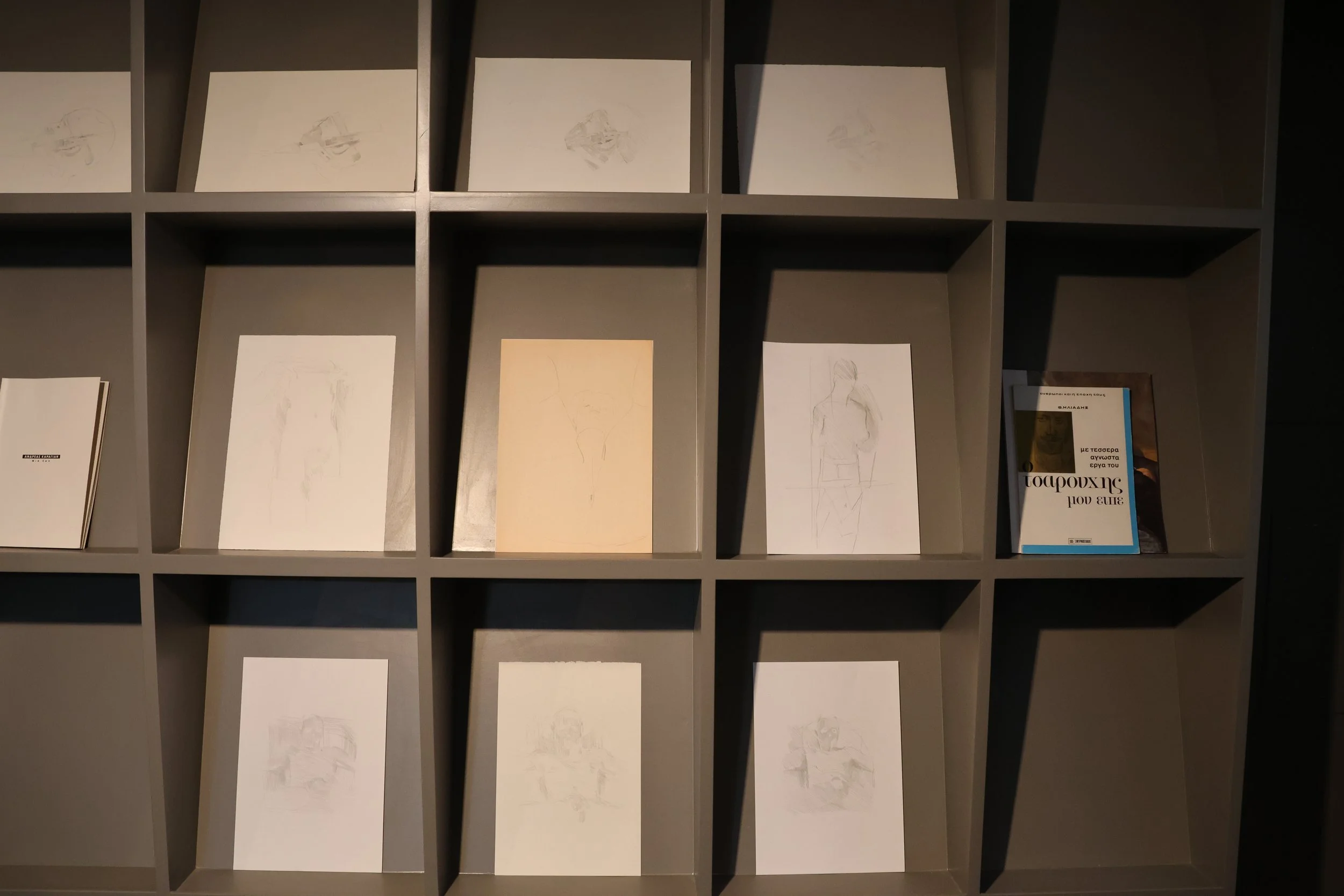
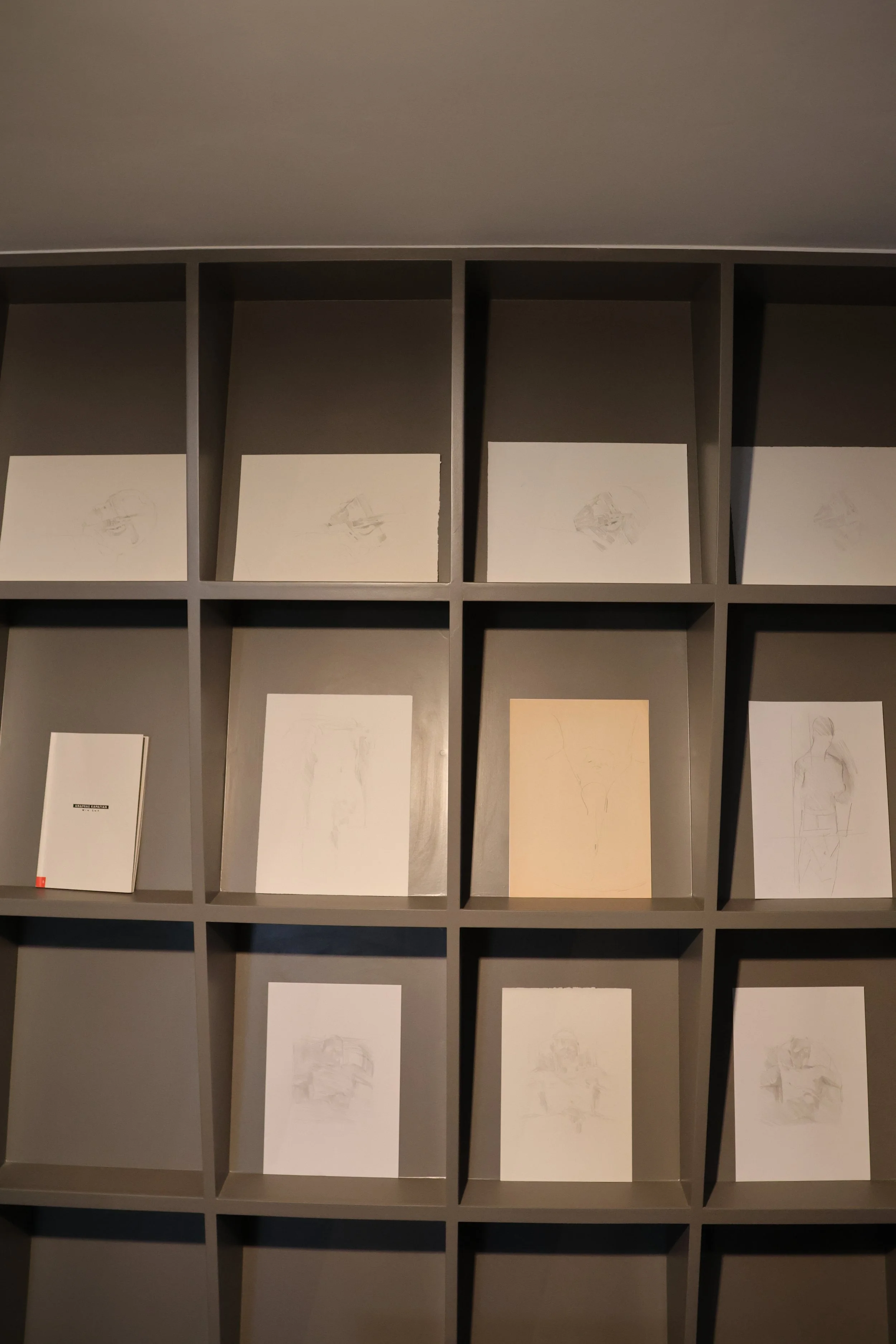
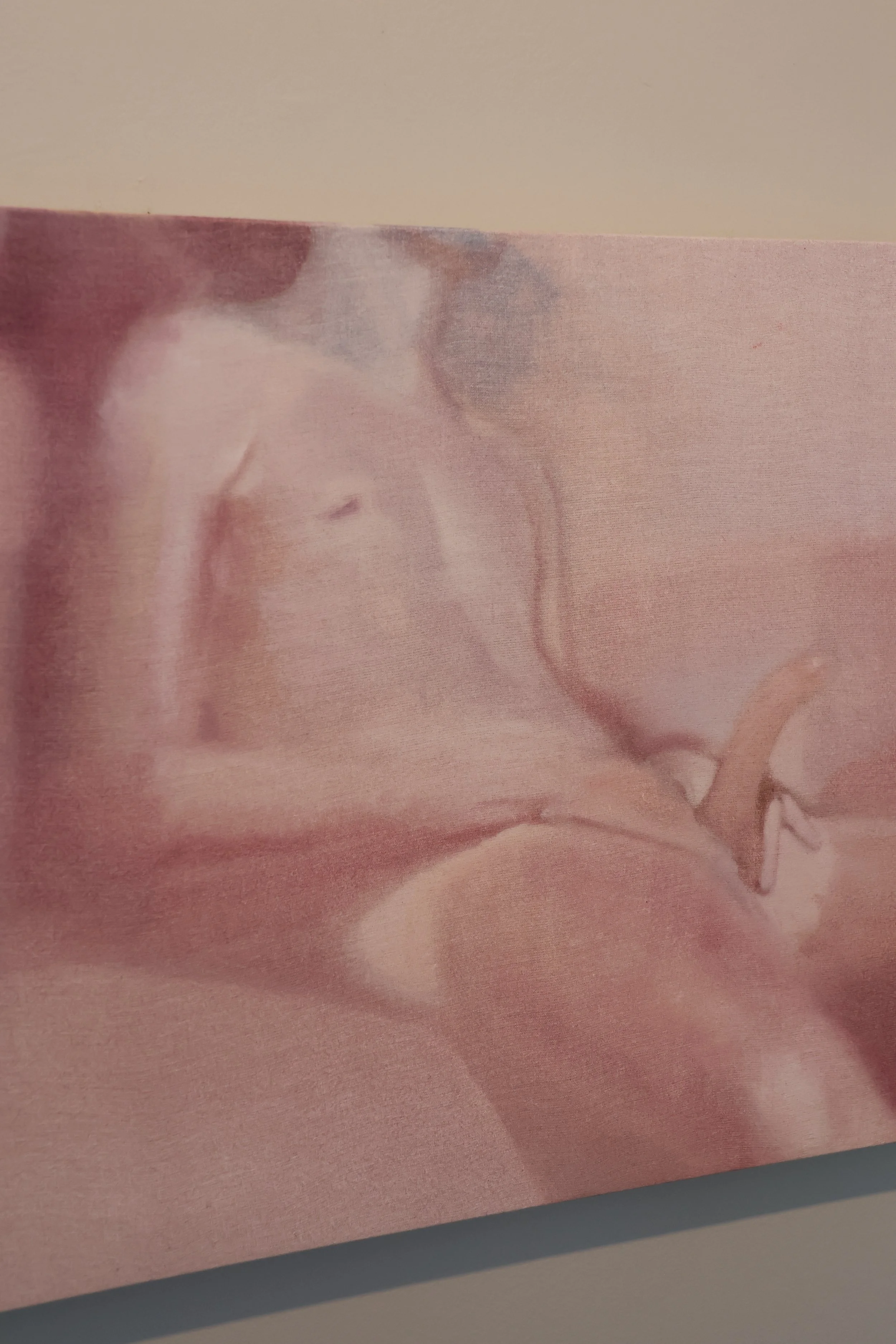
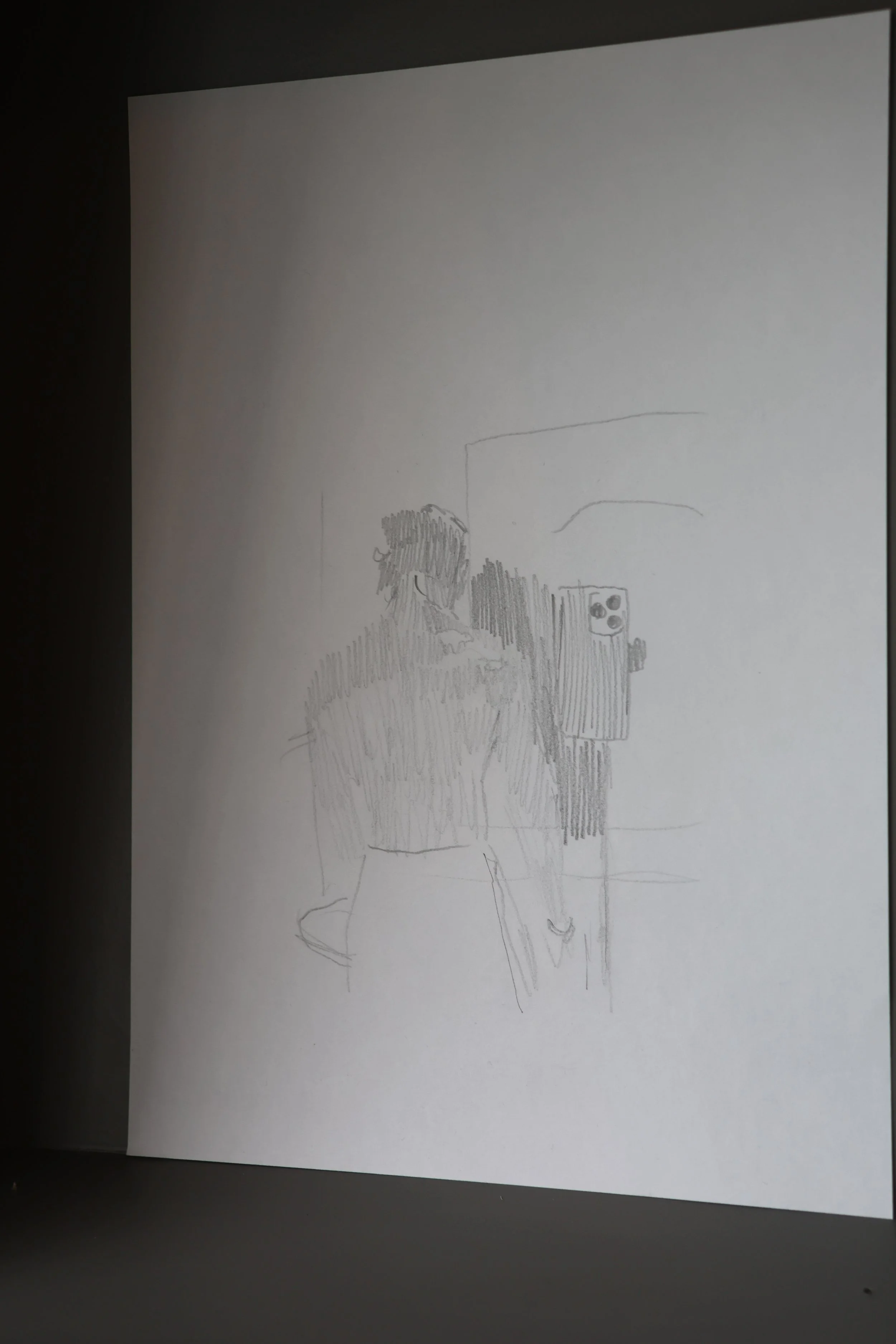
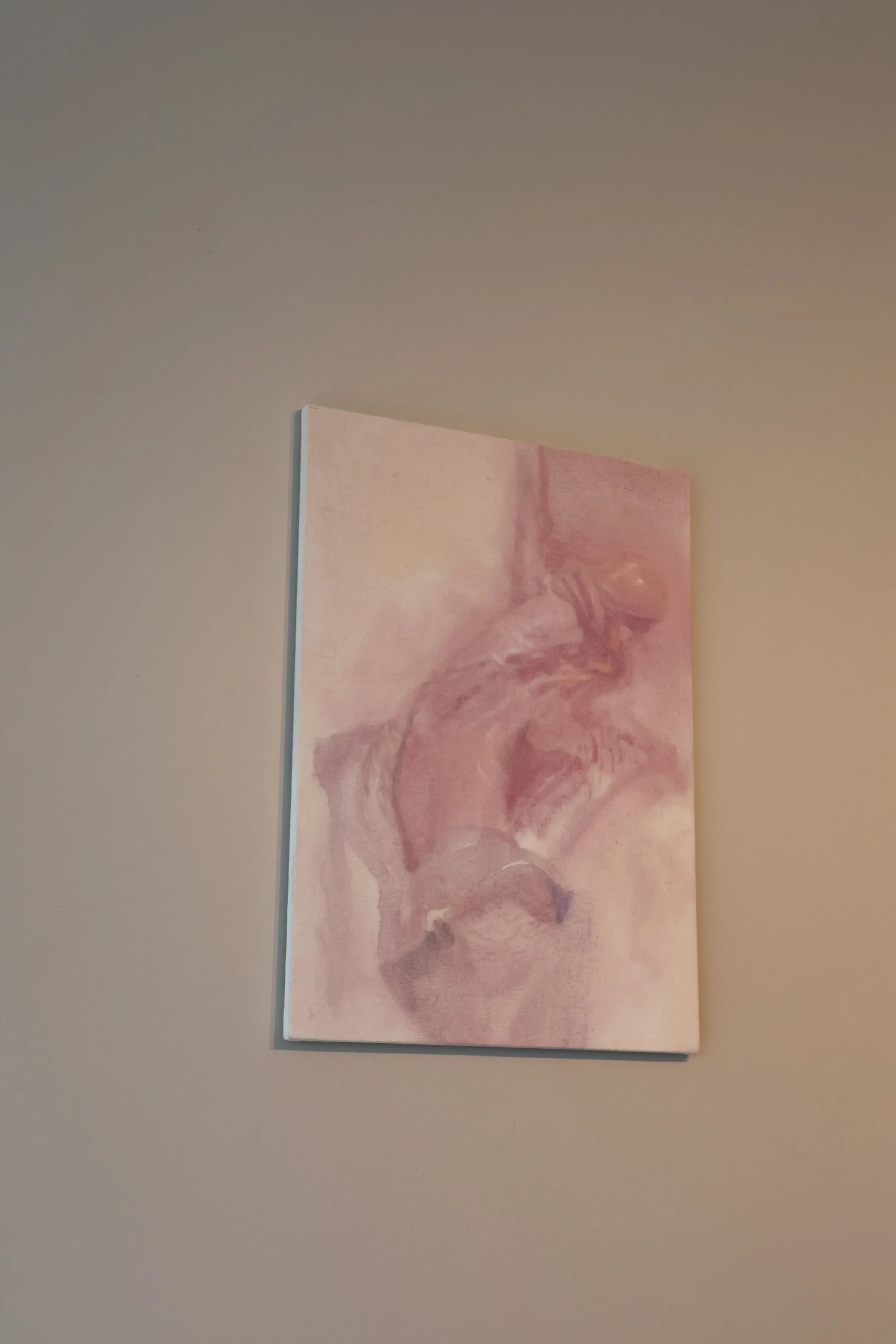
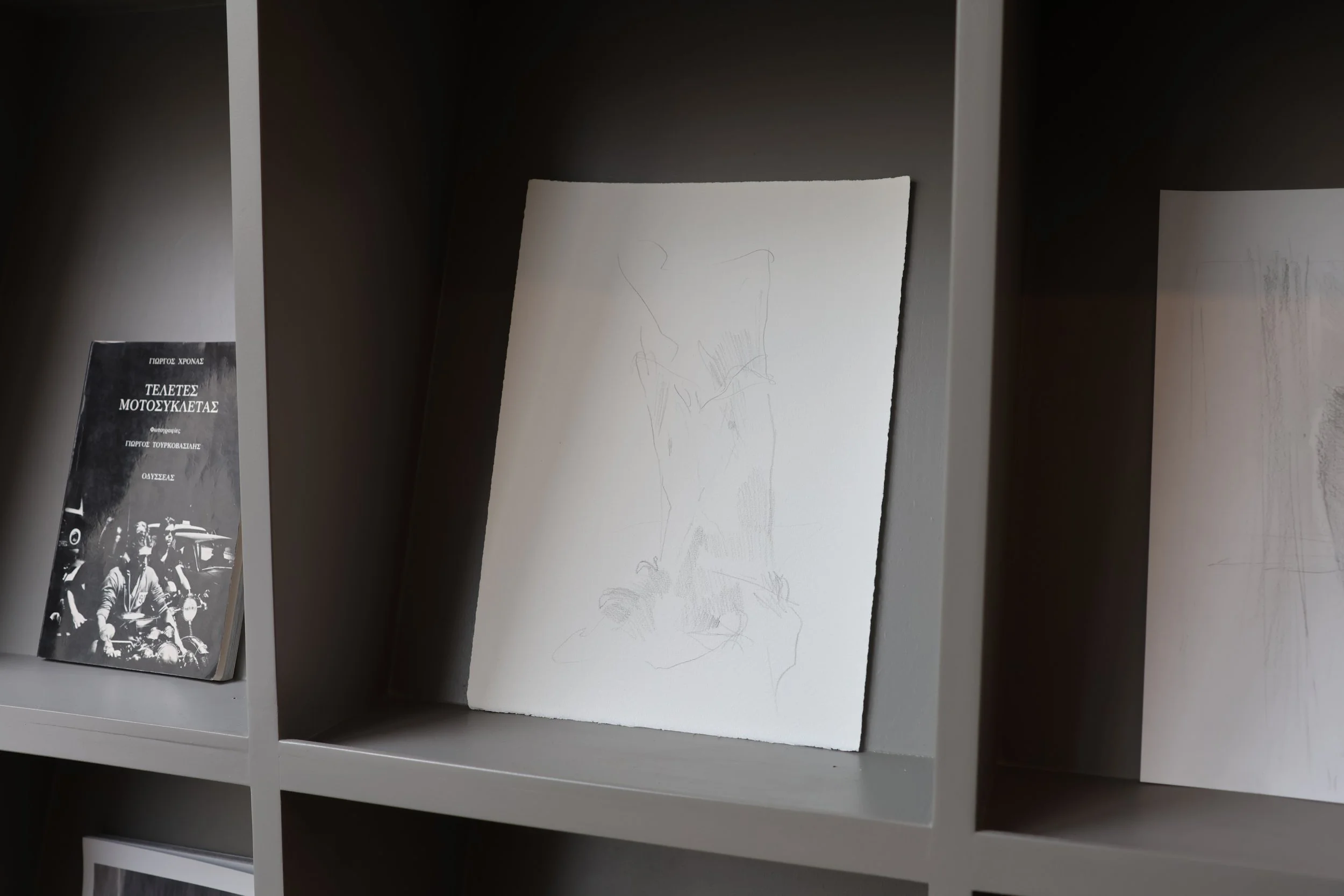
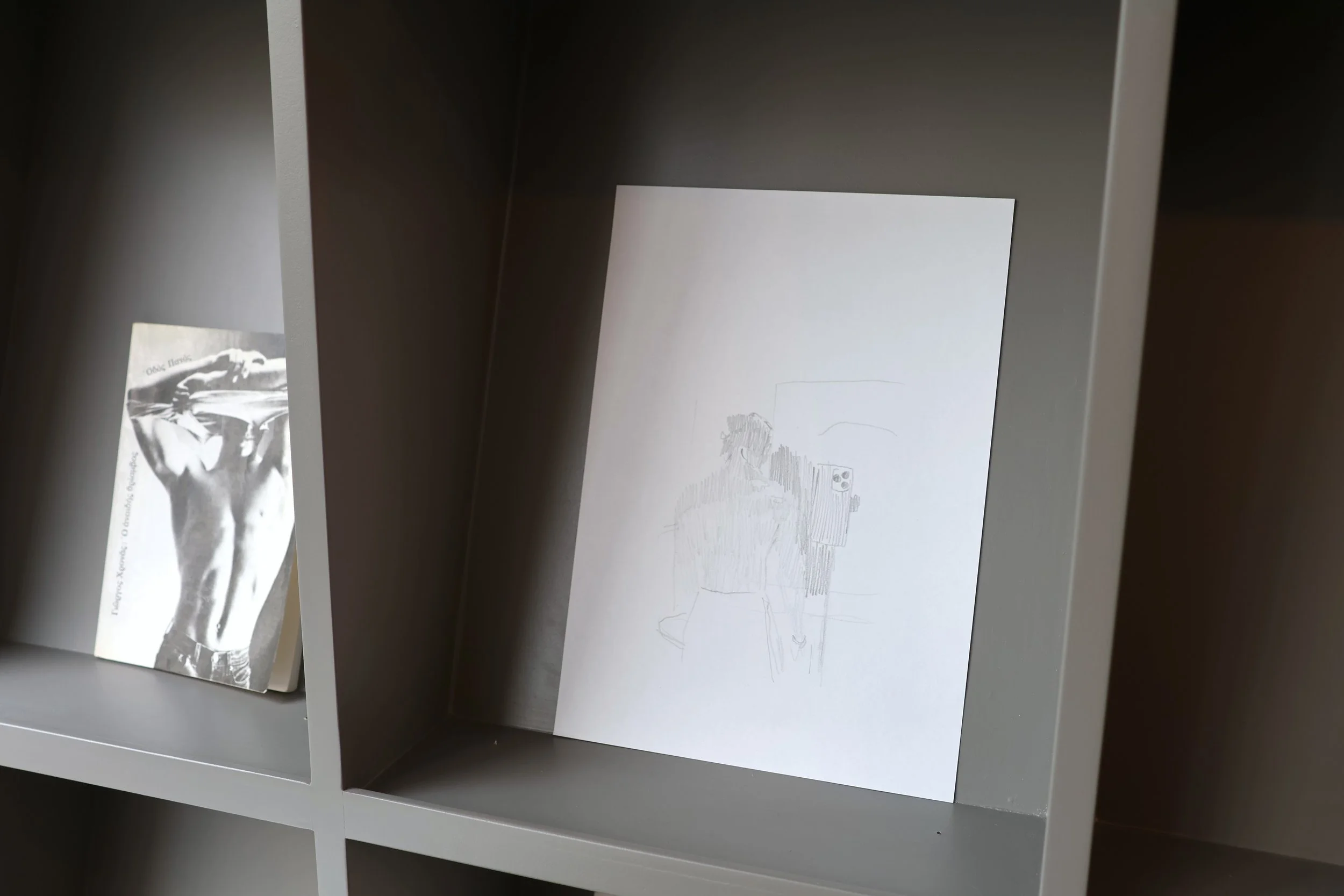
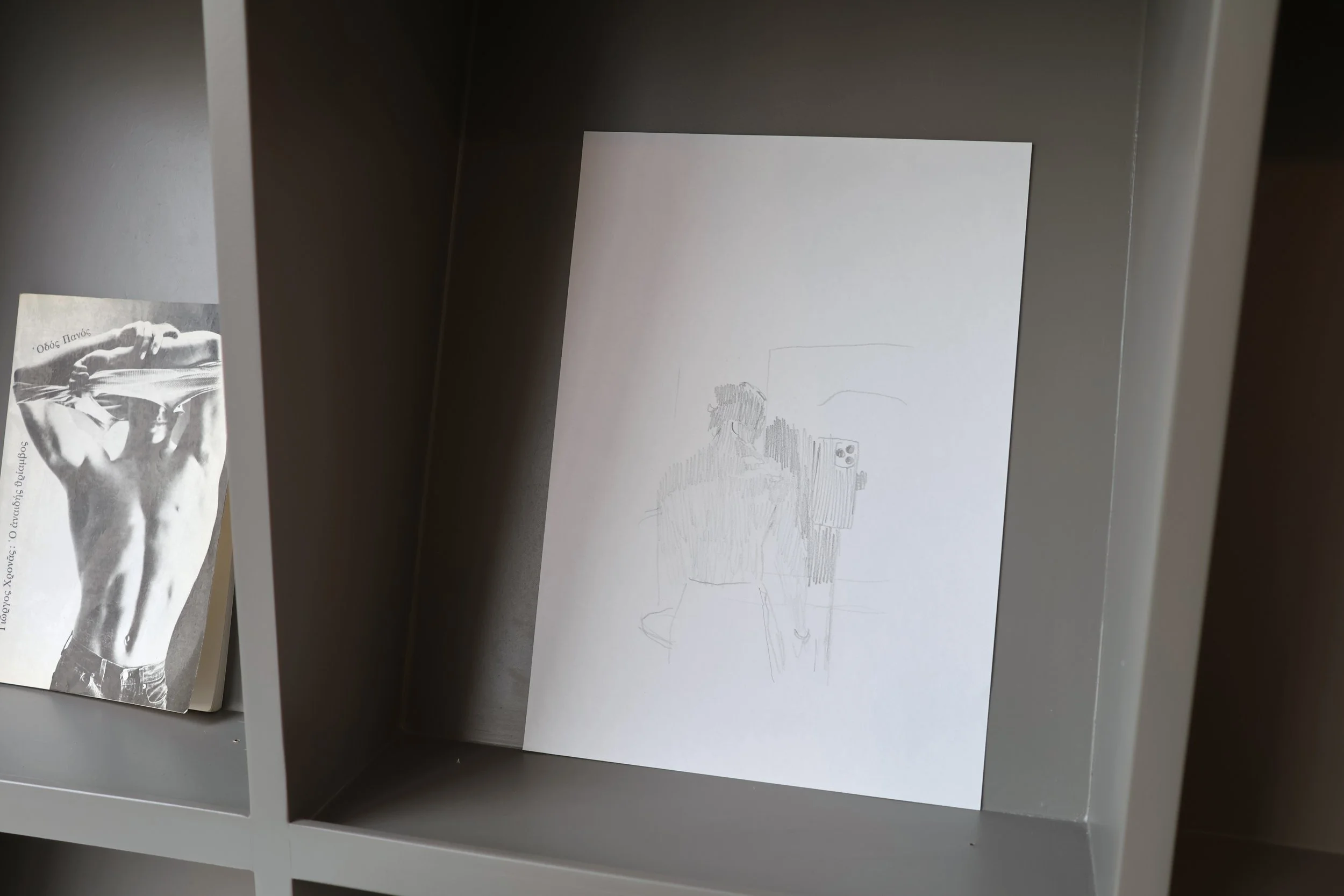
I say images because there were more than just paintings, though there were also those, hung on nails tacked all around so that works could be changed out with ease. Alongside them were drawings, mostly taped in plastic sleeves, some connected to the paintings in fairly obvious ways, some rather less. Some were like palette tests for nearby paintings done in gouache on small scraps of paper, but which could also work as charming little abstractions on their own. And there were also postcards, and pictures that looked like they had been cut out of books: ukiyo-e, photographs from newspapers, a postcard of Girodet’s Endymion. That fresh white piece of paper was just the stage on which all this played out, this dynamic, living salon of images, which the artist kept moving around as we talked.
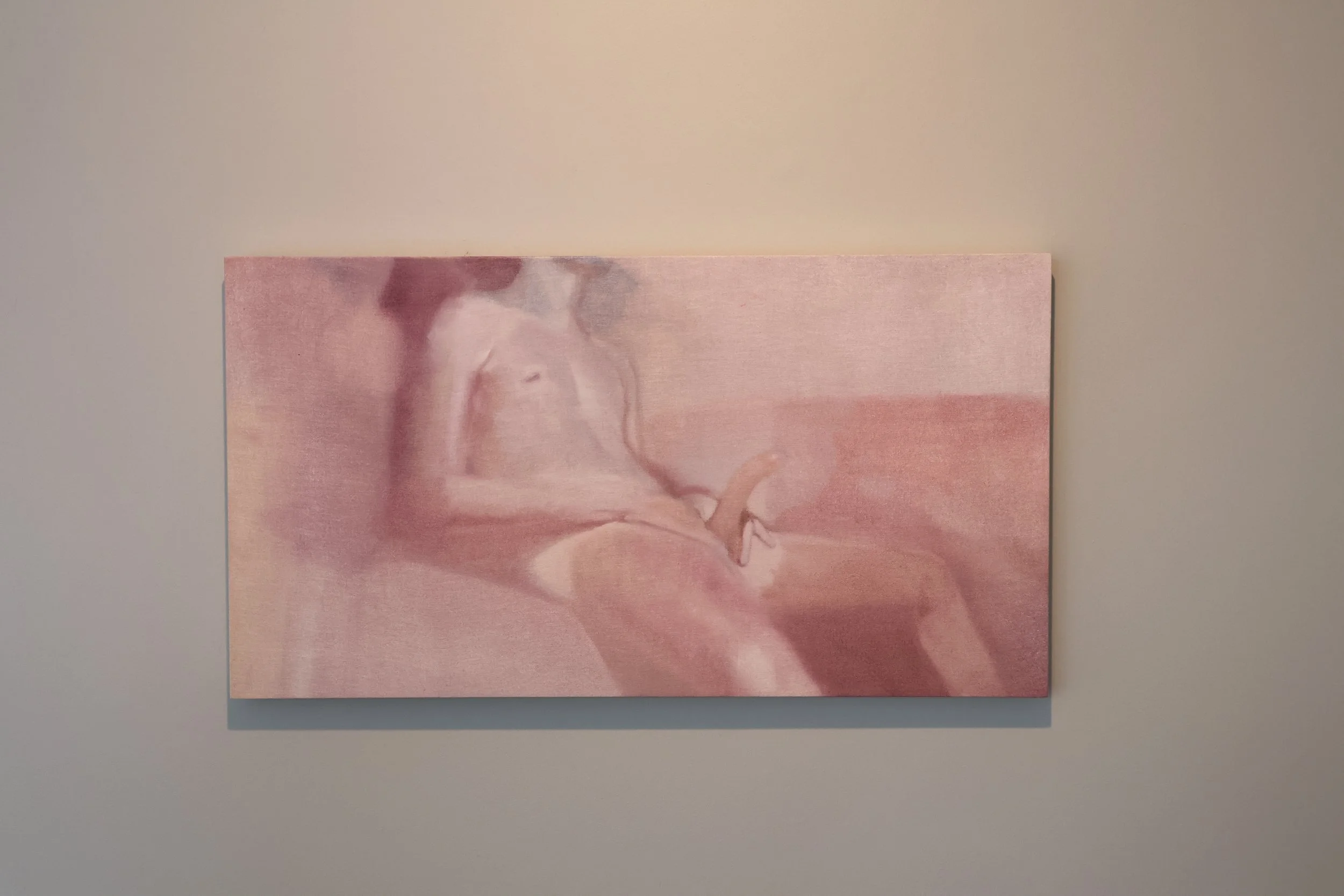
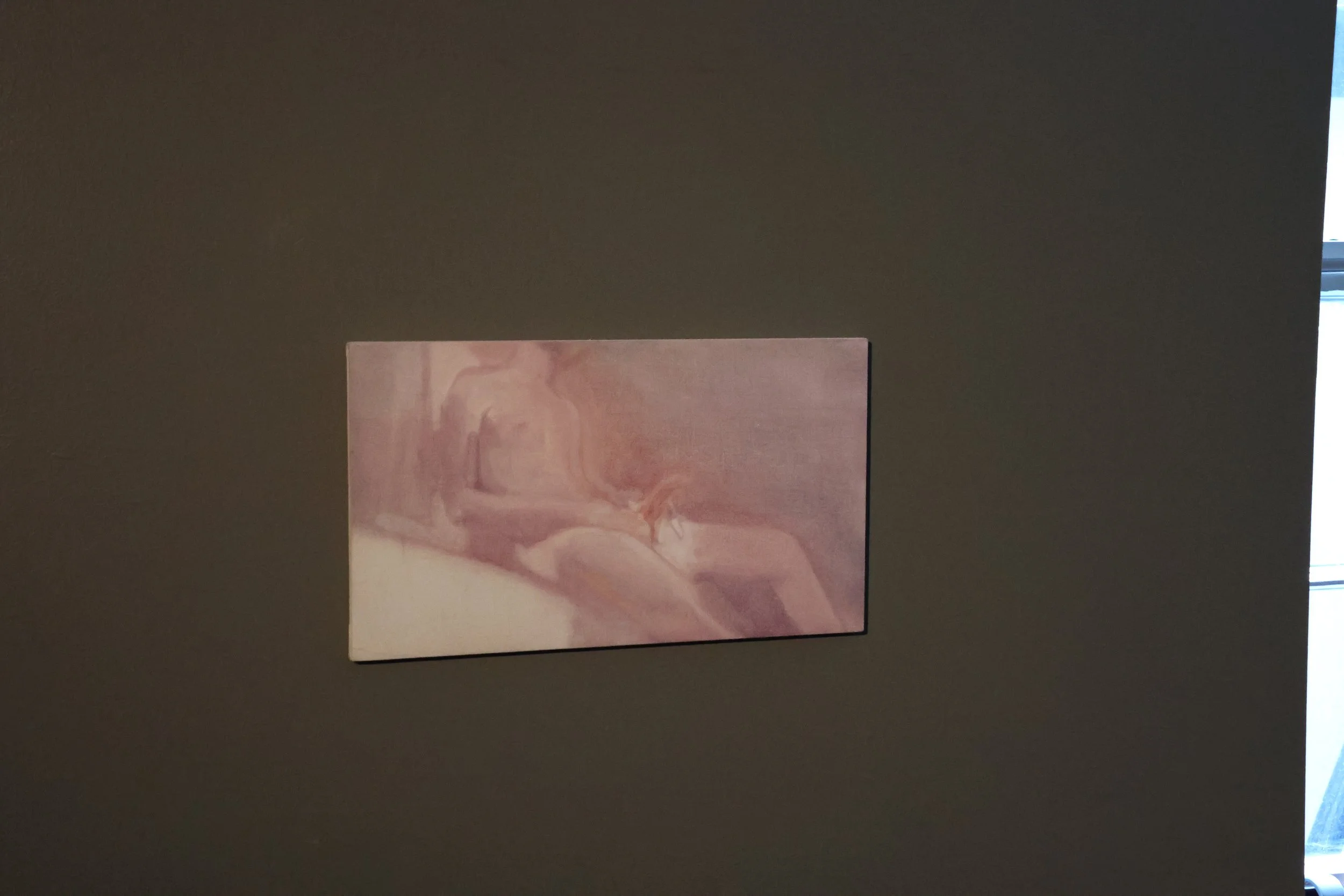
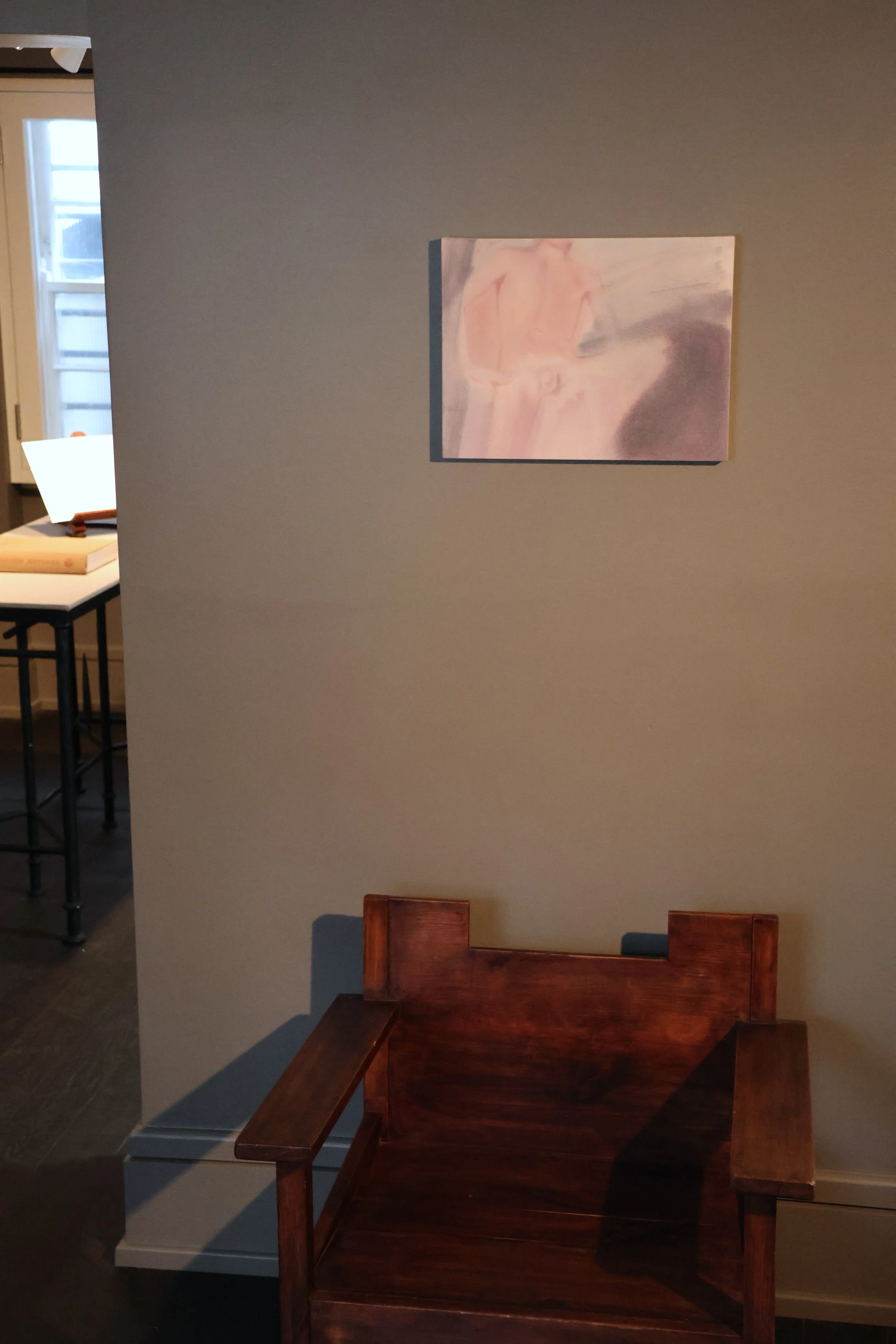
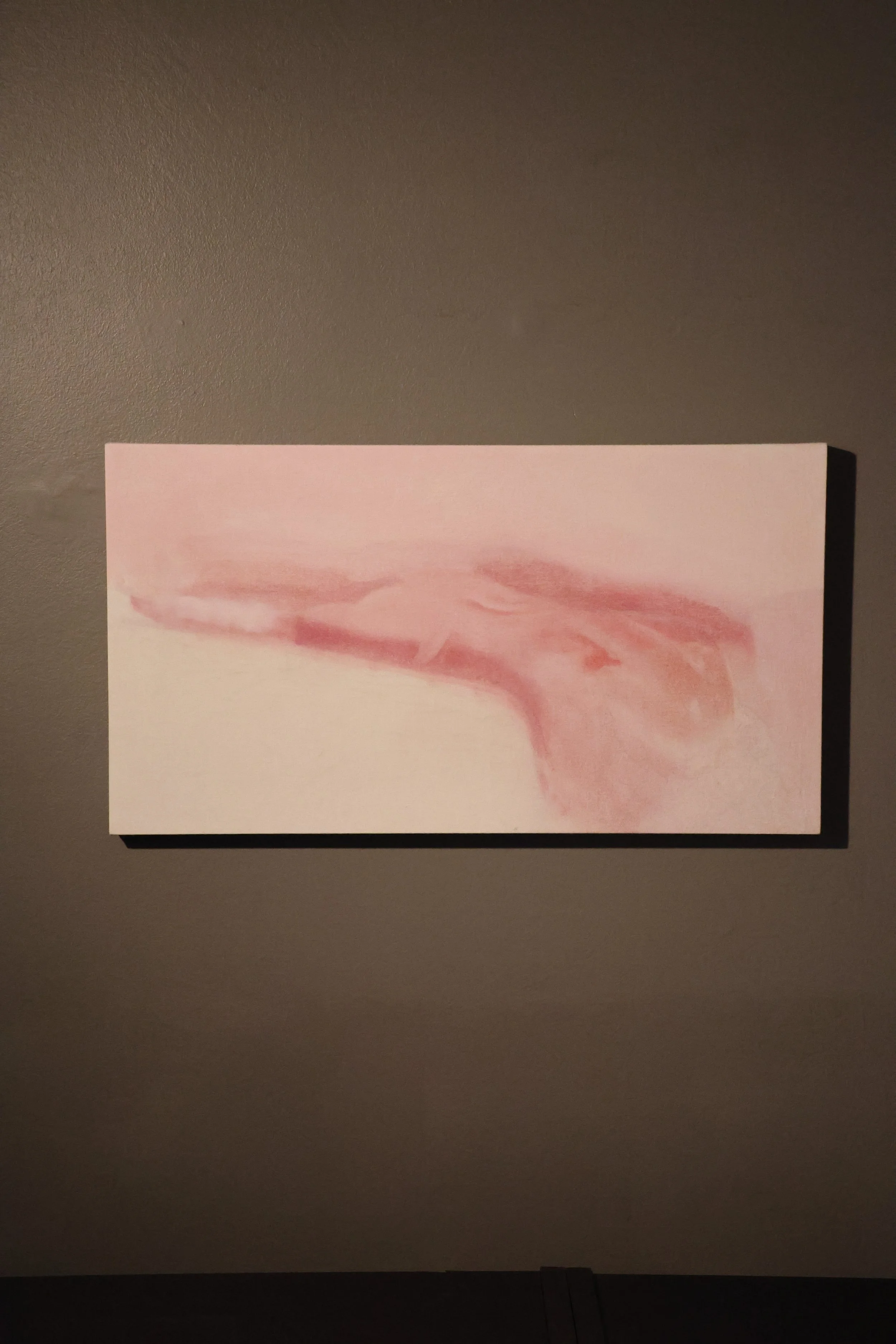
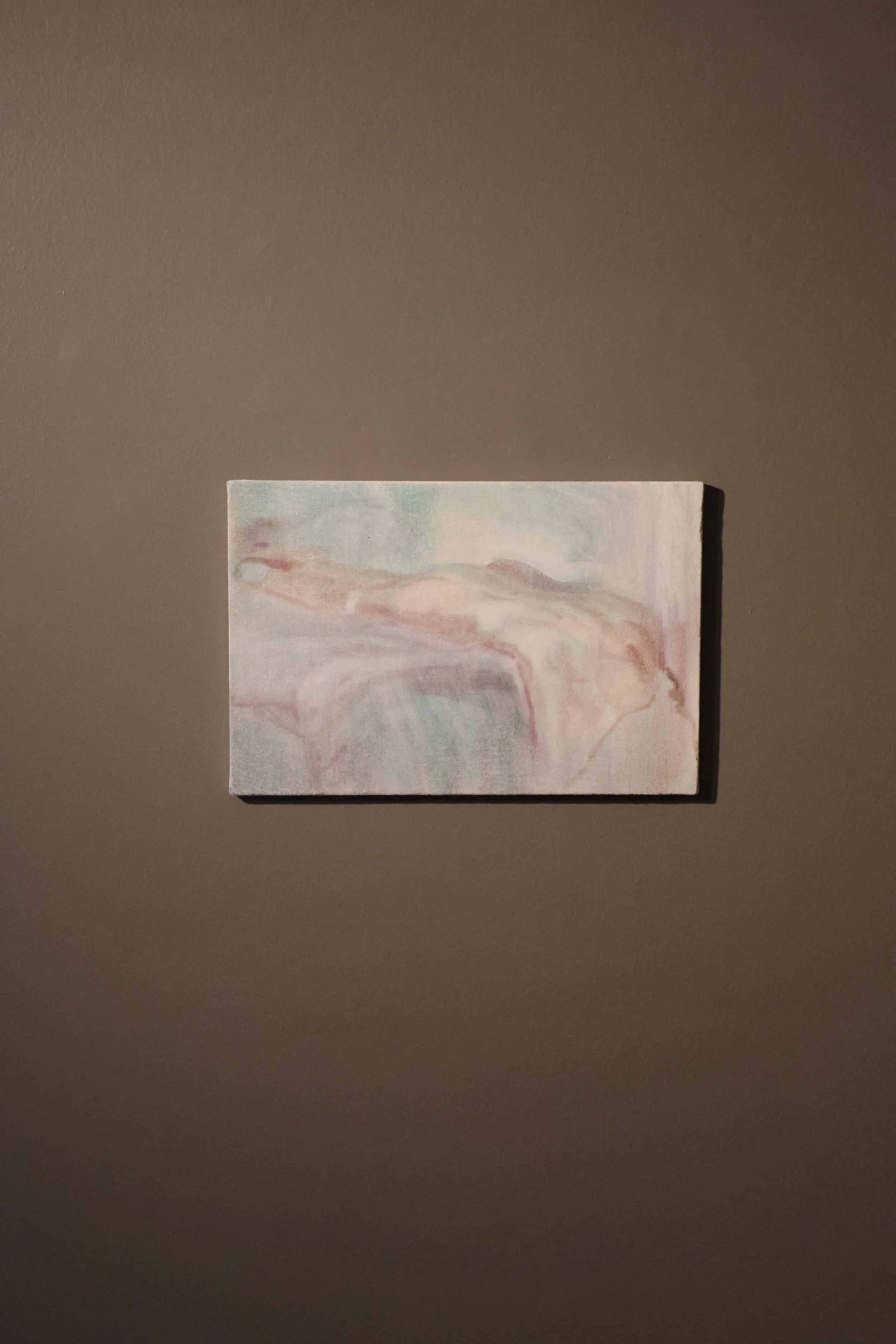
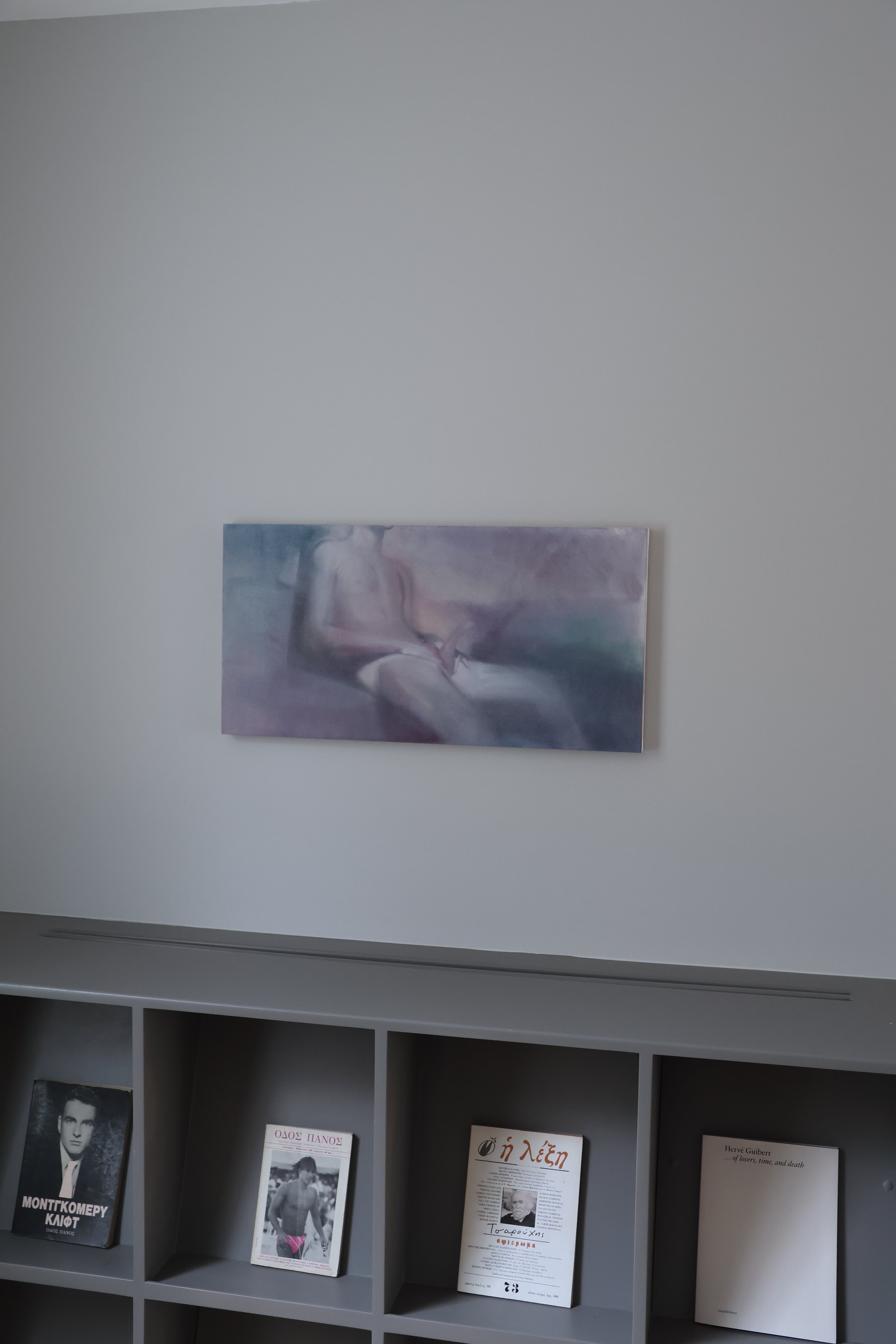
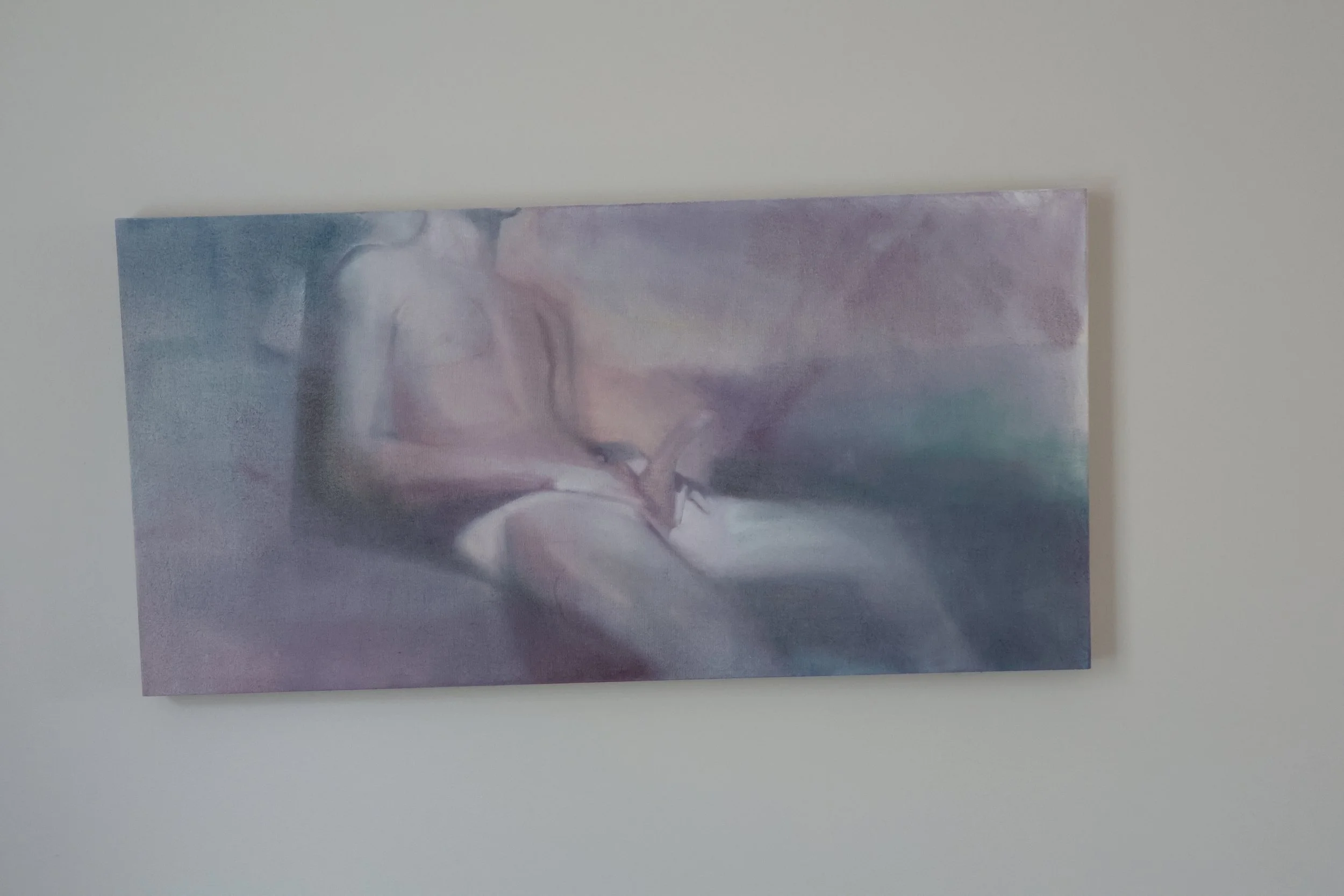
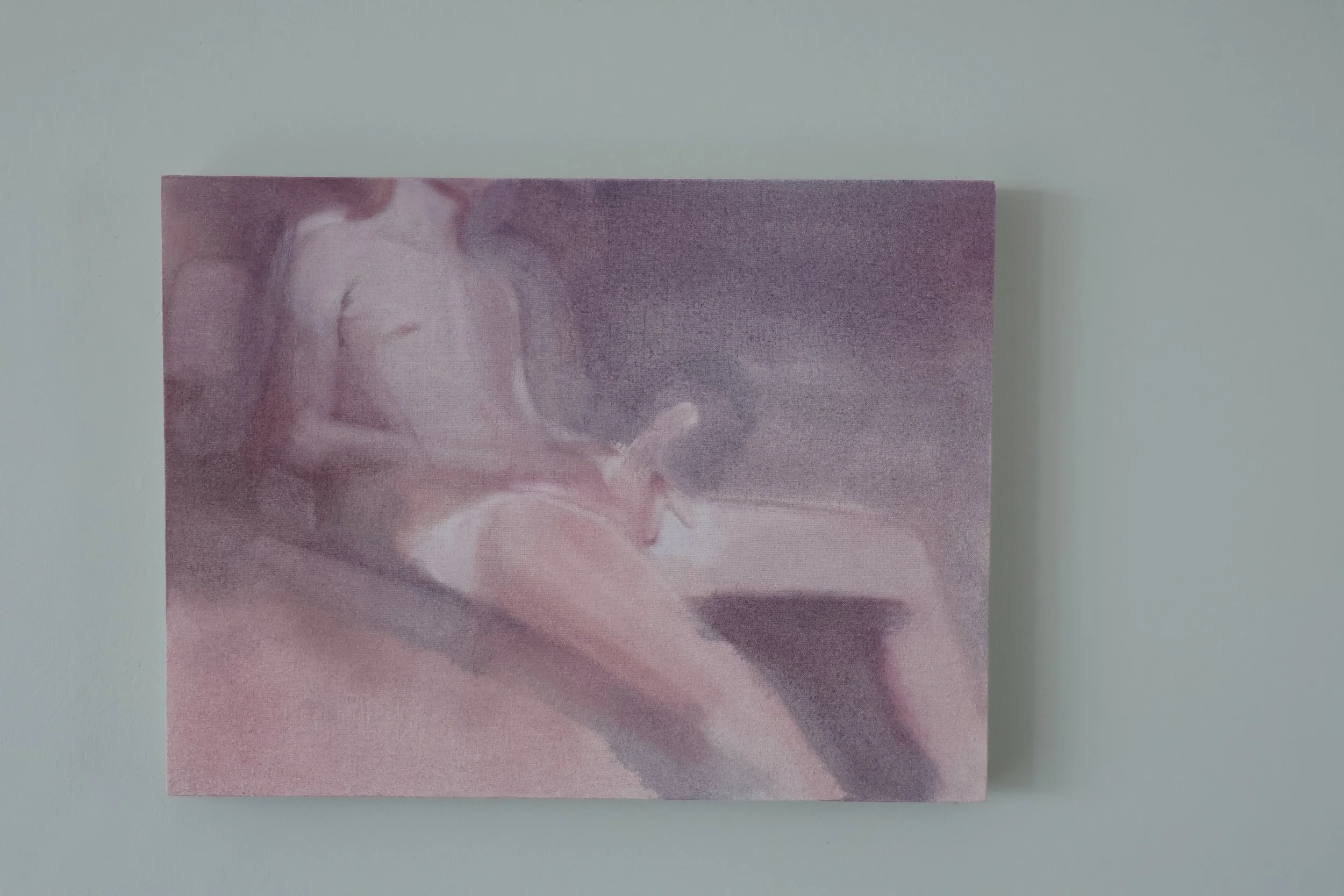
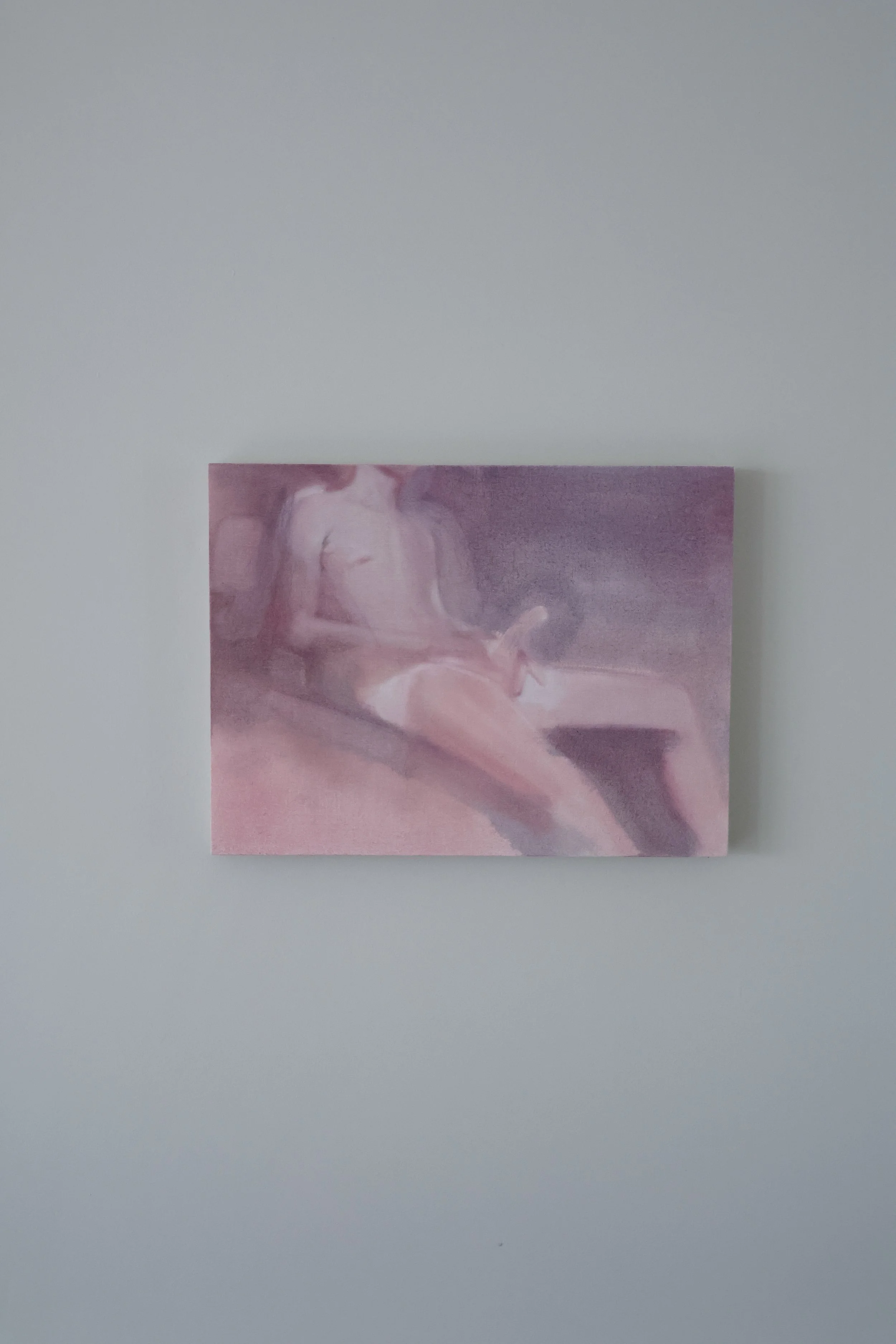
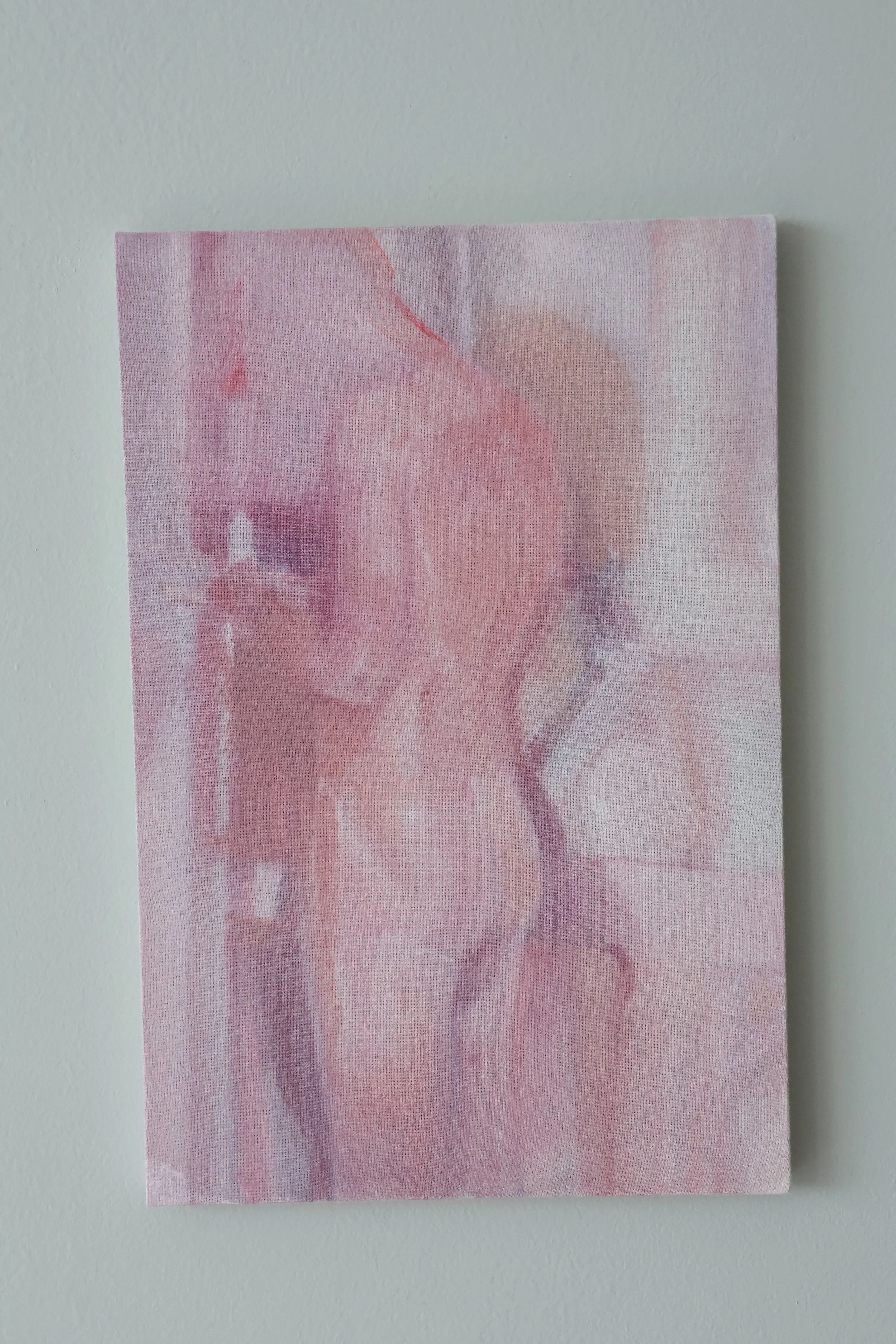
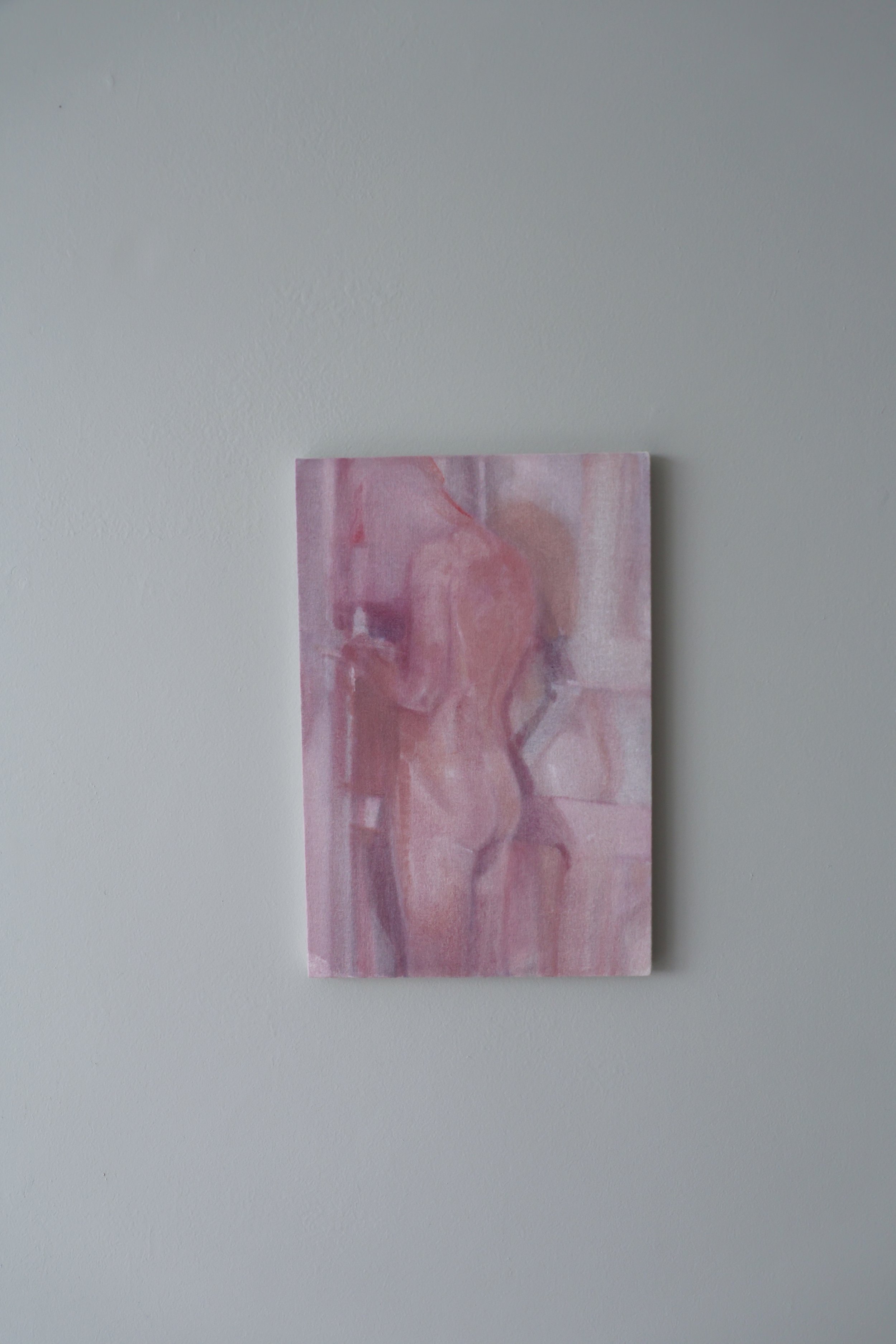
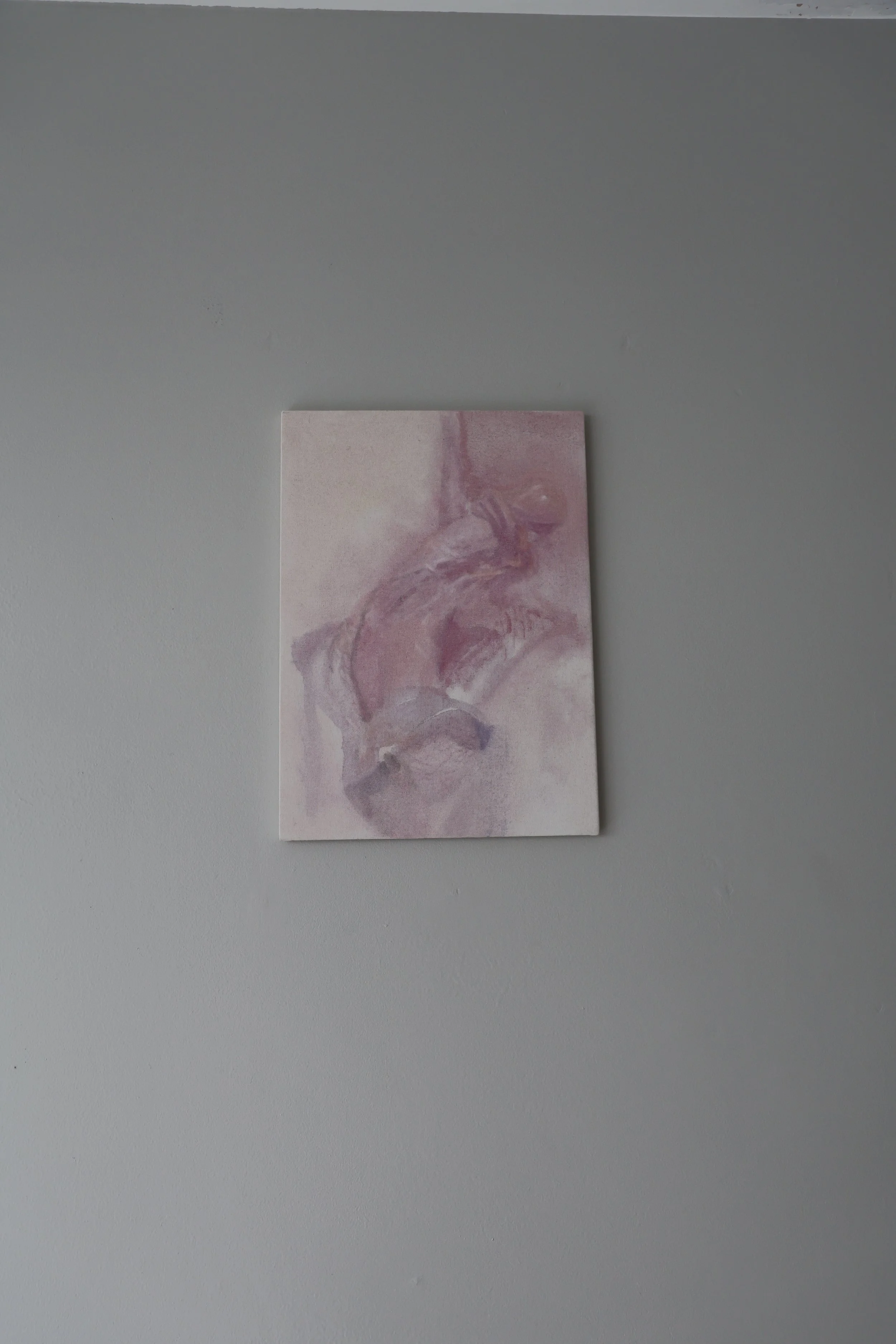
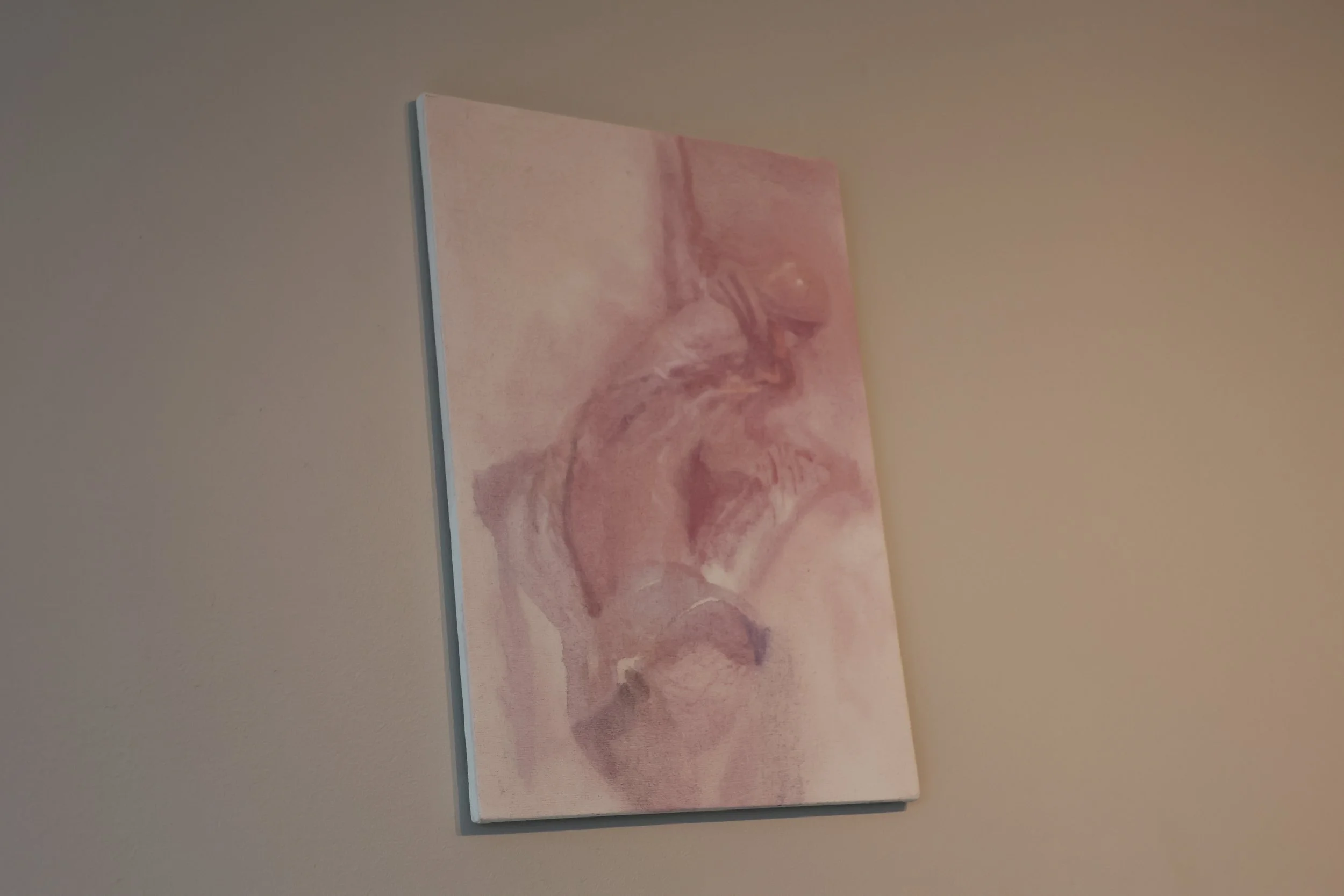
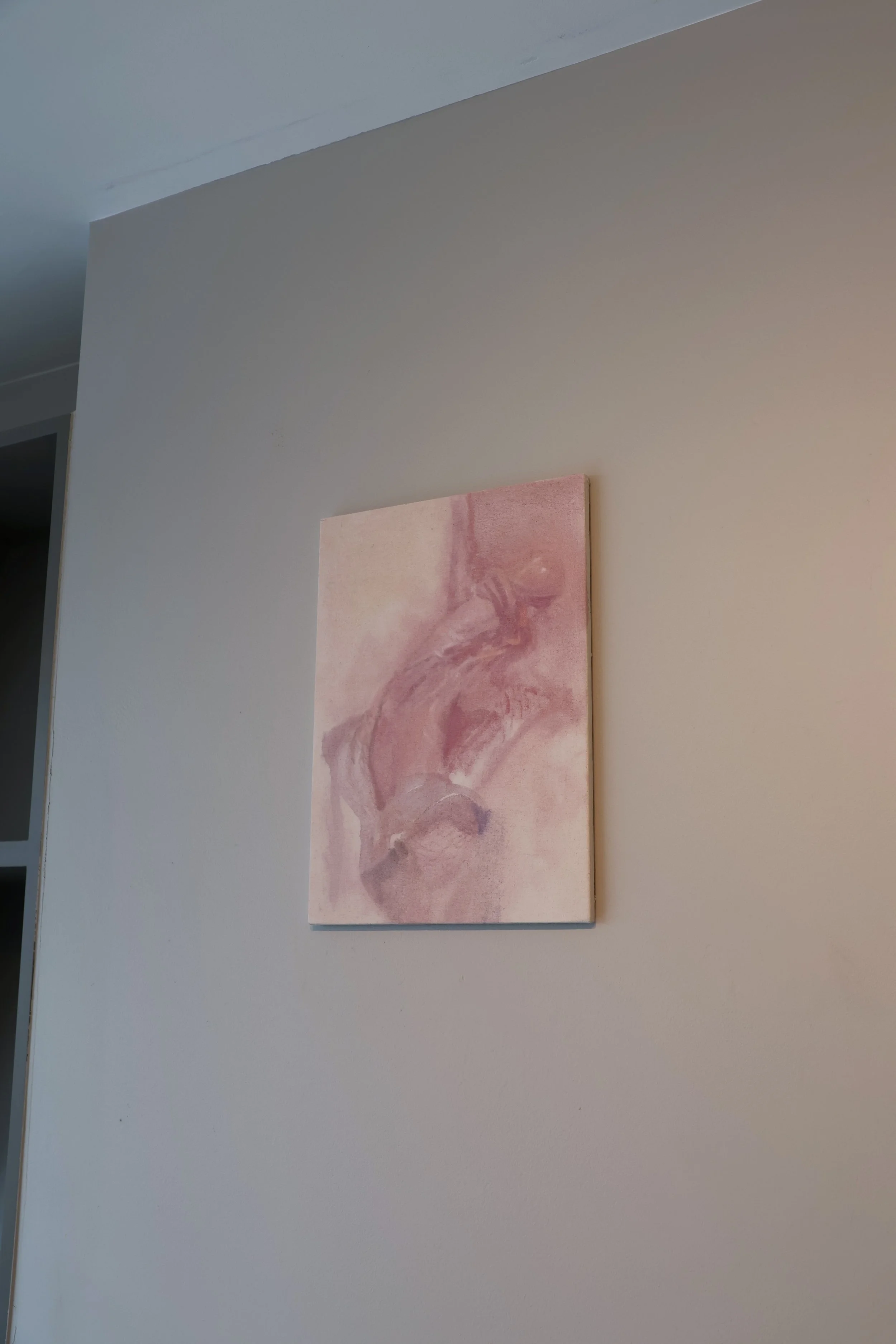
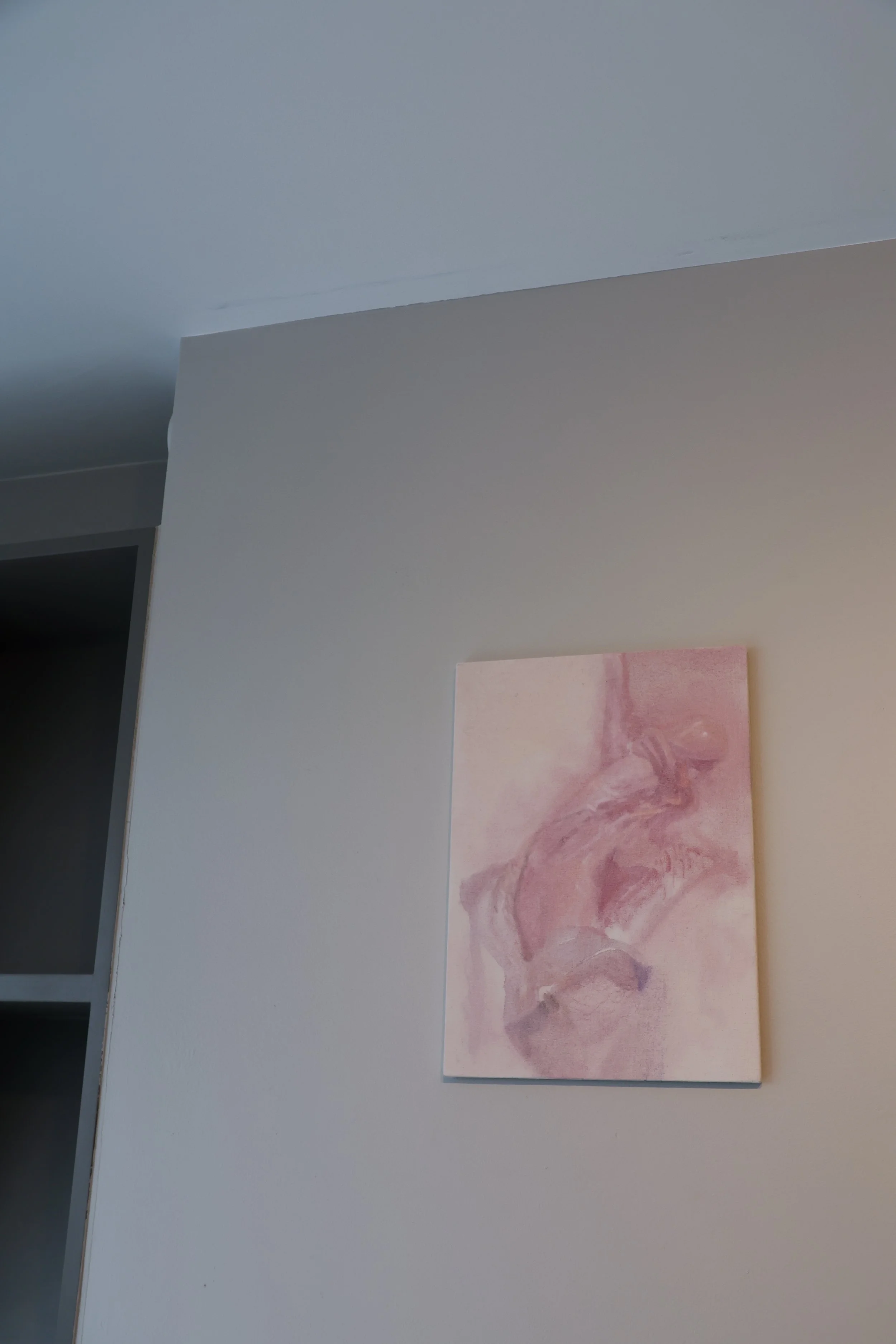
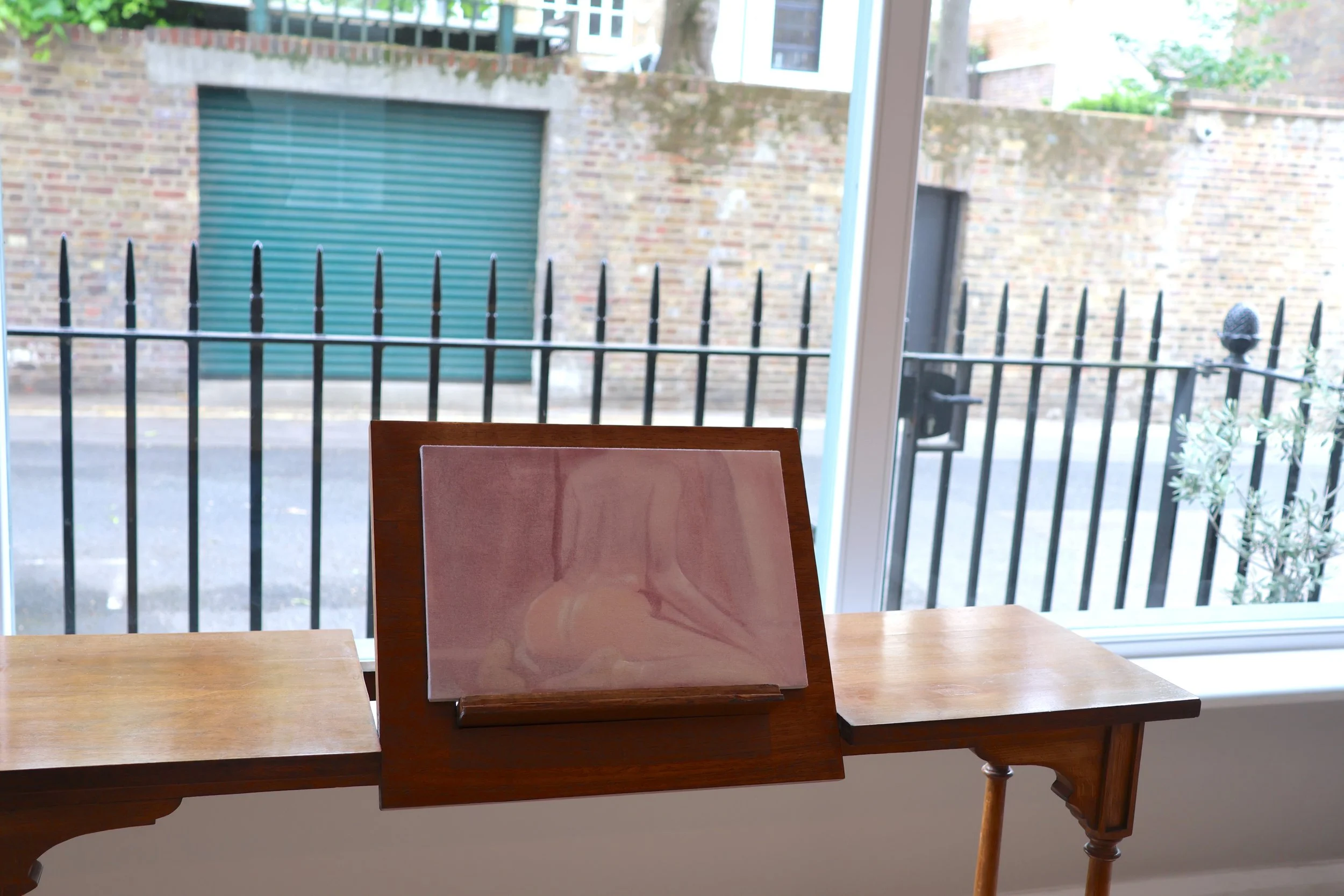
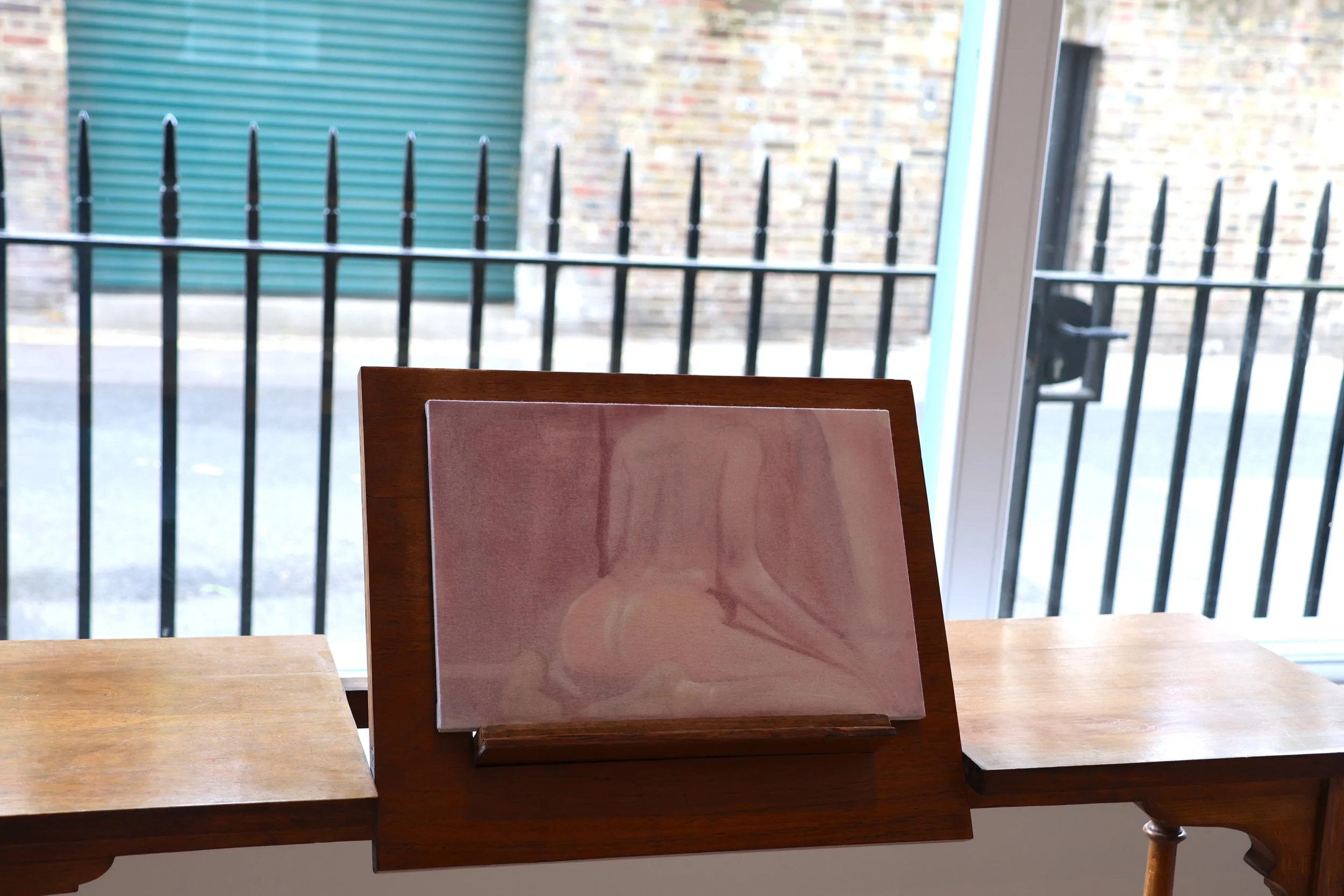
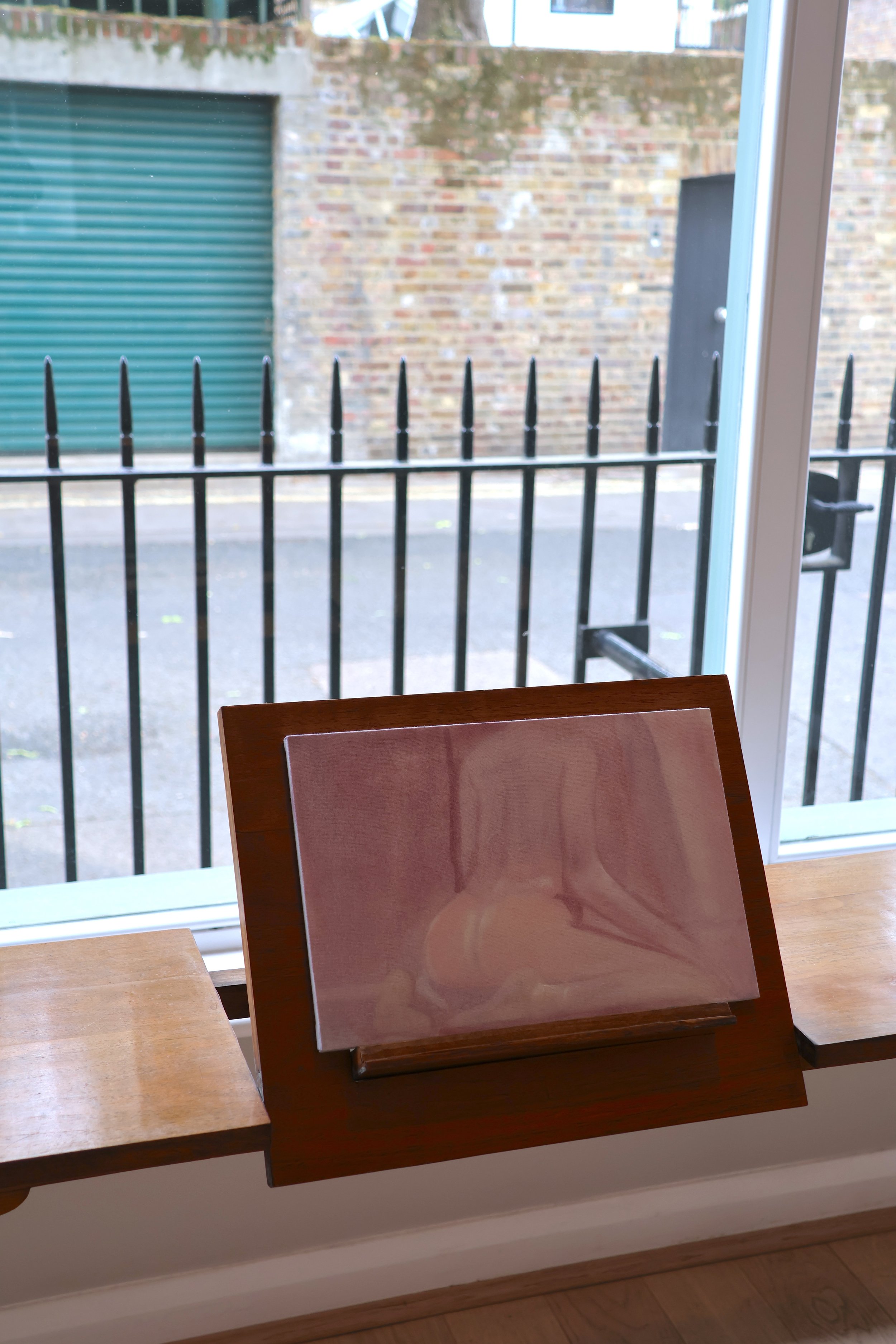
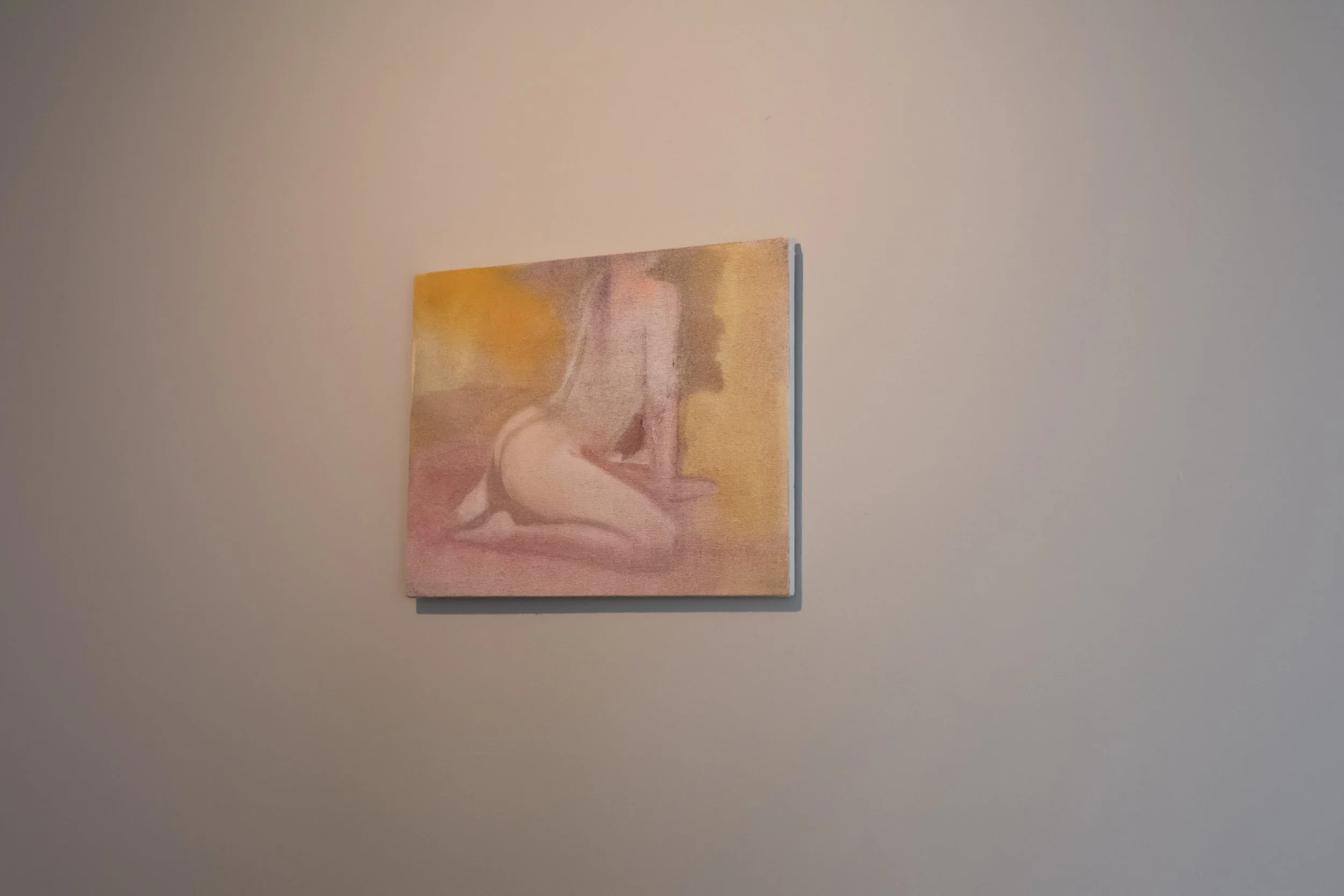
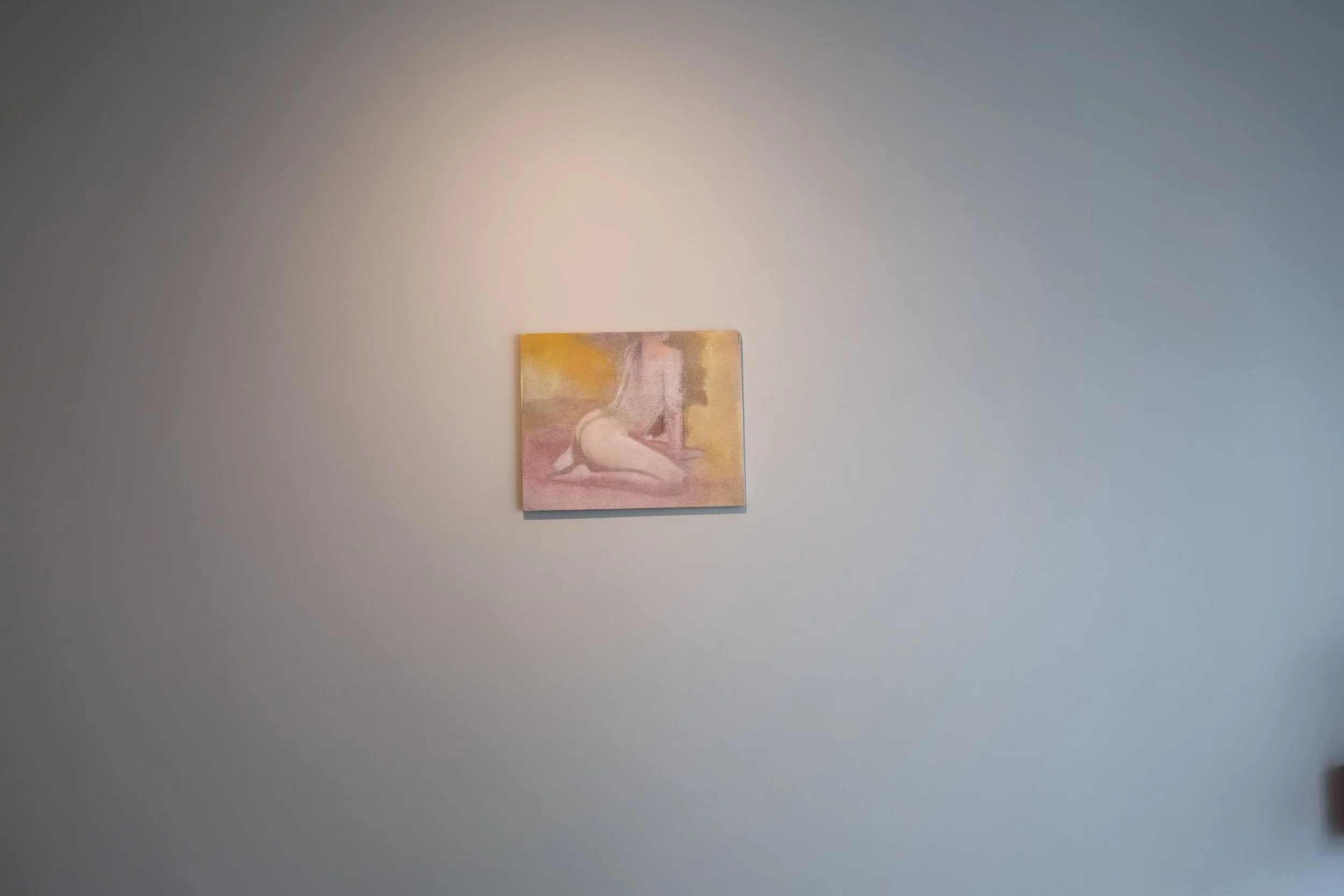
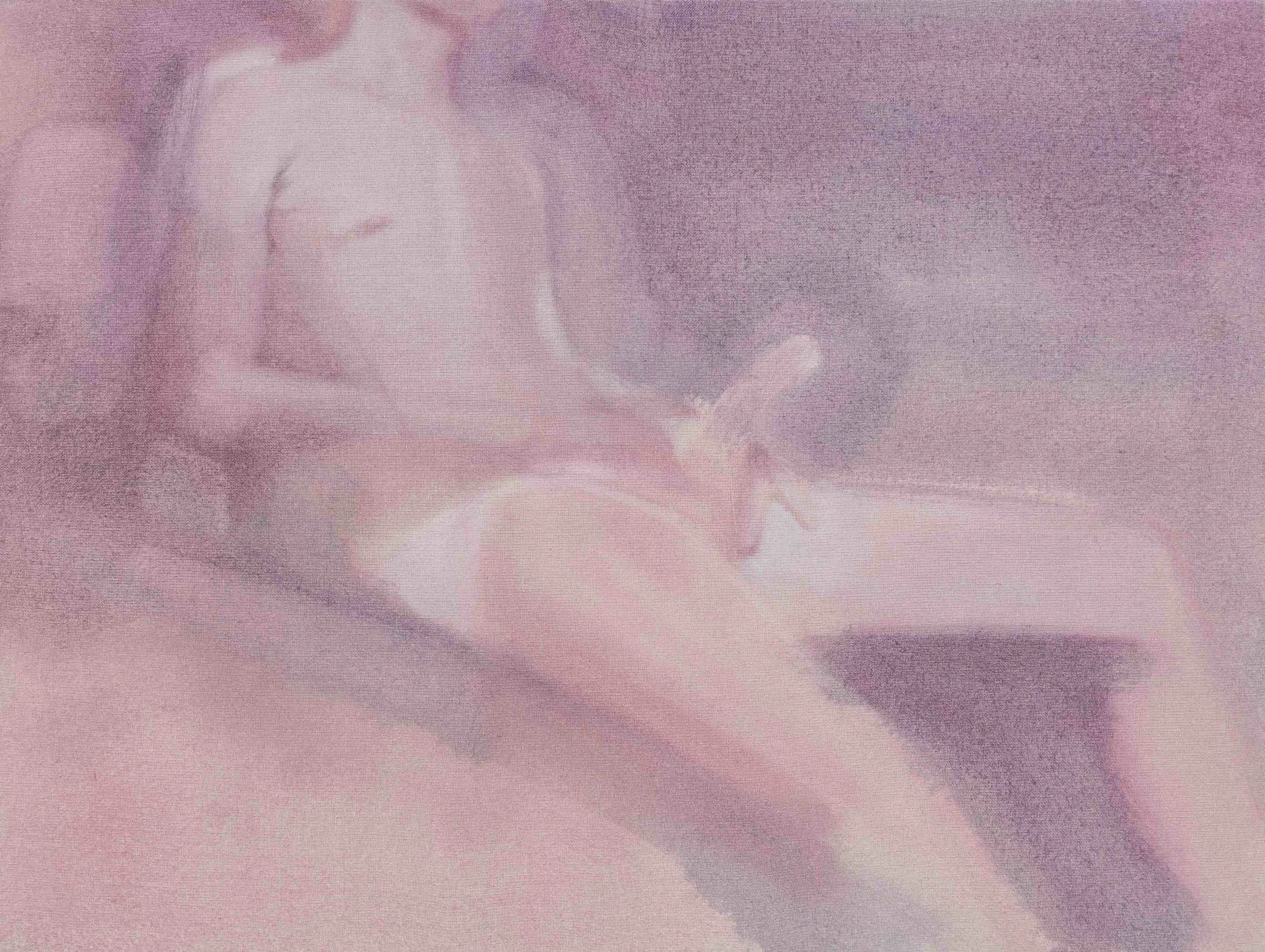
Peslikas’ tendency is to paint the same composition many times over, each with a different palette, scale, set of dimensions, and specificity of surface. Each work needs at least a double-take: some look like landscapes, others abstractions, but in time reveal a male nude, sometimes as vivid as a gaping asshole or a penis tied up in chains, but always painted very tenderly. Somehow this subject of the male nude seems to me secondary to the painterliness of the objects, with their specific qualities and fractional variations. I was more or less in love with them immediately.
Later, I found out what was in the boxes: a collection of images that the artist has been cutting out of books, magazines and newspapers since 1986 - four decades. Like his paintings, he has many printings of the same images, in different inks, scales, on different qualities of paper. And like the artist’s own works, it is the specific qualities of each production that feels precious in his hands, the image itself being somehow secondary.
I have come to realise that this collection goes about halfway in informing the works the artist produces. He is never copying an old master or a news clipping directly, but nonetheless, each of his works does recall other things: in this exhibition, there are a group of works that relate to Caravaggio’s Cupid, for example, and others that refer to the work of the Greek painter Yannis Tsarouchis, but only in sections, only tangentially. The second half, the part that is perhaps what makes each work feel so precious, is coming from elsewhere in the artist’s memory, not his memory of images but rather his own experience: memories of things that have happened to him, the light and atmospheres of places he has lived, that he has loved, that mean things to him that are not for us to know.
We live at a time of abundance for images, and I think my pessimism about Contemporary art can in part be attributed to the over-inundation that anyone who lives in a city in this century and owns a mobile phone must suffer. The problem is that most of the images we see aren’t made precious, they’re fast, consumable, nuggets of junk and wastefulness. It has taken these works, and this artist, to restore some faith in the art of today for me. It is not just a result of their tenderness, their preciousness, the care with which they have been handled and made. Every time I have visited the studio over the past year, the paintings being worked on have changed, swapped places, been painted over, scrubbed down, built up, washed down again. I am writing this two weeks before the exhibition opens, and Polys is still making changes to the paintings. That dynamism of living art, that endless freshness, that vitality, is giving these still, silent objects their breath and beating heart, and it is restoring mine to me. Two weeks before this opens, we have a plan to install this exhibition so that the works feel as alive as they do in the studio. But I am going on holiday, so this is all in Polys’ hands, those hands that are still playing with the paintings. I am not in the least bit worried. It feels good to be back from the dead.
Fraser Brough, CASSIUS&Co.